
How to Use the Matrice 4T for Highway Corridor Work at High
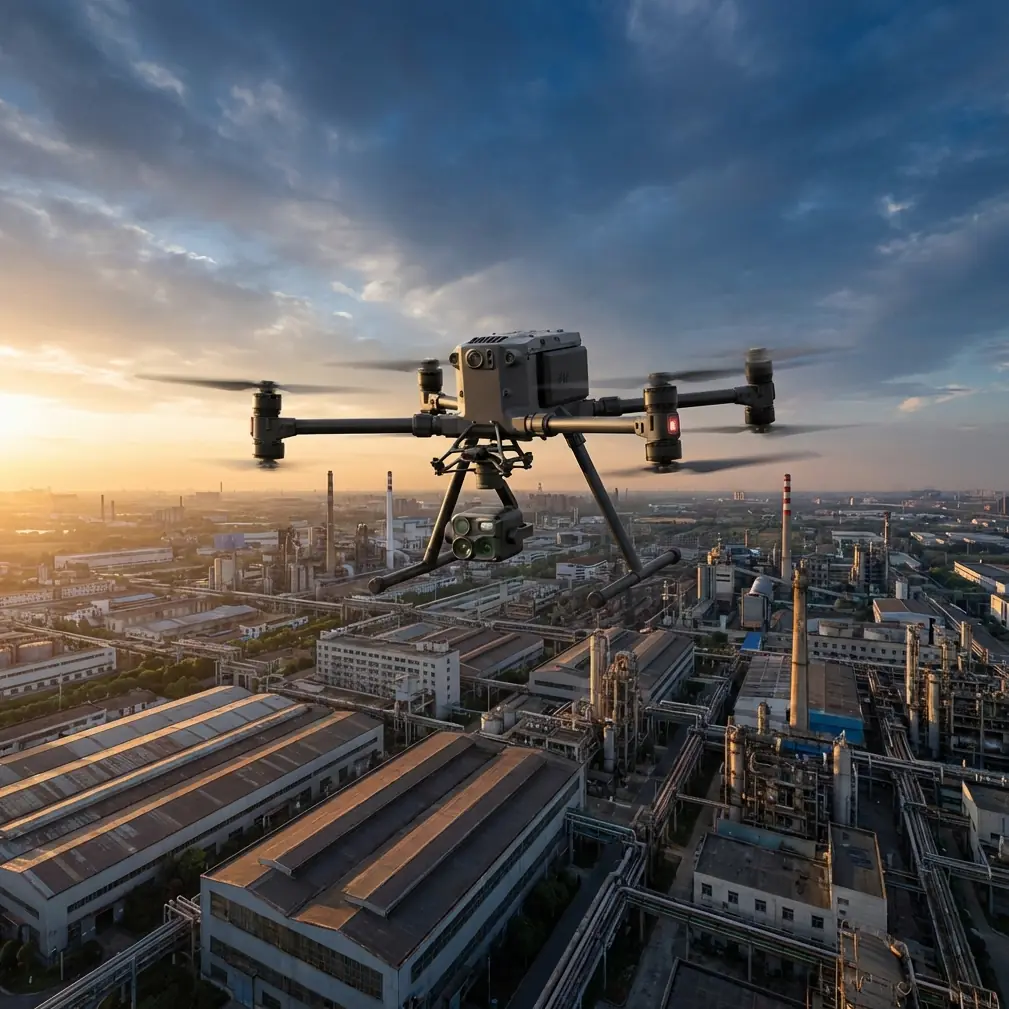
How to Use the Matrice 4T for Highway Corridor Work at High Altitude
META: Practical Matrice 4T field advice for high-altitude highway inspection and corridor operations, with antenna positioning, thermal workflow, transmission tips, battery strategy, and mapping-aware flight planning.
High-altitude highway work punishes weak planning.
Thin air reduces lift margins. Mountain weather shifts fast. Road corridors pull crews into long, linear flight paths where signal quality, battery discipline, and sensor use matter more than marketing claims. If you are using the Matrice 4T in this setting, the aircraft is only part of the equation. The real performance comes from how you build the mission around its strengths: thermal observation, stable long-range transmission, secure data handling, and efficient battery turnover.
I’m writing this from the perspective of a field operator who cares less about brochure language and more about whether a team can finish a corridor segment before the wind picks up over the pass.
The Matrice 4T is especially relevant here because highway operations at elevation often combine several jobs into one sortie. You may need to scan retaining walls for moisture patterns, inspect drainage routes, document slope instability, verify shoulder conditions, and create mapping outputs that engineers can compare over time. That blend of thermal signature analysis and photogrammetry-aware planning is where the platform makes sense.
Start with the mission, not the drone
“Spraying highways” is usually too broad to be a safe or useful flight objective with a Matrice 4T. This aircraft is better suited to the intelligence layer around highway maintenance rather than liquid application itself. In civilian infrastructure work, that means pre-operation assessment, corridor inspection, heat anomaly detection, drainage review, and geospatial documentation.
At high altitude, that distinction becomes even more valuable.
Before crews send any maintenance vehicles or treatment equipment onto the road, the Matrice 4T can be used to identify where conditions change across long stretches of pavement and roadside structure. A thermal signature that deviates from adjacent sections may indicate water intrusion, delamination, blocked drainage, or heat retention differences around repaired surfaces. If your team is trying to prioritize where to deploy limited ground resources, thermal imaging is not just a nice extra. It cuts wasted passes.
This is also where photogrammetry enters the picture. Thermal tells you where to look. Mapping tells you how that location fits into the corridor.
For steep or winding highways in mountainous terrain, I recommend separating the mission into two layers:
- Operational thermal reconnaissance
- Fast passes to identify anomalies on pavement edges, culverts, retaining structures, and slopes.
- Structured mapping capture
- More disciplined image collection tied to GCP-supported outputs when engineering-grade comparison is needed.
Trying to do both at once usually creates compromised data.
Why high altitude changes your workflow
Operators who are excellent at lowland industrial inspection sometimes struggle when they move into alpine or plateau corridors. The reason is simple: the margin for casual decisions gets smaller.
Air density affects rotor efficiency. Battery performance can feel less forgiving, especially during aggressive climbs or return legs against headwind. Transmission paths become deceptive too. You may have broad visual openness while still suffering signal degradation from terrain masking, roadside cut slopes, guardrail reflections, or the geometry of a curved mountain pass.
That is why O3 transmission is operationally significant here. Reliable digital link performance over a corridor lets you maintain cleaner situational awareness as the aircraft transitions through changing terrain. But even a strong transmission system will not compensate for poor pilot positioning or bad antenna discipline. If you want maximum practical range in highway work, antenna positioning deserves more attention than most crews give it.
Antenna positioning advice for maximum range
This is the part many teams skip, then blame the mountain.
The controller antennas should not be pointed directly at the aircraft like a flashlight. The strongest radiation pattern typically comes off the broadside of the antenna faces, not the tip. In plain field terms, you want the flat sides of the antennas oriented toward the drone’s expected flight corridor.
For highway operations, that means you should plan around the route geometry:
- If the road segment runs mostly straight ahead of you, orient the antenna faces toward the corridor centerline and keep your body position stable. Do not keep twisting with every minor heading change.
- If the aircraft is moving laterally across your position, rotate your stance and controller gradually so the broad face remains aligned with the aircraft path.
- If the route bends around a ridge or cut slope, relocate before the aircraft enters the shadowed section. Do not wait for bars to drop and then react.
- Keep the controller above vehicle roofs and metal barriers whenever possible. Standing beside a truck, leaning against a guardrail, or operating from a recessed road shoulder can reduce real-world transmission quality.
- Avoid placing your body between antennas and aircraft. Heavy winter gear, vehicle glass, and metallic roadside structures all work against you.
For maximum range in mountain corridors, elevation at the pilot position often matters more than walking a little closer to the road centerline. A slightly higher turnout with a clean line of sight can outperform a lower position that appears closer on the map.
This sounds basic. In the field, it is not. Crews under schedule pressure often launch from wherever the vehicles stopped. That habit costs more missions than people admit.
If your team wants to discuss controller setup or corridor mission planning in a practical way, you can message a field specialist here.
Build the flight around terrain breaks
A highway in high country is rarely one continuous flight environment. It is a chain of micro-environments. Bridge approach. Curved embankment. Rockfall section. Drainage crossing. Snowmelt channel. Cut slope. Open viaduct.
Treat each as a separate signal and energy problem.
With the Matrice 4T, corridor work improves when you divide long segments into manageable blocks rather than chasing the longest possible outbound leg. The obsession with maximum distance often leads teams into weak return margins. A better practice is to define logical handoff points based on terrain visibility, battery reserve, and likely inspection targets.
This matters even more if you are operating under a BVLOS framework where regulations and company procedures require conservative communication integrity and stronger preplanning. I’m not suggesting anyone exceed local rules. I’m saying that corridor jobs naturally pressure operators toward beyond-visual-line workflows, so the discipline has to start before launch: observer placement, terrain review, emergency recovery areas, and communications planning all need to be explicit.
Use thermal the way road engineers actually need it
Thermal payloads are often misused as if any colorful image is useful. On highways, it only becomes valuable when tied to a maintenance question.
Here are examples where thermal signature work with the Matrice 4T can produce meaningful civilian infrastructure insight:
Drainage failures
Temperature differences can help reveal moisture concentration patterns around culverts, ditches, and shoulder edges, especially during transitional conditions after solar loading or runoff events.Retaining wall and slope seepage
Cool zones or irregular thermal patches may indicate water movement behind structures or through unstable soil faces. This is often operationally significant because seepage can precede visible surface issues.Patch repair comparison
Sections that heat or cool differently from surrounding pavement may deserve closer review, not because thermal alone proves a defect, but because it helps crews narrow the search area.Bridge deck transitions
Edge conditions and joints can present thermal variation worth documenting for follow-up inspection.
The key is timing. Midday summer imagery can flatten useful contrast on some surfaces. Early morning or late-day windows often produce more readable separation, depending on what you are trying to detect. A thermal flight without environmental context creates pretty screenshots and little else.
Pair thermal with photogrammetry, but know the limits
The Matrice 4T is not a dedicated large-area mapping platform in the pure survey sense, yet it can support corridor documentation workflows effectively when used with discipline. If your goal is repeatable geospatial comparison, bring in GCPs where appropriate.
That detail matters.
A team may capture excellent visual and thermal observations, but without proper spatial control, comparing one hillside drainage issue against last month’s dataset can become subjective. GCP-backed work strengthens alignment between image products and engineering interpretation. On mountain highways, where slope angle and runoff paths influence decisions, that extra rigor can change whether the data is trusted.
My advice is simple:
- Use the M4T for fast anomaly finding and targeted documentation.
- Use GCP-supported photogrammetry where positional consistency matters.
- Do not promise survey-grade outcomes from casual capture patterns.
There is no conflict between these approaches. In fact, they support each other. Thermal identifies the “why look here.” Photogrammetry helps define the “where exactly is it, and how is it changing.”
Battery handling is not a side issue
Hot-swap batteries are a major operational advantage for corridor work because they compress downtime between segments. On a mountain highway, that translates directly into safer and more productive field days. You spend less time relaunching from scratch and more time preserving momentum while weather windows hold.
But hot-swap convenience should not lead to sloppy energy management.
At altitude, I advise teams to treat battery rotation as part of mission design, not just logistics. Keep packs warm before flight in cold conditions. Avoid pushing deep discharge on long return legs after climbing into wind. Log performance by segment, not just by day, because one exposed ridge section can distort your expectations for the next sortie.
The point is not merely staying airborne longer. The point is keeping a consistent reserve so the aircraft returns with options if the corridor throws a surprise at you.
Security and data chain matter on infrastructure jobs
Highway inspection data may include critical civil assets, contractor activity, and geolocated records that should not be handled casually. AES-256 encryption is significant because it helps protect the transmission and handling of operational data in professional environments where security requirements are real.
For public works departments, engineering firms, and infrastructure contractors, this is not abstract. If teams are documenting vulnerable slopes, tunnels, bridge approaches, or maintenance staging areas, the data governance conversation should happen before deployment. The Matrice 4T fits better into that environment when crews understand the difference between flying a mission and managing an information asset.
A practical field sequence for high-altitude highway missions
Here is the workflow I prefer for a real corridor day:
1. Pre-select launch points based on line of sight
Use terrain and road geometry to choose several pilot positions rather than one “main” spot. This helps preserve O3 transmission quality and reduces the chance of signal loss behind terrain breaks.
2. Match sensor objective to time of day
If the mission centers on thermal signature analysis, choose conditions that create usable contrast. If the priority is photogrammetry, prioritize lighting consistency and overlap discipline.
3. Set antenna orientation before takeoff
Align broadside to the expected flight corridor. Rehearse how you will pivot or relocate as the aircraft moves through bends, cut slopes, or elevation changes.
4. Fly short diagnostic passes first
Do not commit to full corridor capture immediately. Use brief reconnaissance legs to verify thermal usefulness, wind behavior, and transmission quality.
5. Mark anomalies for follow-up
When thermal or visual issues appear, capture enough contextual imagery for engineers to interpret the scene later. A hotspot without road position, surrounding slope view, or structural reference is weak evidence.
6. Switch to structured documentation where needed
If a section deserves comparative analysis, use repeatable capture geometry and incorporate GCPs if positional control matters.
7. Rotate batteries deliberately
Use hot-swap efficiency to maintain pace, but keep reserves conservative. The return leg at altitude is where rushed teams regret earlier decisions.
8. Secure and label datasets on-site
Separate thermal reconnaissance from mapping captures in your file structure. That saves hours later and reduces interpretation mistakes.
What makes the Matrice 4T useful here
Not every drone handles mountain corridor work gracefully. The Matrice 4T stands out because it supports a mixed inspection reality: visual context, thermal intelligence, stable encrypted transmission, and field-efficient battery swapping. Those are not isolated features. Together, they form a workflow that fits how highway teams actually operate in difficult terrain.
The most overlooked lesson is that range is rarely just about the aircraft. It is about controller orientation, pilot placement, segment design, and knowing when to move before the mountain blocks you. That single habit shift can improve more missions than chasing technical tweaks after the fact.
If your use case is highway work at high altitude, treat the M4T as a decision tool first and a flying camera second. Use thermal signature data to direct human attention. Use photogrammetry and GCP-backed workflows when the corridor needs measurable documentation. Respect battery margins. Respect terrain. And never assume open sky means clean transmission.
That is how you get useful results from the platform instead of just collecting footage.
Ready for your own Matrice 4T? Contact our team for expert consultation.