
Spraying Remote Power Lines With the Matrice 4T
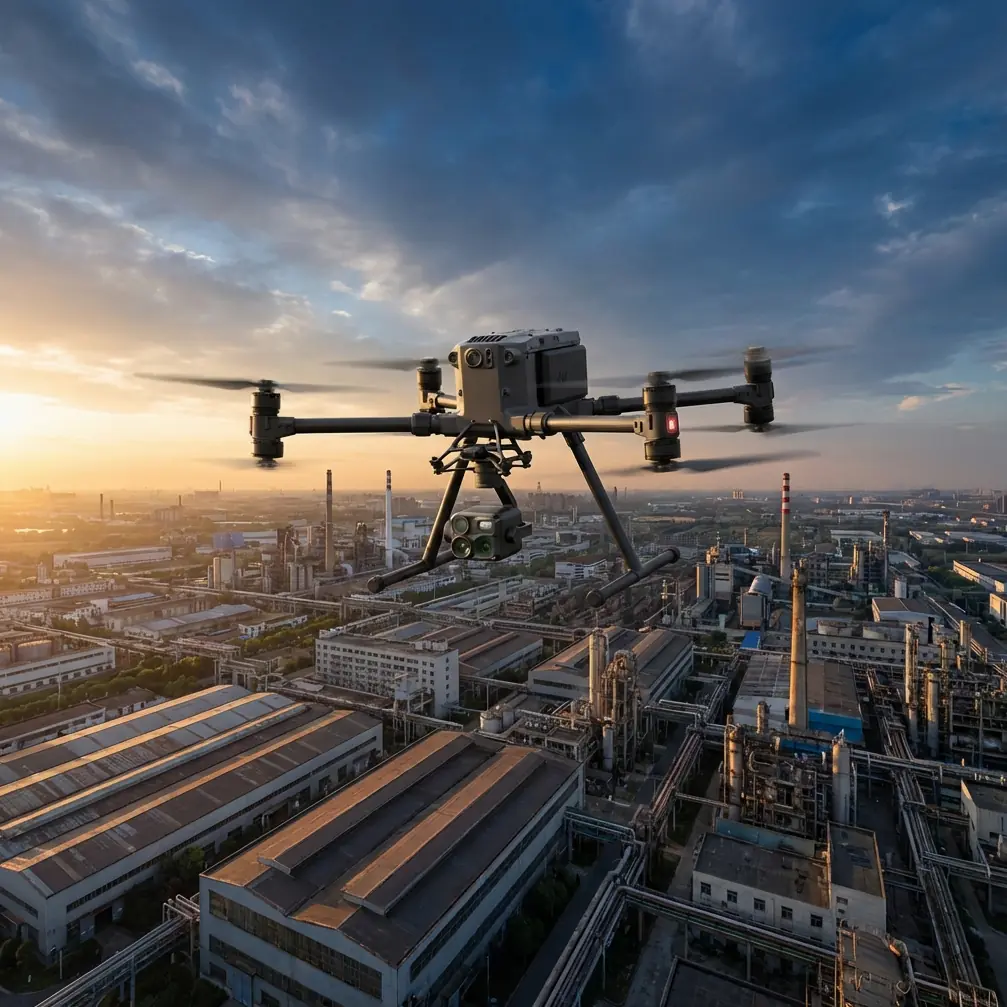
Spraying Remote Power Lines With the Matrice 4T: What Actually Matters in the Field
META: Practical Matrice 4T insights for remote power line spraying missions, including thermal use, transmission reliability, hot-swap workflow, and how campus airspace security trends affect operations.
Remote power line spraying sounds straightforward until the terrain starts making decisions for you.
On paper, the job is simple: reach hard-to-access spans, identify problem areas, apply treatment with precision, and move on before weather, signal loss, or battery limits turn a routine mission into a long recovery exercise. In the field, though, the margins are thin. Dense vegetation can break visual contrast. Heat shimmer can wash out detail. Valleys and ridgelines complicate transmission. Wildlife does what wildlife does. And when you are working near critical infrastructure, airspace discipline is no longer a nice-to-have.
That is where the Matrice 4T becomes less of a catalog item and more of an operational system.
For crews handling remote utility corridor work, especially spraying around power lines in difficult terrain, the real question is not whether the aircraft can fly. Plenty of platforms can fly. The question is whether the aircraft can maintain mission continuity when inspection, positioning, documentation, and application all need to happen in the same sortie cycle.
The real problem in remote line spraying
Power line spraying in remote areas usually starts with an access problem and ends as a data problem.
You may be trying to manage vegetation encroachment, spot invasive growth, or treat selected sections near poles, towers, and line corridors where ground access is slow or unsafe. The challenge is that line environments are visually cluttered. A corridor that looks open from a distance can hide uneven canopy height, dead branches, bird activity, or heat-loaded components that demand a closer look before any work proceeds.
That last point matters more than many teams admit. If a crew is focused only on application, they can miss conditions around the line that should change the flight plan. A thermal signature from a stressed component, for example, may not be the original reason for launching, but it becomes operationally relevant the moment it appears. A drone that can see the corridor thermally and visually lets the team make a better decision before committing to a low, slow pass.
The Matrice 4T fits this kind of work because it compresses several mission stages into one platform: route confirmation, thermal screening, visual verification, position logging, and treatment support.
Why thermal is not just an inspection extra
The most overlooked part of remote spraying work is pre-application awareness.
Teams often think of thermal payloads as something for maintenance crews, roof inspectors, or search tasks. On utility corridors, thermal data has a different value. It helps separate visual clutter from actual operational risk. A corridor can look quiet in RGB while still containing a hot connection point or abnormal heat pattern near line hardware. That does not automatically stop the mission, but it should reshape it.
In remote environments, thermal signature awareness changes how you prioritize spans. It tells you where to slow down, what to document, and where not to stack multiple tasks into one pass. That can protect equipment, improve reporting, and reduce the temptation to “finish the route” when the smarter move is to reassess.
I have seen this become very real during a dawn mission along a ridge line where the aircraft picked up movement near a treated section before the pilot saw it clearly on the visible feed. It turned out to be a large deer pushing through brush below the conductors, followed minutes later by a pair of hawks lifting off from a nearby perch. The sensors gave the crew enough early awareness to adjust altitude and timing rather than forcing the route through an active wildlife zone. That sounds like a small moment. It is not. In remote line work, a clean operation often depends on noticing what is happening around the task, not just on the target itself.
Transmission reliability matters more than spec-sheet bragging
Remote utility work has a habit of exposing weak links in communications.
Long corridors, irregular terrain, tree cover, and changing line-of-sight conditions put pressure on the command and video link. That is where O3 transmission earns its place in the workflow. Not as a marketing bullet, but as a practical stability layer when the route stops being friendly.
For a pilot managing a spraying task near power infrastructure, stable transmission affects more than control confidence. It affects timing, framing, thermal interpretation, route corrections, and safety margins. If your image feed becomes unreliable at exactly the point where the corridor tightens or vegetation thickens, you are no longer operating efficiently. You are improvising.
And remote utility jobs rarely reward improvisation.
Reliable link performance also matters when teams are documenting work products for internal review. If the mission requires evidence of treatment coverage, hazard identification, or post-pass verification, a stable downlink helps preserve continuity in the record. That becomes especially useful when mapping segments are incorporated into the mission and later aligned with GCP-backed datasets for corridor tracking or site change analysis.
AES-256 is not abstract if you work near critical infrastructure
Security conversations around drones tend to get dismissed until the worksite itself raises the stakes.
One reference point from recent industry news makes this impossible to ignore. The University of Alabama selected D-Fend Solutions’ EnforceAir system to protect campus airspace, research infrastructure, and athletic events. That is not a drone operations story on its face. It is an airspace control story. But for commercial drone crews, it sends a clear signal: more organizations that manage sensitive or high-value environments are actively monitoring the airspace above them.
That matters to a Matrice 4T operator working around substations, transmission assets, utility service areas, or adjacent institutional property. Even in a fully civilian, authorized operation, the environment is changing. Asset owners want visibility. Facilities are taking airspace security seriously. The fact that the University of Alabama deployed EnforceAir to protect campus operations and research infrastructure shows that protected airspace thinking is expanding beyond the obvious categories.
Operationally, that means two things.
First, secure communications are no longer just a procurement checkbox. AES-256 encryption has significance when your missions involve infrastructure data, route planning, imagery of restricted utility assets, or sensitive maintenance records. Protecting command and data links helps reduce exposure in environments where unauthorized air activity is under growing scrutiny.
Second, professional crews need better coordination habits. Before flying near campuses, research sites, utility control zones, or major event-adjacent infrastructure, teams should expect tighter awareness around who is in the air and why. The old habit of treating every remote corridor as an isolated worksite is fading. Airspace is becoming actively managed in more places than many operators realize.
Hot-swap batteries are really about momentum
Battery discussions often drift into endurance claims. That misses the field reality.
In remote spraying and utility support work, hot-swap batteries are valuable because they preserve mission momentum. You do not have to reassemble the mission mentally after every power cycle. You can land, replace packs, validate status, and get back into sequence without letting the whole operation unravel.
That matters when the route is long, access is difficult, and the timing window is narrow. It matters even more when weather is moving in or when multiple spans need to be treated and documented before wind picks up.
The crews who benefit most from hot-swap workflow are not the ones chasing maximum airborne minutes. They are the ones trying to maintain consistency across repeated passes. If one section of line required thermal review, another needed imagery for follow-up photogrammetry, and a third demanded precise treatment near uneven vegetation, the ability to keep the mission architecture intact through battery changes saves more than time. It saves concentration.
Photogrammetry still has a role, even in a task-led mission
Not every spraying job needs a full mapping deliverable. But ignoring photogrammetry entirely leaves value on the table.
Utility corridor teams can use targeted mapping runs to build repeatable reference surfaces for treatment planning, vegetation growth monitoring, and access analysis. When tied to GCP workflows, those datasets become more useful across seasons, especially in remote areas where terrain distortion and vegetation changes can make simple visual comparisons misleading.
This is where Matrice 4T operations get smarter. You are not choosing between inspection and mapping. You are deciding how much data discipline the corridor deserves. A short mapping segment before or after treatment can create a far better historical record than scattered stills alone. For teams managing recurring line maintenance cycles, that record helps separate anecdotal decisions from measurable change.
And measurable change is what utility managers care about.
BVLOS pressure is shaping how teams prepare now
Even if your current operation is not flying BVLOS, remote corridor work naturally pushes in that direction. Long linear infrastructure creates a use case where extended operational reach is economically attractive and sometimes operationally necessary.
That does not mean crews should stretch missions beyond their approvals. It means they should prepare their systems and procedures as if greater operational complexity is coming, because it is. Aircraft selection, transmission confidence, encryption, documentation quality, and battery workflow all become more consequential when the mission model moves from localized point work toward distributed corridor management.
The Matrice 4T is attractive in this setting because it supports disciplined operations now while keeping the door open for more advanced workflow design later. Teams can start with tightly managed visual-line missions and still build habits around route repeatability, secure handling, and data capture that scale upward.
A better way to think about the Matrice 4T on power lines
The mistake is treating the aircraft as a spraying accessory.
For remote power line work, the Matrice 4T is better understood as a decision platform that happens to support action. It helps crews decide where to fly, where to pause, what to document, what to avoid, and how to return with a cleaner record of what happened. That is the difference between using a drone and building a drone operation.
The current airspace climate reinforces this. When institutions like the University of Alabama are deploying counter-drone systems such as EnforceAir to protect campus airspace, athletic events, and research infrastructure, operators around critical civilian assets should read that as a broader market signal. Infrastructure-adjacent air operations are becoming more visible, more accountable, and more security-conscious. Flying professionally now means planning with that reality in mind.
So if you are evaluating the Matrice 4T for remote power line spraying, do not start by asking how far or how fast. Start with harder questions.
Can it help you identify thermal anomalies before a pass becomes risky?
Can it maintain a dependable O3 link in rough terrain where route corrections are constant?
Can it support encrypted workflows with AES-256 in environments where infrastructure imagery is sensitive?
Can the crew sustain tempo with hot-swap batteries instead of repeatedly rebuilding the mission?
Can the data slot into photogrammetry and GCP-backed corridor records when the operation needs more than a visual check?
Those are the questions that change outcomes.
If you are working through a specific remote power line scenario and want to compare setup options, field workflow, or sensor priorities, you can message the team here.
The Matrice 4T earns its keep when the corridor is uneven, the access is poor, the wildlife is active, the route is long, and the crew still needs clean results. In that environment, capability is not about one headline feature. It is about how many problems the aircraft solves before they become delays.
Ready for your own Matrice 4T? Contact our team for expert consultation.