
Matrice 4T Over Urban Power Lines: A Field Report on What
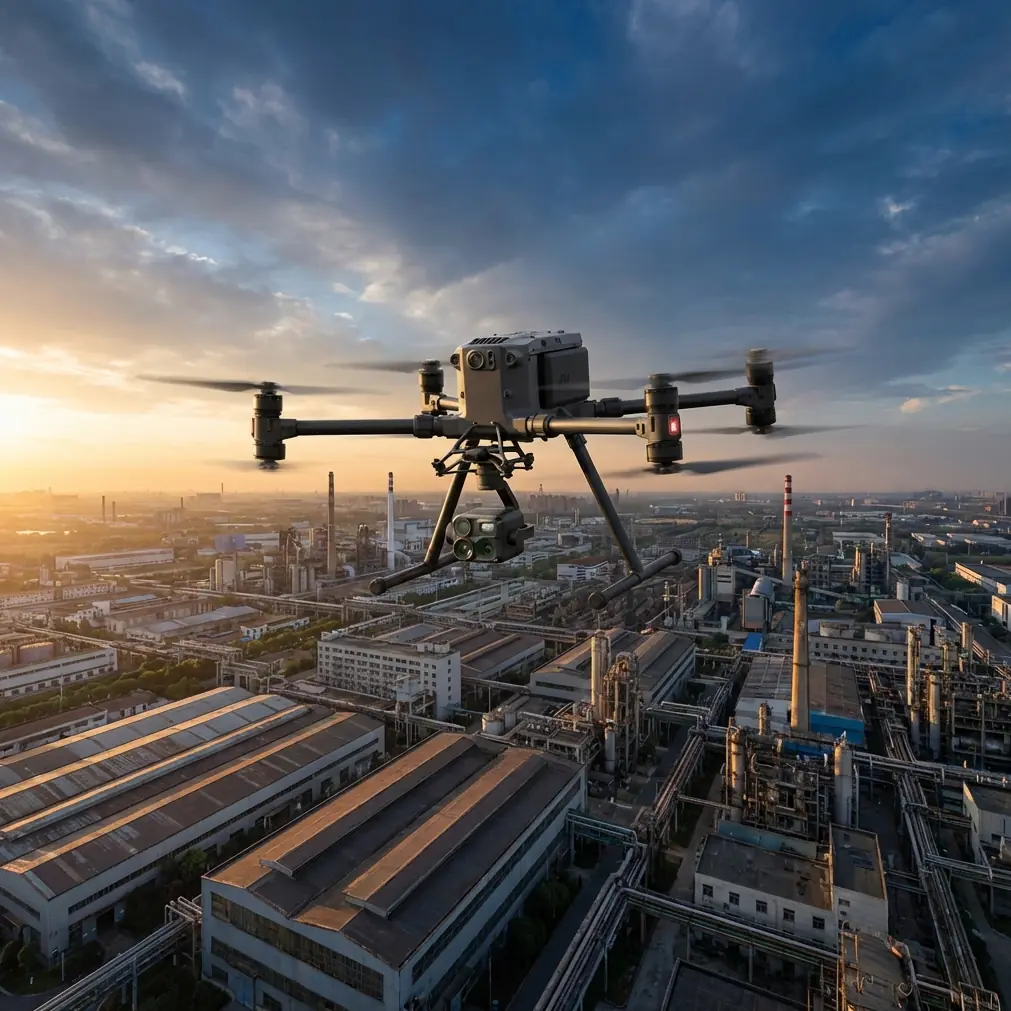
Matrice 4T Over Urban Power Lines: A Field Report on What Actually Matters
META: A practical field report on using Matrice 4T around urban power lines, with expert insight on thermal work, transmission reliability, aerodynamic relevance, and structural loading principles that shape safer civilian utility operations.
Urban power-line work punishes vague drone specs. Dense rooftops, reflective glass, narrow access lanes, traffic, RF clutter, and tight standoff distances all expose the difference between a platform that merely flies and one that can hold a stable, useful inspection profile.
That is why the Matrice 4T deserves to be discussed in operational terms rather than brochure language.
I’m writing this from the perspective of utility-focused mission design, where the aircraft is only one part of the system. The real question is whether the drone can deliver repeatable thermal and visual data over live distribution corridors in a city environment without turning each sortie into a compromise between safety, image quality, and crew workload.
For that kind of work, the Matrice 4T stands out less because of one headline feature and more because its mission logic aligns with how aerial platforms are actually engineered: you do not maximize one variable in isolation. You balance lift, control response, viewing geometry, payload usefulness, transmission integrity, and structural margin. Interestingly, that same balancing act shows up in classical aircraft design references, and it helps explain why some drone platforms feel composed in urban utility missions while others feel busy and fragile.
Why urban line work is not a normal drone job
Power-line inspection in cities is often discussed as if it were just another infrastructure task. It is not.
The crew needs to identify small thermal anomalies against a noisy background. Sun-heated façades and metallic rooftop equipment contaminate the thermal scene. Conductors run close to trees, signage, telecom clutter, and building edges. GPS quality can fluctuate. Wind behaves badly around tower faces and apartment blocks. Even a short leg can involve multiple altitude changes and angle corrections.
In this context, thermal signature quality matters more than raw flying speed. So does transmission consistency. So does the aircraft’s ability to maintain a predictable nose attitude while the operator is trying to read equipment condition rather than fight framing drift.
The Matrice 4T fits this reality well because it supports a workflow, not just a flight. The thermal camera helps isolate heat patterns before a crew commits to a closer look. The visual system supports contextual confirmation. O3 transmission improves confidence when the aircraft is working around urban interference. AES-256 matters too, especially for utilities and contractors handling sensitive infrastructure imagery, route logs, and site documentation.
That last point is often treated as an IT checkbox. In practice, it changes who can approve drone deployment. Security language like AES-256 is not decoration for enterprise buyers. It helps bridge the gap between flight operations and utility governance teams.
Thermal work over power lines depends on stability more than people admit
There is a common mistake in utility drone planning: teams obsess over sensor resolution and forget that usable thermal interpretation starts with aircraft behavior.
When you are examining connectors, insulators, jumper points, or termination hardware in an urban corridor, tiny attitude changes alter what the thermal camera sees. Angle, background, emissivity assumptions, and reflective interference all shift with the aircraft’s position. The best thermal payload in the world cannot rescue poor station-keeping.
This is where a useful comparison with traditional aerodynamic design becomes surprisingly relevant.
One reference from the aircraft design literature notes that leading-edge slat chord is typically chosen in the range of about 12% to 16% of local wing chord, with the design goal of increasing maximum lift while minimizing adverse pitch effects after deployment. That is not a drone specification, of course. But the principle carries over cleanly: performance gains are only valuable if they do not destabilize the aircraft’s attitude or overload the control problem.
That same source also points out that high-lift devices vary spanwise because real aircraft are three-dimensional compromises. A Boeing 737-200, for example, used an inboard flap arrangement of equal absolute chord while the outboard flap used equal relative chord. Again, the deeper lesson matters more than the airliner example itself. Serious aircraft are not designed with one uniform answer across the span. They are tuned by zone because aerodynamic demands are different inboard and outboard.
Why does that matter for a Matrice 4T flying utility corridors? Because it reminds us that a well-behaved inspection platform is never just “powerful.” It is balanced. In urban line work, the winning aircraft is the one that preserves control authority and camera usefulness under constantly changing local conditions. The Matrice 4T feels engineered around that operational balance, while many competing platforms with decent sensors still become harder to trust once winds shear around building corners or signal conditions deteriorate.
Transmission is not a comfort feature in the city
O3 transmission deserves a more serious discussion than it usually gets.
In open rural inspection, transmission quality is largely a convenience issue until range increases. In city utility work, it is immediate mission value. A temporary video hesitation while checking a conductor tie or connector temperature can force a re-approach, which means extra time on station, more battery consumption, and often a less efficient flight path around obstacles.
A stable link does three things for the power-line crew.
First, it reduces the number of partial passes that produce unusable records.
Second, it improves thermal decision-making because the pilot and payload operator can trust what they are seeing in near real time.
Third, it reduces the tendency to creep closer than necessary. That is a subtle but major safety benefit. Crews operating with weak link confidence often compensate by over-tightening the geometry. Better transmission supports disciplined standoff.
This is one area where the Matrice 4T has an edge in the real world. On competing systems, the nominal spec sheet may look acceptable, but once you stack urban reflections, rooftop Wi-Fi density, and blocked sightlines, transmission stability becomes the invisible differentiator. It affects inspection rhythm, not just image transport.
A note on structural logic: why strain theory still matters to drone operators
Another reference in the source material comes from structural mechanics rather than aerodynamics, and it is more useful here than it may seem at first glance.
The text describes small-displacement and small-deformation assumptions and defines relative volumetric strain as the sum of three normal strain components. It also states that principal strain directions are the three mutually perpendicular directions where angular deformation is zero, and the principal strains are ordered accordingly. In the source, that relationship appears in Equation (16-87), showing that the sum of strain components along x, y, and z equals the sum of the three principal strains.
Most pilots do not need the equation. They do need the mindset.
Why? Because utility inspection flights around power infrastructure are full of repeated micro-load cycles: acceleration, braking, yaw corrections, gust response, and landing gear contact on improvised urban launch points. If your organization wants consistent data quality and long service intervals, structural awareness matters. Small deformations accumulate long before they become obvious failures.
That has operational consequences for how the Matrice 4T should be used:
- avoid abrupt control inputs when holding thermal framing on line hardware
- use smooth lateral repositioning rather than repeated stop-start corrections
- document any recurring vibration pattern after urban missions with turbulent recirculation
- treat battery swaps and payload mounting as part of structural discipline, not just logistics
Hot-swap batteries are especially valuable here. The gain is not only reduced downtime. They allow teams to maintain mission continuity without rushed restarts, improvised power cycling, or awkward reset sequences on cramped urban staging sites. Better continuity usually means fewer unnecessary takeoff and landing cycles in a shift, which indirectly supports airframe longevity and data consistency.
The practical workflow: how I would run a Matrice 4T on urban line assignments
For a city power-line mission, I would structure the Matrice 4T workflow in three layers.
1. Corridor overview pass
Start with a conservative altitude and broad visual context. The purpose is not immediate defect confirmation. It is route familiarization, obstacle recognition, and thermal screening. This is also where O3 transmission reliability earns its place. If the downlink remains clean, the crew can mark suspect spans early and reduce random repositioning later.
If photogrammetry is required for pole environment documentation or vegetation encroachment mapping, this is the stage where a controlled visual pass can support later reconstruction. In built-up corridors, using GCP-backed ground references can improve confidence in measurements and align drone-derived outputs with asset records.
2. Targeted thermal interrogation
After suspect points are identified, move into deliberate, repeatable views. Resist the temptation to free-fly each anomaly from scratch. Build a consistent angle set for connectors, insulators, switchgear housings, and line transitions. This creates better comparability across assets and dates.
Thermal interpretation in urban scenes is only as good as discipline. The Matrice 4T helps because the platform can support these slower, controlled looks without feeling cumbersome.
3. Confirmation and reporting pass
Use the visible camera to confirm context around any thermal event. A heat irregularity without visual context is rarely enough for a maintenance decision. Shade, reflectivity, neighboring HVAC exhaust, and solar loading can create misleading signatures.
At this point, secure transmission and encrypted handling of captured data matter as much as the image itself. Contractors serving municipal or utility clients should not underestimate how much AES-256 style protections can influence data acceptance and internal approval.
If your team is refining this kind of utility workflow, I usually recommend discussing mission layout before the first field day rather than after the first missed dataset; you can reach out here: https://wa.me/85255379740
Where the Matrice 4T clearly outperforms weaker alternatives
Some competing drones are fine in open-site roof inspections and still underperform once the task shifts to urban line corridors. The gap usually appears in four places.
Link confidence. A platform that drops visual smoothness or introduces latency under city RF pressure slows the whole crew.
Thermal usability. Not just thermal presence. Usability. The operator needs stable framing and quick interpretation, not a sensor that looks impressive on paper but is difficult to exploit over cluttered backgrounds.
Mission continuity. Hot-swap battery logic matters when the aircraft is part of a workday system, not a hobby session. Utility crews do not want stop-start friction.
Enterprise handling. AES-256 and broader secure workflow features matter when asset imagery becomes part of contractor deliverables, compliance records, and infrastructure documentation.
This is where the Matrice 4T separates itself. It is not merely capable of flying near power lines. It supports the boring, demanding disciplines that make repeat inspection programs work month after month.
The bigger engineering lesson behind this platform
The most useful thing in the reference material is not a single formula or flap dimension. It is the engineering worldview behind them.
In the aerodynamic text, a leading-edge device is sized to gain lift without creating unacceptable pitch penalties. In the structural text, deformation is described through component relationships and principal directions rather than vague intuition. Those are reminders that aircraft performance is always a managed compromise.
That same logic should guide how we evaluate the Matrice 4T for urban utility work.
Do not ask whether it has thermal. Ask whether the thermal workflow remains credible in reflective city geometry.
Do not ask whether it has transmission. Ask whether the link supports disciplined standoff around infrastructure.
Do not ask whether batteries can be changed quickly. Ask whether the energy system supports stable shift planning and clean data continuity.
On those questions, the Matrice 4T answers better than many alternatives.
For urban power-line teams, that is the difference between owning a drone and running a dependable inspection operation.
Ready for your own Matrice 4T? Contact our team for expert consultation.