
Matrice 4T for Solar Farm Spraying in Extreme Temperatures
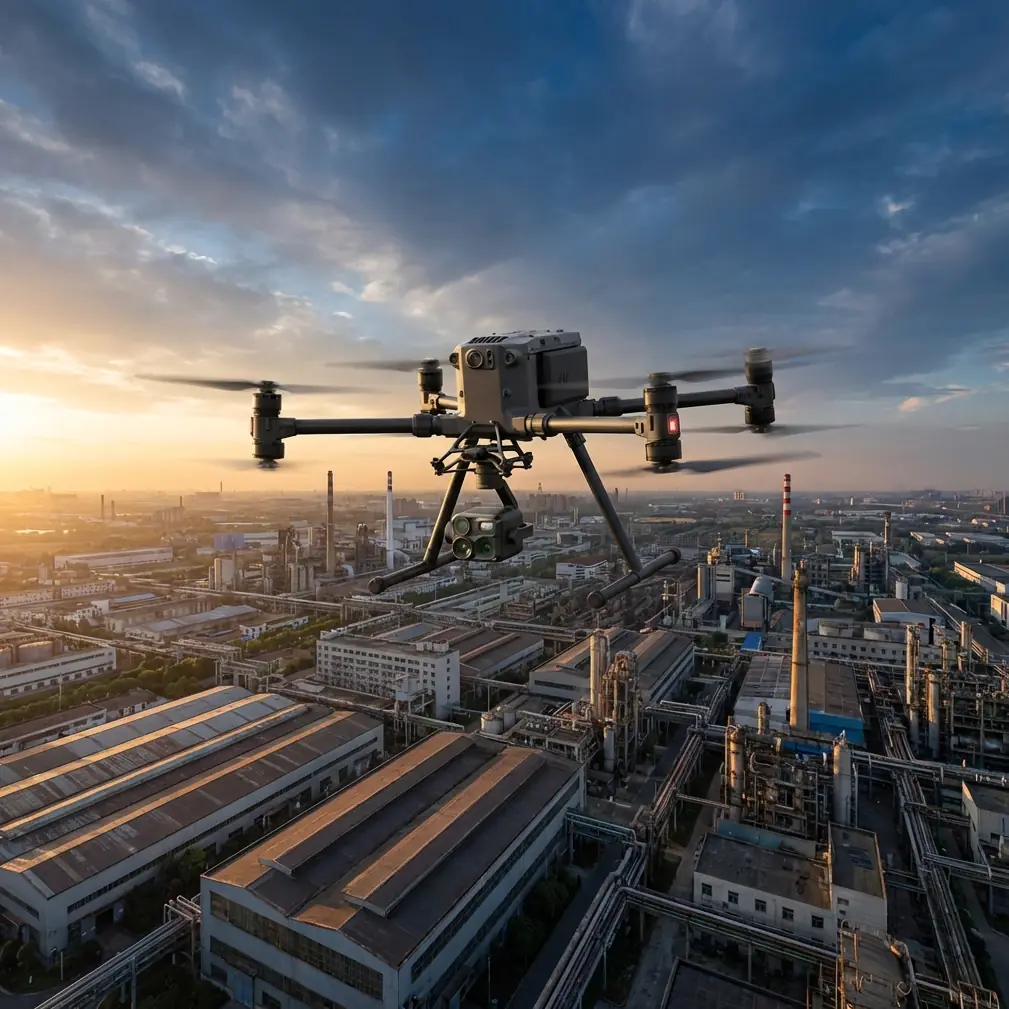
Matrice 4T for Solar Farm Spraying in Extreme Temperatures: A Technical Review from the Field
META: Expert review of using the Matrice 4T around solar farm spraying operations in extreme temperatures, with practical insight on corrosion control, thermal workflows, materials logic, and accessory integration.
When people discuss the Matrice 4T, the conversation usually drifts toward sensors, zoom range, thermal imagery, and mission efficiency. All fair points. But for solar farm work in punishing heat, coastal humidity, blowing dust, and chemically active maintenance environments, the more interesting question is simpler: how well does the aircraft hold up when the operating environment tries to degrade it every day?
That is the lens I want to use here.
The Matrice 4T is not a crop sprayer, and it is not the machine doing the liquid application itself in a solar cleaning or treatment workflow. In the field, though, it can become the command aircraft that identifies heat anomalies, maps panel blocks, verifies coverage, checks runoff pathways, and keeps a spraying or surface-treatment operation honest in conditions that are hard on both electronics and structure. If you are managing utility-scale solar assets in desert heat or near coastal air, durability is not a side topic. It shapes uptime, inspection confidence, and maintenance cost.
What makes this particularly relevant is that the best answers are not hidden in marketing language. They come from aircraft design logic that has been understood for years: water, salts, pollutants, trapped condensation, and material mismatch do more damage over time than many teams expect.
Why corrosion logic matters even for a modern enterprise drone
One of the reference texts behind this article, an aircraft materials handbook, makes a blunt point: water acts as an electrolyte, and once industrial pollutants, sea spray, or salts are dissolved into it, electrochemical corrosion accelerates. That sounds abstract until you picture a drone leaving an air-conditioned vehicle, launching into a 42°C solar field, then returning with condensation building in places the pilot cannot see.
That same source identifies drainage as one of the most important anti-corrosion design factors. The idea is straightforward. Rain, wash water, condensation, and humid air should not be allowed to collect in hidden areas. They need a path out, or at least a way to ventilate and dry.
For Matrice 4T operators supporting solar farm spraying in extreme temperatures, this has direct operational significance. The aircraft may not be submerged in harsh liquids, but it often works around mist, dust bonded with moisture, panel wash residue, and thermal cycling that encourages condensation. If moisture remains trapped around joints, fasteners, landing interfaces, payload mounts, or accessory brackets, long-term reliability starts to slide quietly rather than dramatically. By the time symptoms appear, they often look like intermittent electrical issues, cosmetic oxidation, rough-fitting accessories, or inconsistent gimbal behavior rather than obvious structural distress.
The old aircraft guidance still holds: prevent moisture ingress where possible, encourage drying where you can, and never treat hidden joints as harmless.
Material choice is not just about peak strength
Another detail from the same handbook is unusually useful in a drone context. It argues against selecting materials on strength alone and instead recommends a broader balance: strength, fracture toughness, corrosion resistance, and economics. The source even gives a concrete tradeoff example, noting that accepting a roughly 10% to 15% reduction in strength can be worthwhile if it buys significantly better resistance to intergranular corrosion, exfoliation, and stress corrosion cracking, as with 7075-T73.
That matters because many drone buyers unconsciously assume “stronger” always means “better.” In solar farm operations, especially near coastlines or in aggressive industrial atmospheres, that is the wrong instinct. The better question is whether the structure, fasteners, accessory interfaces, and landing system materials are chosen for the actual environment.
No, I am not claiming the Matrice 4T uses that specific alloy in a specific location. The point is broader and more practical. When evaluating a platform for repetitive deployment in extreme conditions, the mature engineering mindset favors survivability over headline stiffness. If a drone and its accessories are designed around realistic environmental stress rather than lab-clean assumptions, you gain more than durability. You reduce inspection burden, prevent premature replacement cycles, and avoid the kind of creeping degradation that undermines thermal repeatability and mapping accuracy.
For a solar O&M team, that translates to fewer questionable flights and more confidence in trend data. A thermal signature only helps if the platform capturing it behaves consistently from week to week.
The landing system is an underrated stress point
The helicopter design reference adds another piece that deserves more attention than it usually gets. It highlights landing gear verification through drop testing, static testing, stiffness and damping testing, and ground resonance-related evaluation. It also notes that material selection for structural and landing components must align with load, function, and environmental conditions.
Again, this is not because the Matrice 4T is a helicopter. It is because the principle is universal. The landing system is where environmental abuse becomes mechanical abuse.
Solar farms are not tidy airport ramps. You are often taking off from crushed stone, compacted dust, uneven service roads, or temporary pads exposed to high surface temperatures. During spraying support missions, the aircraft may cycle repeatedly for battery swaps while crews and vehicles move nearby, creating grit, vibration, and abrupt landing conditions. If the drone also carries third-party add-ons, the landing geometry and impact loads can change subtly.
This is where operators should think like airframe engineers. A platform used in these conditions needs not only capable sensors but also predictable landing behavior and robust structural interfaces. Repeated hard set-downs on hot surfaces can do more to shorten service life than many long-range cruise segments.
The reference’s emphasis on stiffness, damping, and static validation is a reminder to inspect more than propellers and lenses. Check landing legs, foot pads, accessory brackets, gimbal dampers, payload latches, and battery seating surfaces. On a thermal inspection mission tied to a spraying window, a small mechanical inconsistency can trigger vibration, image blur, or unstable hover precisely when you need clean comparative data.
Where the Matrice 4T fits in a solar spraying workflow
For this reader scenario, the Matrice 4T’s value is not “spraying.” It is orchestration.
A typical workflow looks like this:
- Pre-treatment thermal sweep to identify hotspot clusters, inverter-adjacent anomalies, soiling patterns, or unusual panel strings.
- Rapid photogrammetry or structured visual capture to document the exact treatment area and establish location control, ideally with GCP-backed checkpoints where repeatability matters.
- Oversight during the cleaning or surface-treatment phase to monitor crew progress, detect missed zones, and flag runoff or environmental concerns.
- Post-treatment verification using thermal and visible imagery to confirm whether the intervention actually changed the panel performance pattern.
That is where the sensor mix on a thermal-capable enterprise aircraft earns its keep. Thermal data gives you anomaly prioritization. Visual zoom helps verify whether the issue is likely soiling, hardware shading, cabling, debris, or a failed component. Mapping output lets teams organize treatment and maintenance across large block layouts instead of working from rough descriptions.
And in extreme temperatures, speed matters. Solar modules can heat hard and fast. If you are trying to compare thermal states before and after a treatment window, long delays between sorties reduce the quality of your interpretation. Hot-swap batteries become operationally meaningful here, not as a convenience feature but as a way to preserve temporal consistency in thermal review.
Third-party accessories can make the platform more useful than the spec sheet suggests
This is also where a well-chosen third-party accessory can elevate the Matrice 4T from a survey aircraft to a workflow anchor.
One accessory I have seen make a tangible difference is a high-visibility strobe or beacon package mounted specifically for industrial site operations. On a sprawling solar farm in heat shimmer and airborne dust, visual reacquisition matters more than people admit. Crews, service vehicles, and spray teams need to identify the aircraft instantly, especially during low-angle light or when the background is nothing but mirrored panel rows. A good beacon kit does not change sensor performance, but it improves coordination, launch recovery discipline, and safe handoff between aerial and ground teams.
The best accessories are not flashy. They solve friction. In this type of mission, that can include landing gear extensions for rough surfaces, transport-friendly protective covers that reduce contamination during vehicle moves, or shade-management kits for the pilot station so thermal interpretation is not compromised by screen washout.
If you are comparing setup options for harsh-environment solar work, it is worth discussing mission-specific accessories with an experienced integrator through this direct WhatsApp channel.
Transmission security and remote operations are part of the reliability equation
The context around Matrice 4T often includes O3 transmission, AES-256, and BVLOS planning. Those are not side notes in large solar deployments.
A utility-scale site can stretch visual line management, especially when terrain, fencing, and access roads force awkward launch points. Strong transmission architecture matters because signal instability ruins more than pilot confidence. It affects the continuity of thermal assessment, the timing of intervention checks, and the quality of post-event documentation. If the link is robust enough to support consistent image review across distance and heat shimmer, the aircraft becomes far more useful as an operations platform.
AES-256 matters for a different reason. Solar farm owners and EPC contractors increasingly treat imagery, defect maps, and maintenance records as sensitive operational data. Secure transmission is not just an IT talking point. It supports tighter handling of infrastructure imagery, treatment logs, and performance-related evidence tied to warranty or contractor accountability.
As for BVLOS, any actual use has to follow local rules and approvals. Still, the planning mindset behind BVLOS readiness is valuable even for standard operations. It pushes teams toward cleaner route design, stronger communication procedures, better battery discipline, and more formalized emergency contingencies. Those habits improve short-range missions too.
Corrosion control after assembly is the forgotten maintenance layer
One of the most practical facts in the source material concerns post-assembly corrosion inhibitor treatment. The handbook describes applying a thin-film water-displacing rust preventive after assembly so the inhibitor can penetrate joining surfaces, then leave a protective film once the solvent evaporates. It also notes that, depending on the environment, reapplication may be appropriate every few years, or even every two to three years.
That is an old-aircraft idea with real relevance to enterprise drone fleets.
The operational takeaway is not that you should start spraying random chemicals across a Matrice 4T. It is that post-assembly protection and periodic environmental maintenance should be intentional, documented, and appropriate to the platform. In coastal solar sites, polluted industrial zones, or locations with frequent washdown activity, a maintenance schedule that ignores hidden joints and interface surfaces is incomplete.
For fleet managers, this means establishing a maintenance protocol that includes:
- contamination checks after humid or dusty missions
- careful drying after exposure to mist or condensation
- inspection of joining interfaces and mounts
- environment-based maintenance intervals rather than calendar guesswork
- accessory removal and cleaning, not just airframe wipe-downs
The point is discipline. The source text stresses that corrosion control only works when design, production, quality, and engineering personnel share the same understanding and execute consistently. In a drone operation, that translates into pilot, technician, and asset-management alignment. If one person treats cleaning seriously and the next person rushes storage while moisture remains trapped, the chain breaks.
My view: why the Matrice 4T is compelling here
The Matrice 4T makes sense for extreme-temperature solar farm support because it compresses multiple tasks into one aircraft: thermal reconnaissance, visual verification, location-aware documentation, and post-treatment review. That alone can simplify field operations.
But the bigger story is whether your team uses it with an airworthiness mindset.
The two references behind this article point to the same lesson from different angles. First, hidden moisture and corrosive contaminants are long-term structural threats, so drainage, sealing, inspection access, and protective treatment matter. Second, structural and landing-system materials must be judged in context, with testing and environment suitability carrying as much weight as headline mechanical performance.
Apply that thinking to the Matrice 4T, and you stop asking whether it can fly a hot solar site. It can. The better question is whether your operating model preserves its precision after months of heat, dust, condensation, rough landing zones, and repetitive deployment around treatment activities.
That is where good fleets separate themselves from expensive fleets.
If your thermal signature data has to stand up over time, if your photogrammetry outputs need repeatable geometry, if your crews rely on fast battery turns under punishing sun, and if your site conditions are rough enough to expose weak maintenance habits, then the Matrice 4T becomes more than a sensor platform. It becomes a test of how professionally your operation handles environment, structure, and data continuity.
That is the standard I would use.
Ready for your own Matrice 4T? Contact our team for expert consultation.