
Using Matrice 4T Around Urban Solar Farms When Conditions Tu
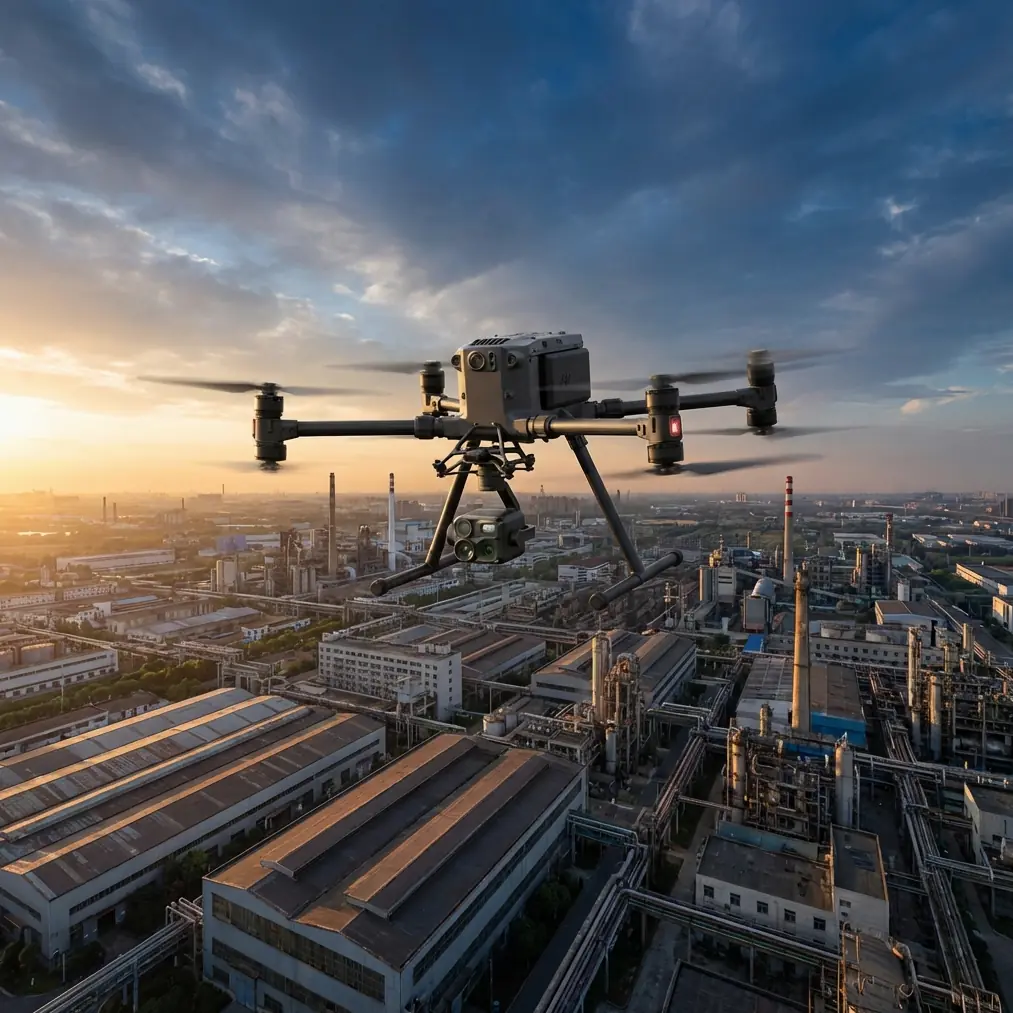
Using Matrice 4T Around Urban Solar Farms When Conditions Turn Mid-Flight
META: A field-focused look at how Matrice 4T can support urban solar farm operations with thermal insight, stable transmission, secure workflows, and disciplined mission planning when weather shifts.
Urban solar sites look simple from the street. Rows of panels. Predictable geometry. Easy access, at least on paper.
In practice, they are awkward places to work from the air. Roof edges, HVAC clutter, reflective glass, narrow operating windows, variable wind corridors between buildings, and a constant need to avoid wasted passes all complicate the job. If the mission involves spraying, inspection support, or maintenance coordination, the aircraft has to do more than stay airborne. It has to hold its position, preserve data quality, and keep the crew confident when the environment stops behaving.
That is where the Matrice 4T becomes interesting—not as a generic “smart drone,” but as a platform that makes sense when urban solar work gets messy.
I want to frame this from a real operations perspective: a mission starts in stable weather, then conditions change halfway through. Wind begins to roll over nearby structures, surface temperatures shift, visibility contrast changes, and the crew has to decide whether to continue, adjust the pattern, or bring the aircraft back. Those moments reveal what actually matters in an enterprise platform.
The real problem at urban solar farms
Urban solar farms create two overlapping challenges.
First, there is the site itself. Panel arrays are repetitive, but the air around them is not. Wind gets deflected by parapet walls and neighboring structures. Heat radiates unevenly from roofs and mechanical equipment. GPS-rich skies can still become operationally tricky because the physical environment forces tighter movement discipline than open-field work.
Second, there is the workflow. Nobody wants a disconnected mission where one flight gathers thermal imagery, another collects visible-light data, and a third is needed because the first two sets do not align. Teams need actionable information quickly. If a panel string shows a thermal anomaly, they need to relate that heat pattern to location, orientation, and maintenance priority without guessing.
The Matrice 4T fits this kind of work because it can act as a decision platform, not just a camera carrier. Thermal signature analysis, photogrammetry support, secure transmission, and stable airborne behavior all become part of one chain of evidence.
Why the “weather changed mid-flight” moment matters
A lot of drone content treats weather as a checklist item. I think that misses the point.
The harder question is what happens after takeoff, when the environment changes enough to degrade confidence but not enough to force an automatic abort. That gray zone is where operators either lose mission efficiency or prove the value of their platform.
Imagine a midday urban solar operation. The mission begins with a clean grid over panel rows. The thermal camera is producing useful contrast because some strings are warming differently than expected. Then a cloud bank moves in. At nearly the same time, wind begins curling across the roofline from the west-facing edge of a neighboring structure. Reflections flatten visual contrast. The aircraft now has to maintain positional discipline while the operator re-evaluates thermal interpretation in real time.
This is exactly where transmission reliability and aircraft control quality matter more than headline specs. O3 transmission is not just a convenience in that situation. It directly affects whether the pilot can keep clean situational awareness while standing in an imperfect urban launch position. When environmental noise increases—physical or visual—the last thing the crew needs is a weak data link or delayed image feedback.
And if the mission data includes asset condition information or customer infrastructure records, AES-256 encryption also stops being a brochure term. It becomes operationally significant. Urban energy assets are often tied to commercial tenants, utility partners, or facility managers who care about where their site data travels and how it is protected.
Thermal isn’t useful unless it is tied to context
The biggest misunderstanding about thermal work on solar assets is that heat alone solves the problem.
It does not.
A hot area on a panel can indicate a fault, contamination, shading effect, or a temporary artifact caused by changing irradiance. Thermal only becomes valuable when paired with exact position and image context. That is why photogrammetry concepts still matter, even on missions that are not pure mapping jobs.
If you use the Matrice 4T to identify thermal anomalies, you also want a structured visual record that supports maintenance follow-up. That may include repeatable flight lines, consistent overlap, and control discipline that makes downstream comparison easier. On larger or more regulated sites, GCP-backed workflows can strengthen location confidence when teams are building maintenance reports or comparing recurring issues across time.
This is where the old aerodynamic testing principles from aircraft design still have surprising relevance. One reference point from wind tunnel methodology is the value of revealing the nature of the flow field around the aircraft and its surroundings in order to build the correct physical model. That idea matters here. Urban solar operations are not just about what the camera sees on the panel surface. They are also about understanding the air movement and thermal environment around the site so operators do not misread unstable conditions as equipment faults.
Another reference detail worth pulling forward is the emphasis on matching key physical characteristics when validating behavior—mass distribution, structural stiffness, and geometry are treated as significant because they affect how an airframe responds under changing aerodynamic loads. For drone operators, the translation is practical: not every airframe responds the same way when wind begins to shear across rooftop edges. A platform that remains predictable under changing load and airflow conditions will preserve better image quality and safer flight margins.
Why six-degree-of-freedom thinking belongs in drone operations
One detail from the source material stands out: a six-degree-of-freedom servo system was used to place a test model at the next motion position and attitude so aerodynamic force and moment data could be measured point by point along a trajectory.
That sounds far removed from a commercial drone mission, but the operational lesson is direct. Aircraft behavior is never just “forward movement.” Position and attitude are linked. When conditions shift around an urban solar site, the drone must constantly manage those six degrees of freedom to keep the sensor pointed correctly and the data trustworthy.
For a Matrice 4T crew, that means:
- maintaining stable orientation over repetitive panel rows,
- minimizing yaw-induced framing inconsistency,
- compensating for wind without smearing thermal interpretation,
- and preserving enough precision that maintenance teams can trust what they are seeing.
This matters even more if the site team is trying to coordinate multiple tasks in one sortie: identify hot modules, document visible damage, flag debris accumulation, and confirm whether access crews need to mobilize.
The quality of that output depends on controlled aircraft attitude, not just sensor resolution.
When urban wind starts interfering with the mission
Let’s go back to the weather shift.
The mission is halfway complete. Wind increases as the aircraft reaches the southern section of the array. The pilot notices slight course correction activity while holding line spacing. A less capable platform might force a simple decision: continue and accept degraded data, or stop and reschedule.
With the Matrice 4T, the smarter response is to adapt the operation without losing the mission objective.
The thermal pass may be tightened to focus on priority strings first. The crew can reduce unnecessary repositioning, maintain better stand-off from turbulence near roof structures, and rely on strong live transmission to judge whether thermal contrast is still diagnostic. If contrast has weakened because cloud cover changed the heating profile, the visible or zoom payload becomes more important for documenting context. The point is not that the drone magically defeats weather. It is that the platform gives the crew enough control and information to make a disciplined call before data quality collapses.
That is a more valuable capability than raw endurance claims.
Hot-swap batteries also fit into this operational picture. On a constrained urban site, time lost during battery turnover can break workflow rhythm, especially if the crew is trying to capture a narrow thermal window. A hot-swap process reduces interruption and helps teams keep momentum when conditions are still usable but evolving.
Secure operations matter more in cities
Urban infrastructure jobs carry a different risk profile than open agricultural work.
You may be flying near commercial buildings, power equipment, private rooftops, or sensitive industrial assets. Site owners often want proof that image transmission and stored mission data are handled responsibly. AES-256 matters here because it supports a stronger security posture for customer data, inspection records, and site imagery that may reveal layout details or equipment conditions.
This is also why BVLOS gets discussed so often in enterprise drone planning, even if many urban solar missions remain within visual line of sight. The broader point is scalability. A platform and workflow that can support disciplined, secure, repeatable operations today is easier to build into more advanced inspection programs tomorrow, whether those involve larger campuses, distributed rooftop portfolios, or corridor-linked energy sites.
Don’t confuse “spraying” with a generic drone task
The prompt around spraying solar farms deserves precision.
On urban solar sites, spraying-related work has to be approached carefully and within local compliance requirements. In many cases, the aircraft’s role is not direct broad-acre application, but site assessment, hotspot confirmation, contamination mapping, access planning, and post-treatment verification. The Matrice 4T is especially strong in that support role because it can help teams determine where intervention is actually needed before crews commit resources.
That can save time on panel cleaning, targeted treatment, or maintenance routing. It also reduces unnecessary activity near sensitive rooftop areas.
If your team is trying to build a workable procedure for urban solar missions, a quick project discussion can help clarify whether the aircraft should be used for thermal diagnosis, visual documentation, route planning, or integrated maintenance support. A practical starting point is to message a site workflow specialist here.
What the source material quietly teaches drone teams
The aircraft design references behind this article are not about the Matrice 4T specifically, but they point to something many drone operators overlook: reliable aerial work is built on disciplined understanding of airflow, structure, motion, and data validity.
Three source details are especially useful for enterprise UAV crews:
Flow-field measurement exists to reveal the real nature of airflow around the aircraft and surface.
Operational significance: on urban solar sites, rooftop turbulence and heat plumes can alter flight stability and sensor interpretation. Crews who understand the local air environment produce better data.Flutter-related testing requires similarity in geometry, mass distribution, and stiffness.
Operational significance: aircraft behavior under dynamic load is not accidental. Stable performance in wind depends on how the platform is designed and how predictably it responds to structural and aerodynamic inputs.A six-degree-of-freedom system can map trajectory point by point with corresponding force, moment, and attitude data.
Operational significance: precision missions depend on managing full aircraft motion, not just route lines on a screen. For solar work, that translates into cleaner thermal reads, sharper visual records, and more trustworthy maintenance decisions.
There is another subtle lesson in the load and stiffness reference. It describes how gravity components and coupled motion between different degrees of freedom affect the system response. For drone crews, the takeaway is simple: when the aircraft banks, yaws, or corrects laterally in gusty rooftop conditions, those motions are connected. If you ignore the coupling, you may think you have good coverage while the sensor geometry has already degraded.
That is why experienced operators watch aircraft attitude and data quality together.
The Matrice 4T’s real value on solar work
For urban solar operations, the Matrice 4T earns its place when it helps teams answer three questions quickly:
- Where is the anomaly?
- Can we trust what we are seeing?
- Can we keep collecting useful data as site conditions change?
Thermal signature helps isolate suspect modules or strings. Photogrammetry discipline and GCP-aware workflows help anchor those findings spatially. O3 transmission helps maintain control and visual confidence in difficult urban positions. AES-256 supports secure handling of site information. Hot-swap batteries keep the workflow moving when the weather window is tight.
That combination is what matters. Not a feature list in isolation.
A drone used over solar assets has to turn unstable real-world conditions into stable decisions. If the crew launches under clean skies and finds themselves dealing with shifting wind and changing thermal contrast ten minutes later, the right platform does not remove complexity. It gives them the control, visibility, and data continuity to work through it professionally.
That is the standard urban energy sites deserve, and it is the lens through which the Matrice 4T should be judged.
Ready for your own Matrice 4T? Contact our team for expert consultation.