
Spraying Venues in Windy Conditions With the Matrice 4T
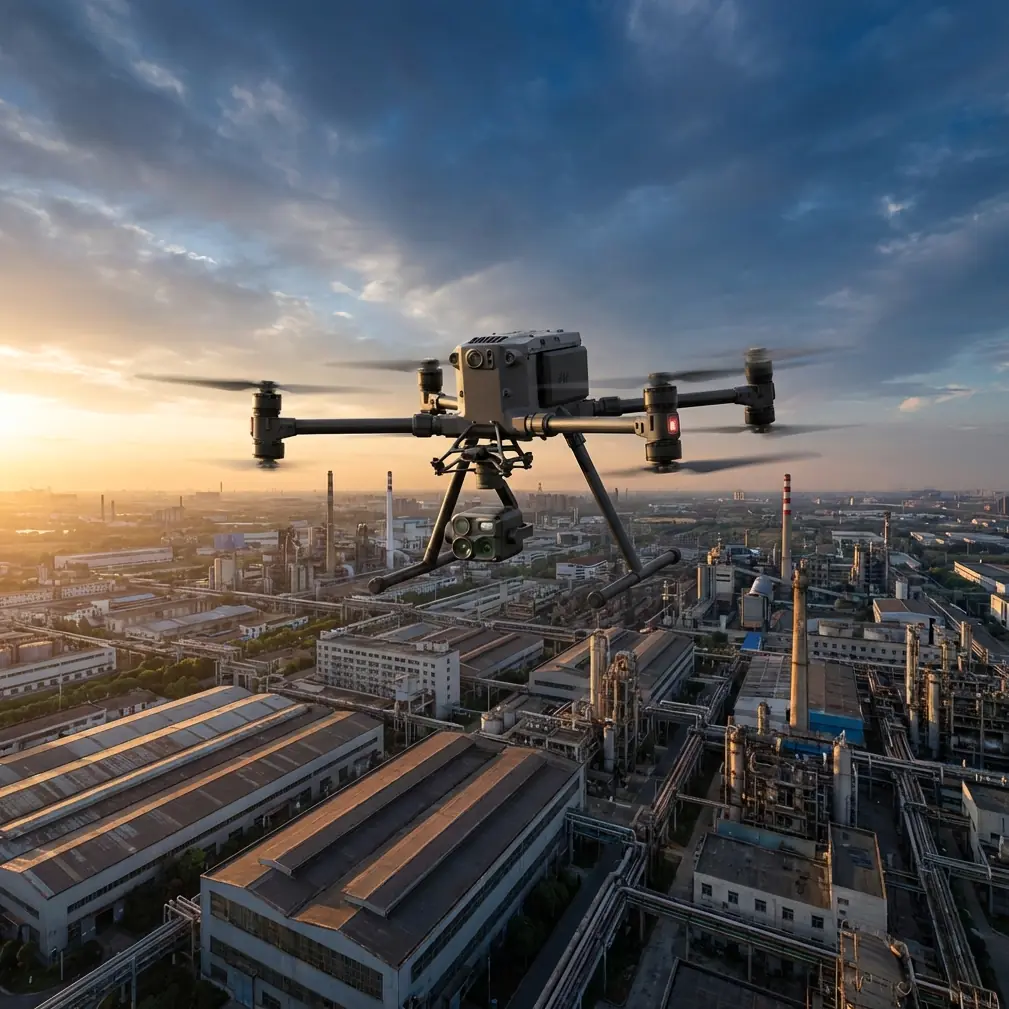
Spraying Venues in Windy Conditions With the Matrice 4T: What Actually Works
META: Expert field guidance on using the DJI Matrice 4T around windy spraying venues, with practical advice on thermal imaging, interference management, antenna adjustment, transmission stability, and workflow planning.
Wind changes everything at a spraying venue.
It shifts drift patterns, pushes aircraft off line, shakes visual confidence, and exposes every weak point in your workflow. If you are using a Matrice 4T around agricultural blocks, greenhouse edges, orchards, treatment corridors, or mixed-use spraying sites, the challenge is not simply “can the drone fly in wind?” The real question is whether you can still gather clean, actionable data when airflow, signal noise, and site complexity all start stacking against each other.
That is where the Matrice 4T earns its place. Not as a sprayer, because it is not built for liquid application, but as a support platform that helps teams assess conditions before spraying, document the site during operations, and verify outcomes afterward. In windy venues, that support role becomes even more valuable. Good intelligence reduces bad decisions. And bad decisions become expensive very quickly once wind enters the picture.
The real problem at windy spraying venues
Most operators initially focus on aircraft stability. That matters, of course, but it is only one layer.
Windy treatment sites create three operational problems at the same time:
- Unstable situational awareness
- Reduced image consistency for mapping and inspection
- Higher risk of transmission issues, especially near electrical infrastructure or metal structures
A spraying venue often includes more than open field. You may be working around pumps, utility lines, irrigation control systems, steel sheds, mesh fencing, pivot systems, or temporary staging vehicles. Each one can complicate radio performance. If there is electromagnetic interference in the area, even a capable transmission system needs proper handling.
On top of that, wind can make visual interpretation harder. Tree canopies move. Thermal differences appear unevenly. Dust or mist may obscure detail. A pilot who relies only on a standard visual feed can miss subtle signs that affect spraying decisions, such as uneven wetness, heat stress bands, blocked irrigation sections, or overspray movement toward sensitive boundaries.
The Matrice 4T is strong because it brings several sensing tools into one platform. In windy environments, that sensor fusion matters more than headline specs.
Why the Matrice 4T makes sense before, during, and after spraying work
The Matrice 4T’s value around spraying operations comes from how it combines visible imaging, thermal data, and a transmission stack built for professional fieldwork.
The thermal camera is especially useful when wind complicates visual interpretation. A thermal signature can reveal stressed vegetation, irrigation inconsistency, pooling, or residual heat differences around equipment and treatment zones that do not stand out in standard RGB footage. That does not replace agronomy. It sharpens the operator’s understanding of what is happening on the ground before a spray team commits to a route or returns for a follow-up pass.
Then there is the operational side. If you are documenting a venue for compliance, treatment planning, or post-job review, consistent image capture matters. Wind introduces blur, angle variation, and overlap problems that can weaken photogrammetry outputs. This is where disciplined flight planning matters more than raw drone capability. The Matrice 4T can support structured site capture, but in wind, your mission geometry needs to be tightened and your expectations adjusted. Ground control points, or GCPs, become more than a mapping best practice. They are a practical safeguard against drift-related inconsistencies in larger stitched outputs.
And when you are working around infrastructure, stable link quality becomes non-negotiable. DJI’s O3 transmission architecture gives the aircraft a strong foundation for live feed reliability, but field performance is never just a spec-sheet issue. Antenna orientation, operator position, and awareness of local interference sources often decide whether your feed remains clean or starts breaking up at exactly the wrong moment.
Handling electromagnetic interference: small adjustments, big difference
This is the part many teams underestimate.
At spraying venues, electromagnetic interference usually does not announce itself clearly. You may notice brief signal drops, delayed camera response, erratic video quality, or control warnings near utility corridors, irrigation power cabinets, communications towers, or metal-dense staging zones. In wind, operators sometimes mistake those issues for purely atmospheric conditions. They are not always wrong, but they are not always right either.
The simplest field correction is often antenna adjustment.
With the Matrice 4T, maintaining proper antenna orientation between the remote controller and aircraft can materially improve link quality. The goal is not just “point the antennas at the drone.” In practice, it is about keeping the antenna faces properly aligned with the aircraft’s position while avoiding body blockage, vehicle obstruction, and unnecessary changes in pilot stance. If you launch from beside a truck, under a shed edge, or near tall steel fencing, your own setup may be degrading the link before the aircraft reaches the work zone.
Here is what tends to work in real field conditions:
- Move the pilot station away from metal surfaces and parked equipment.
- Avoid standing directly beside power distribution hardware.
- Recheck antenna orientation after the aircraft turns downwind and increases range.
- If the venue includes multiple treatment sections, reposition the control point rather than forcing one long, compromised line-of-sight.
- Watch for repeated signal degradation in the same airspace segment. That usually points to a local interference source, not random instability.
This matters operationally because a weak link does more than interrupt viewing. It can ruin thermal interpretation, delay route decisions, and force unnecessary re-flights. At a windy spraying venue, every extra minute increases the chance that conditions will shift again before the data can be used.
For crews that want to talk through interference-heavy sites before heading out, a quick field workflow discussion can save wasted setup time: message our drone team on WhatsApp.
Thermal imaging is not just for finding heat
A lot of people approach the Matrice 4T thermal payload as a specialist tool. At spraying venues, it is often more practical than that.
Wind can disguise visible symptoms while still leaving a thermal pattern worth reading. For example, a stressed irrigation strip may not immediately look different from adjacent vegetation in RGB if the canopy is moving and light is inconsistent. But the thermal layer can show a temperature contrast that points to uneven moisture or plant stress. Around treatment perimeters, thermal data may also help identify hotspots from equipment operation, pump assemblies, or retained heat in structures that affect local airflow or worker staging.
The point is not to over-interpret thermal imaging. The point is to use it as a second layer of truth when conditions are too messy for visual confidence alone.
On windy days, I would rather have a good thermal reference and an acceptable RGB image than a beautiful visual image that hides the operational problem.
Mapping in wind: slower, tighter, smarter
If your role includes site assessment for treatment planning, recordkeeping, or drainage and access review, the Matrice 4T can support photogrammetry tasks. But windy venues punish casual mapping habits.
The usual problems are predictable: inconsistent overlap, yaw variation, motion blur, and reduced reconstruction quality along edges or uneven terrain. If you fly the same mission profile you would use on a calm day, your output quality often falls apart quietly. You do not always see the damage until processing.
That is why GCPs matter. They anchor the model to reality when aircraft drift and image inconsistency start nudging the dataset off target. For spraying venues, this has real operational significance. A weak map can misrepresent offsets to access roads, treatment boundaries, exclusion areas, or water channels. A corrected map helps teams plan safer ground movement and cleaner application routes.
My own advice is straightforward:
- Shorten flight lines when gusts are affecting consistency.
- Increase overlap beyond your calm-weather baseline.
- Use GCPs on larger or compliance-sensitive sites.
- Capture key perimeter features separately if the main map mission becomes unstable.
- Do not chase perfect speed. Chase usable data.
Fast mapping sounds efficient. Re-flying a bad dataset is not.
Security and continuity still matter in agriculture and industrial work
Spraying venues are not always remote farms. Some are research plots, food production sites, managed estates, or industrial green zones where data handling matters. The Matrice 4T’s support for AES-256 encryption is relevant here because not every site owner wants sensitive imagery or operational layouts circulating casually. Whether the concern is crop research, infrastructure layout, or contractor access records, secure transmission and data handling are part of professional practice, not an afterthought.
The same goes for uptime. Hot-swap batteries may sound like a convenience feature until you are trying to maintain continuity during a narrow weather window. At a windy venue, conditions can shift fast enough that losing momentum between flights means losing comparability. Hot-swapping helps the crew keep eyes on the site, continue inspections, and complete structured capture without a long interruption. That can be the difference between a coherent dataset and a patchwork of mismatched conditions.
What about BVLOS?
The phrase BVLOS gets mentioned often in professional drone conversations, but at spraying venues the practical issue is not ambition. It is compliance and mission suitability.
For civilian commercial operations, the Matrice 4T can be part of advanced workflows where regulations and approvals allow. But windy conditions should make operators more conservative, not more aggressive. If the venue includes complex boundaries, moving crews, tall vegetation, or signal obstacles, extending operational distance without a strong legal and procedural framework is the wrong instinct. Wind magnifies uncertainty. Good operators reduce it.
So while BVLOS may be part of future scalability for some enterprise teams, the immediate focus at windy spraying sites should be this: clear airspace awareness, reliable communications, disciplined mission scope, and well-defined recovery decisions.
A practical field workflow for windy spraying support
If I were sending a Matrice 4T crew to support spraying operations in unstable wind, the workflow would look like this.
1. Start with the edge conditions
Inspect the boundaries first. Waterways, roads, neighboring plots, structures, and worker access points matter more in wind because they are where drift consequences become serious.
2. Use thermal early
Capture thermal views before the site heats unevenly or visual clutter starts affecting interpretation. This helps identify stress zones, irrigation anomalies, and equipment heat signatures while conditions are still relatively consistent.
3. Establish a clean pilot position
Do not accept the nearest launch point by default. Choose a control location with fewer metal obstructions, better line-of-sight, and less exposure to local interference. Then adjust the controller antennas deliberately, not casually.
4. Keep mapping goals realistic
If the objective is photogrammetry, tighten the mission and reinforce it with GCPs where accuracy matters. Wind is not the day to push thin-overlap missions and hope software fixes everything later.
5. Use battery continuity intelligently
Take advantage of hot-swap capability to preserve timing consistency between flights, especially if you are comparing sections of the same venue for planning or verification.
6. Record what changed
Wind direction, gust behavior, signal anomalies, and visible drift indicators should all be logged. The Matrice 4T is a data platform, but field notes still matter because they explain why one section of the dataset looks different from another.
The bottom line
The Matrice 4T is not the aircraft applying the product at a spraying venue. It is the aircraft that helps you make smarter decisions around that operation when wind makes everything less forgiving.
Its thermal capability helps reveal what standard visual imaging can miss. Its transmission system can be highly dependable, but only if operators respect antenna alignment and interference realities. Its support for photogrammetry is useful, but windy missions demand tighter planning and the discipline to use GCPs where positional confidence matters. Features like AES-256 and hot-swap batteries are not brochure filler in this context. They support secure, continuous fieldwork when timing and site sensitivity both matter.
For teams dealing with windy treatment environments, that combination is practical, not theoretical. And practical is what counts when the weather is moving faster than your margin for error.
Ready for your own Matrice 4T? Contact our team for expert consultation.