
How to Use the Matrice 4T for Urban Wildlife Spraying Operat
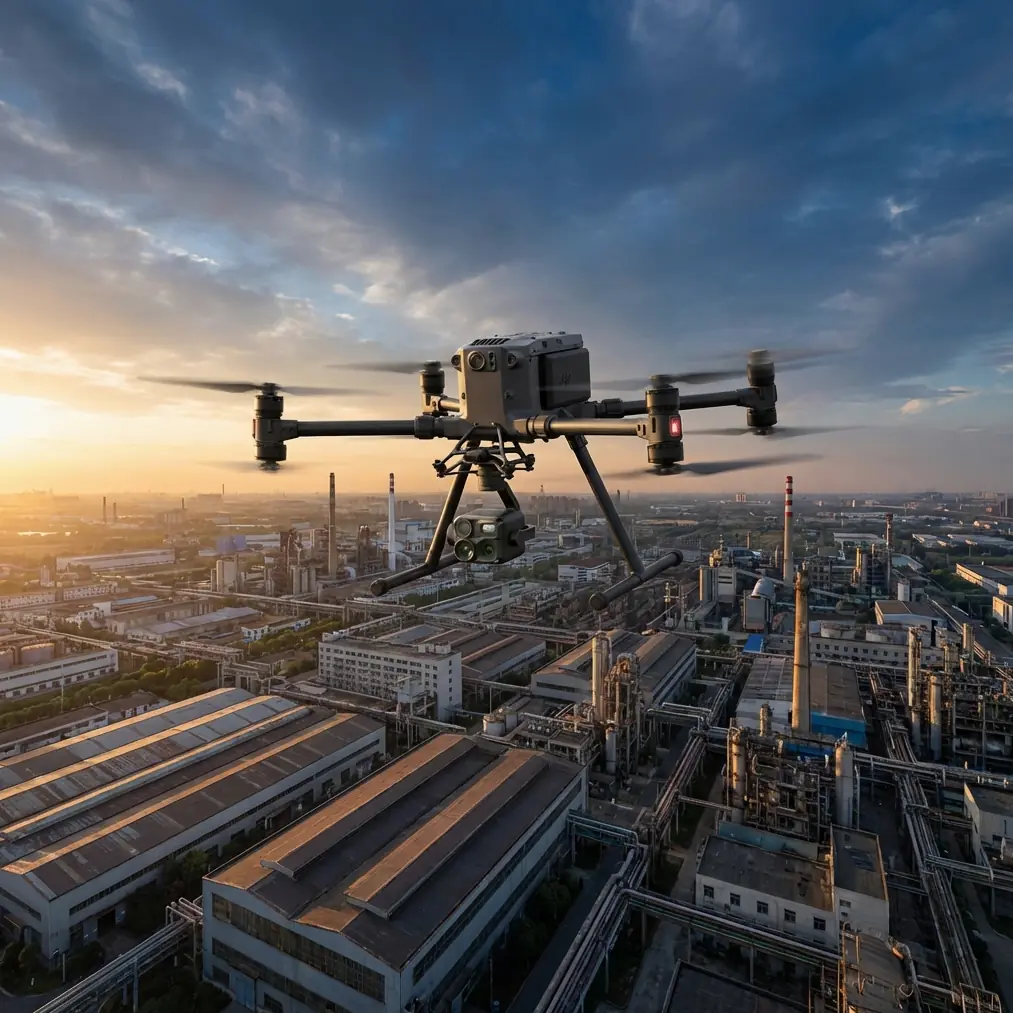
How to Use the Matrice 4T for Urban Wildlife Spraying Operations
META: Expert tutorial on using the DJI Matrice 4T for urban wildlife spraying missions, covering thermal detection, flight planning, payload setup, safety, and operational workflow.
Urban wildlife spraying is a niche job. It sits at the intersection of public safety, environmental control, precision aviation, and neighborhood sensitivity. If you are planning to use a Matrice 4T in this role, the first thing to get clear is this: the aircraft is not a dedicated agricultural spray platform. That matters. The Matrice 4T earns its place in urban wildlife work through intelligence, detection, mapping, and tightly managed mission support around a spraying operation rather than brute-force liquid carrying capacity.
That distinction is exactly why it can be such a useful tool.
In an urban setting, spraying wildlife-related targets often means one of three things. You may be locating pest concentrations near rooftops, drainage corridors, park structures, warehouse edges, or tree lines. You may be identifying nests, roosting zones, or heat-emitting animal presence before treatment teams move in. Or you may be supporting a highly controlled application workflow where the aircraft documents the site, confirms target location, guides ground crews, and verifies results afterward. The Matrice 4T is especially strong in those scenarios because it combines thermal imaging, visible zoom capability, and mission-grade connectivity in one compact platform.
Start with the right mission definition
If your brief says “spraying wildlife with M4T,” do not begin by mounting tanks and improvising. Begin by defining what the drone is actually responsible for.
For most urban jobs, the Matrice 4T should handle:
- Pre-treatment reconnaissance
- Thermal signature detection around structures and vegetation
- Area documentation and photogrammetric capture
- Real-time overwatch during treatment
- Post-treatment verification and evidence collection
That workflow is safer and more defensible than trying to force the aircraft into a role it was not designed to own.
The reason this matters operationally is simple. Urban wildlife management rarely rewards speed over precision. A misidentified hotspot on a residential block can trigger complaints, unnecessary chemical use, or treatment in the wrong location. Thermal data helps reduce that risk. The zoom system helps verify what thermal alone cannot. And a structured capture workflow gives your team something better than memory when questions come later.
Why the Matrice 4T fits urban wildlife work
The Matrice 4T’s biggest advantage here is sensor fusion in a field-friendly airframe. In a dense city environment, line of sight is often interrupted by buildings, trees, utility corridors, and uneven rooftops. You need a platform that can quickly switch from wide situational awareness to detailed inspection without landing and reconfiguring.
The thermal camera helps identify a live thermal signature where visual contrast is poor, especially at dawn, dusk, or in shaded corridors between structures. That is not just a convenience. It changes the pace of decision-making. A nest cavity in a facade, a cluster under roof cladding, or animal activity near HVAC exhaust can be overlooked in standard RGB footage. Thermal makes those anomalies stand out first, then the visual system lets you confirm what you are looking at.
The second key detail is transmission security and reliability. Urban work often involves municipal clients, contractors, or property managers who expect controlled data handling. O3 transmission provides stable live feeds across cluttered radio environments, and AES-256 encryption matters when your flights involve sensitive sites, internal infrastructure views, or recorded footage over occupied properties. That may sound like a technical footnote, but in real operations it affects whether a client trusts your workflow enough to approve repeat deployment.
The smart way to incorporate spraying
Because the Matrice 4T is not a primary spray drone, the most effective urban model is a two-part operation.
First, use the M4T to map, locate, classify, and prioritize treatment points.
Second, carry out spraying through either:
- a ground-based applicator team,
- a legally approved separate spray-capable UAV,
- or a specialized third-party attachment system only if it is fully validated for your jurisdiction, weight limits, and safety envelope.
This is where a third-party accessory can genuinely improve capability. A loudspeaker module or spotlight accessory, for example, can be useful during pre-treatment site control. In urban wildlife jobs, that extra equipment can help clear pedestrians from a work zone, coordinate with rooftop staff, or illuminate shaded treatment areas during low-light inspections. That is a meaningful enhancement because city jobs are rarely conducted in a sterile flight box. You are working around people, access constraints, and surprise movement. The accessory does not make the aircraft a sprayer; it makes the operation more manageable.
If you want to compare field setups or talk through accessory compatibility with someone who has done this in live environments, you can message an operations specialist here.
Build the site model before any treatment
One of the most underused strengths in a Matrice 4T workflow is photogrammetry. People often associate this aircraft primarily with inspection and thermal tasks, but a clean site model before treatment can save time and prevent misapplication.
In an urban wildlife spraying workflow, photogrammetry helps you:
- mark exact treatment boundaries,
- identify entry and exit routes,
- document neighboring risk areas,
- and create repeatable inspection references for follow-up missions.
If the site is large or legally sensitive, add GCPs, or ground control points, to tighten positional accuracy. That extra step is operationally significant because “near the rear parapet” is not a reliable instruction if multiple roofs share similar geometry. A referenced map with GCP support gives your team a defensible location framework, especially when treatment records may later be reviewed by facilities staff or local authorities.
A simple example: if you are managing wildlife concentration around a mixed-use block with rooftop mechanical equipment, drainage pockets, and a landscaped podium, a photogrammetric model can distinguish where animal activity was observed versus where treatment actually occurred. That cuts down on confusion during the next visit. It also reduces duplicate spraying in places that only looked suspicious from street level.
A practical mission sequence
For urban wildlife support operations, I recommend a five-stage sequence.
1. Early thermal sweep
Fly the first pass when thermal contrast is useful, usually early morning or toward evening depending on surface heat retention. Concrete, metal, vegetation, and roofing membranes all emit differently, so timing matters. Your goal is not cinematic footage. You are isolating anomalies.
Look for:
- repeat heat signatures in cavities or roof edges,
- concentrated activity near vents and sheltered corners,
- movement patterns from trees to structures,
- and warm zones that do not match the surrounding building fabric.
Thermal alone is not proof of target presence. It is a filter.
2. Visual confirmation with zoom
Once a hotspot is flagged, switch to the visual sensor and confirm it. The Matrice 4T is strong here because it lets you inspect from a safer stand-off distance rather than pushing close in over traffic, courtyards, or private balconies.
This step matters because heat sources in cities are messy. Warm ducting, reflective surfaces, recently sunlit masonry, and HVAC discharge can all create false positives. A fast visual cross-check prevents bad decisions.
3. Build the treatment map
Document the confirmed zones. If the job requires repeat visits, capture enough overlap for a photogrammetric model and mark your GCPs if high positional confidence is needed. This is where experienced operators separate useful mission data from a folder full of random clips.
Label:
- confirmed wildlife presence,
- suspected access points,
- no-spray zones,
- pedestrian risk areas,
- and ideal approach paths for the treatment team.
4. Support the spray phase
If the actual spraying is done by a ground unit or a second aircraft, keep the Matrice 4T overhead in a support role where legal and safe. Use it to watch drift behavior, monitor movement of people into the exclusion zone, and confirm that the target area, not adjacent habitat, is receiving attention.
Urban spraying can go wrong slowly. Drift into a neighboring courtyard, treatment near parked vehicles, or public encroachment into the work area are exactly the kinds of issues an overwatch aircraft can catch before they become reports and complaints.
5. Run a post-treatment verification pass
This final pass is where the Matrice 4T often pays for itself. Re-fly the same angles. Re-check thermal anomalies where relevant. Compare the before-and-after state. Save your evidence package properly.
If the mission objective was wildlife dispersal rather than eradication, you are verifying reduced activity. If it was targeted pest control around structures, you are checking whether hotspots remain active. Either way, documentation matters.
Battery strategy is not a side issue
Urban jobs often involve short flight windows, permission constraints, and multiple adjacent takeoff points. Hot-swap batteries are a practical advantage in this kind of work because they shorten downtime without forcing a full system reset between sorties.
That has direct operational value. If you detect activity on one structure, then need to relocate quickly to an adjoining building while the treatment team is already in motion, battery turnaround becomes part of mission continuity. In the field, continuity beats raw endurance numbers on paper. You want the aircraft back in the air while the target conditions still match your earlier observations.
BVLOS and urban reality
A lot of people throw around BVLOS as though it automatically makes every drone operation more efficient. In city wildlife work, BVLOS is not a shortcut; it is a regulatory and risk-management question. Urban environments introduce signal interference, obstacle density, and uninvolved people. Even with strong O3 transmission, that does not remove the need for airspace discipline.
Where BVLOS frameworks are permitted, the Matrice 4T’s transmission and situational awareness features can support more advanced operations. But the safer planning mindset is to assume that every urban leg must be justified on containment, visibility, and contingency options. You are not just protecting the aircraft. You are protecting the legitimacy of the operation.
Common mistakes crews make with the M4T in wildlife spraying support
The first mistake is trying to make one platform do every job. Detection, mapping, spraying, overwatch, public coordination, and reporting are separate functions. The Matrice 4T can support several of them extremely well, but not all of them as a single do-everything machine.
The second mistake is relying on thermal without context. A thermal signature is a clue, not a verdict.
The third is skipping mapping discipline. If the target area is near schools, apartment blocks, roof gardens, or service corridors, you need a record that explains exactly what was observed and where.
The fourth is underestimating urban communication. Spotters, treatment crews, property contacts, and pilots need clean coordination. This is where even a simple third-party loudspeaker or signaling accessory can make a measurable difference to site control.
What a strong Matrice 4T workflow looks like
A professional urban wildlife operation built around the Matrice 4T is methodical.
It starts with a thermal sweep timed for contrast. It uses visual zoom to confirm targets. It captures photogrammetric context when the site is complex. It anchors key zones with GCPs when positional certainty matters. It secures the live feed and recorded data through AES-256-backed workflows. It uses O3 transmission to keep the pilot informed in cluttered urban RF conditions. It rotates hot-swap batteries to maintain tempo. And it treats spraying itself as one component of a broader, documented mission rather than the whole story.
That is the real value of the platform in this use case. Not just seeing more, but reducing ambiguity.
If your work involves wildlife treatment in dense urban spaces, ambiguity is the enemy. The wrong roof edge, the wrong vent cavity, the wrong service lane, the wrong assumption about target activity—those are the errors that cost time and credibility. The Matrice 4T helps strip some of that uncertainty away when it is deployed with discipline.
Ready for your own Matrice 4T? Contact our team for expert consultation.