
Matrice 4T for Windy Coastline Surveys: What Actually
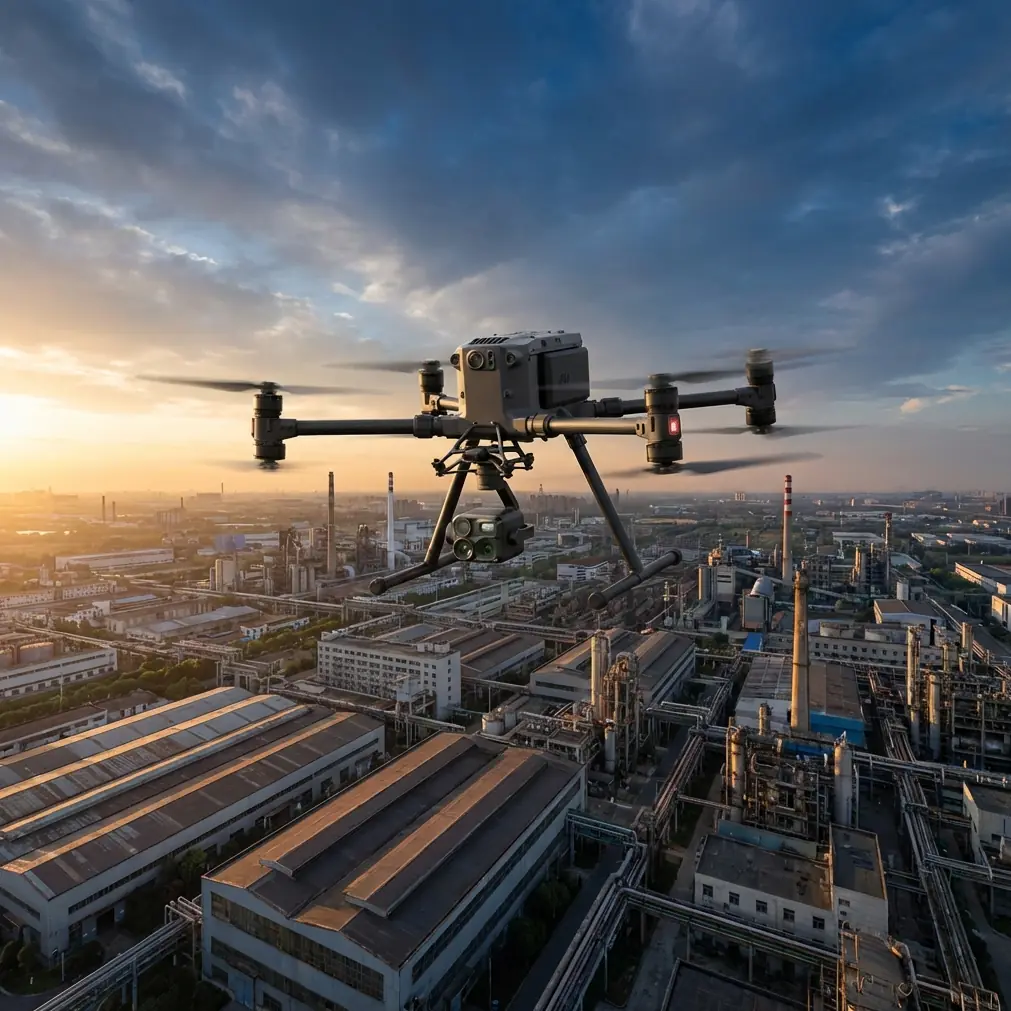
Matrice 4T for Windy Coastline Surveys: What Actually Decides Data Quality Offshore
META: A field-based case study on using Matrice 4T for windy coastline surveys, with practical insight on battery management, transmission stability, thermal work, and why aerospace-grade hose and thread principles matter in real operations.
When people discuss coastline surveys, they usually fixate on wind speed, sensor specs, or whether RTK and GCPs will be enough to hold the map together. Those factors matter. But on exposed shoreline jobs, especially where salt mist, temperature swings, and constant aircraft repositioning are part of the day, reliability comes down to smaller engineering details than most operators realize.
That is where the Matrice 4T becomes interesting.
I want to frame this through a practical scenario rather than a brochure-style summary. Picture a commercial survey team documenting a wind-beaten stretch of coast: rocky edges, shallow erosion cuts, a tidal access road, and a cluster of utility assets set back from the bluff line. The brief is mixed. The client wants photogrammetry for terrain change, thermal signature checks on drainage outfalls and moisture intrusion around structures, and repeatable data they can compare across future inspections.
On paper, this sounds like a standard industrial UAV mission. In reality, windy coastlines punish weak systems. They punish poor battery habits even faster.
The real problem is not just wind
Wind over the coast is rarely uniform. Gusts hit harder at cliff edges, airflow tumbles over man-made structures, and a seemingly manageable average can still produce ugly attitude corrections once the aircraft turns broadside. That affects image overlap, thermal consistency, and flight endurance. It also exposes a truth that experienced crews know well: survey accuracy is partly a software problem, partly a pilot problem, and partly a hardware durability problem.
This is where a drone like the Matrice 4T earns its place not simply because it carries multiple sensing modes, but because it fits into a more disciplined field workflow. O3 transmission stability matters when you are trying to maintain confidence in framing and route adherence near reflective water and uneven terrain. AES-256 matters too, not as a marketing bullet, but because coastline work often involves infrastructure clients who expect secure handling of imagery and thermal datasets from acquisition onward.
Still, the aircraft itself is only part of the system. The coastline environment has a habit of teaching lessons that aerospace engineers learned a long time ago.
Why an old aircraft design manual still matters to a Matrice 4T operator
The reference material behind this piece comes from aircraft design manuals focused on materials, hose assemblies, and thread standards. At first glance, that seems far removed from a modern enterprise drone. It is not.
One of the source documents describes testing for high-pressure PTFE hose assemblies used in aircraft systems. The numbers are severe: pressure cycling to 14 MPa, holding for 25 minutes, repeated up to 840 cycles, with a required burst performance of not less than 56 MPa. It also references high-temperature exposure at 135°C, bend tests around the minimum bend radius, and vacuum retention down to 133 Pa for 4 hours.
Now, no Matrice 4T operator is dealing with those same hydraulic conditions in the field. That is not the point. The point is operational philosophy. Aviation-grade systems are built around repeated stress, not ideal conditions. Coastline drone work should be managed the same way.
Salt-laden air behaves like a slow aggressor. Repeated gust loading behaves like a fatigue event. Constant unpacking, setup, battery changes, gimbal checks, and transport vibration all add up. If your field process assumes a perfect day, the mission quality collapses long before the aircraft does.
The same source also mentions an overtightening test repeated 15 times, after which the nut still needs to rotate freely on the tube without functional failure. That detail may sound obscure, but its significance is immediate for drone crews: over-torquing and repeated handling damage often begins at connection points. In drone terms, that means battery seating, prop inspection discipline, payload locking checks, tripod heads for GCP work, and every connector that gets touched in a salty environment. Coastal jobs do not forgive “good enough” mechanical habits.
A coastline case study: mixed photogrammetry and thermal collection
On one survey I’d model for this type of mission, the Matrice 4T would be tasked with two separate deliverables during the same operational window.
First, visible-spectrum image collection for photogrammetry across the bluff face and adjacent infrastructure corridor. Because shoreline wind can shift quickly, this is where mission planning has to become conservative. Instead of chasing maximum coverage per flight, the better move is often tighter blocks, shorter legs, and more deliberate overlap. GCP placement remains critical near feature-poor surfaces such as sand, rock shelves, or weathered concrete. Even with strong onboard positioning, GCPs provide insurance when wind introduces slight attitude variation across image runs.
Second, thermal signature collection near drainage exits and areas where subsurface moisture may be affecting soil stability or built assets. Thermal work on the coast is less forgiving than inland scans because sun angle, wet surface reflectivity, tidal change, and wind cooling all distort readings. The Matrice 4T’s value here is not merely that it can capture thermal imagery. It is that the operator can pair thermal observations with visual context in one mission framework, reducing revisit uncertainty.
That matters when you are not just looking for a “hot” or “cold” area, but trying to identify whether a thermal anomaly lines up with seepage, delamination, standing moisture, or a material boundary.
Battery management is where field crews quietly win or lose
Here is the battery tip I give teams after years of difficult environmental work: do not treat battery percentage as the decision point; treat voltage behavior under wind load as the decision point.
On calm inland flights, crews can get away with rough battery heuristics. On coastline missions, especially when returning upwind from a far leg, the pack can look healthy until the aircraft begins drawing harder current during sustained correction and climb. The smarter habit with the Matrice 4T is to rotate batteries earlier than your inland profile would suggest, and to assign each pack to a simple log noting wind conditions, sortie duration, and post-flight temperature impression.
That sounds basic. It is not. Over time, that log reveals which batteries sag earlier under gust load and which remain dependable for survey legs requiring reserve margin. If you are using hot-swap batteries as part of a fast-moving shoreline workflow, this becomes even more useful. Hot-swap capability saves time on site, but it can also tempt crews into rushing the transition. Resist that. Battery changes are one of the few natural pauses in the mission. Use them to inspect contact surfaces, verify seating, confirm route changes, and check whether the next flight should be shortened because the wind trend has shifted.
My rule on exposed coastlines is simple: if the previous flight returned with more aggressive attitude corrections than expected, I shorten the next leg before I change any camera setting. Endurance assumptions go stale faster than image settings.
The hidden lesson from thread standards
The second reference document focuses on thread forms and fit classes. Again, it sounds distant from a UAV mission until you notice the deeper engineering logic.
The source notes that fine threads such as UNF/UNRF are less likely to loosen under vibration than coarse threads, making them suitable for adjustment points and assemblies that need more stable retention. It also distinguishes fit classes like 1A/1B for easier assembly with greater tolerance and 2A/2B as broadly used grades with defined clearance.
Why does that matter to a Matrice 4T article? Because windy shoreline operations are vibration-rich environments. Even if the aircraft is designed properly from the factory, field operators still create their own vibration and loosening risks through repeated setup, case transport over rough ground, improvised vehicle staging, and fast battery swaps on uneven surfaces. The engineering lesson is not “know imperial thread tables.” The lesson is this: assemblies exposed to vibration need retention discipline, repeatable inspection, and no casual overtightening.
That becomes operationally significant in three places:
Payload security checks before launch
Multi-sensor missions are unforgiving when a crew assumes a mount is seated because it was seated earlier in the day.Accessory mounting for shoreline observation points
Tripods, antennas, landing pads, and controller mounts all benefit from hardware that resists loosening under repeated movement.Maintenance culture
The crews with the cleanest datasets usually have the cleanest preflight habits.
This is not glamorous. It is why their maps line up.
Wind, transmission, and mission geometry
A windy coastline also changes how you should think about transmission. O3 transmission is useful here not because it magically eliminates RF realities, but because maintaining stable situational awareness over water-adjacent terrain reduces the temptation to drift off planned geometry. When line-of-sight angles get awkward near bluffs or recessed shoreline sections, strong link confidence helps the pilot keep the aircraft where the survey plan needs it, not where the eye finds it easiest to follow.
That matters even more on projects with future repeatability requirements. If today’s dataset is meant to support month-over-month erosion analysis or infrastructure condition comparison, consistency in route geometry becomes a data integrity issue, not just a pilot preference.
For teams planning longer-range commercial corridors where regulation permits, BVLOS planning discussions often start with aircraft capability. They should start with risk structure instead: communication reliability, battery reserve policy, weather trend logic, emergency landing options, and what sort of terrain-induced wind behavior exists across the route. The aircraft can be capable and the operation still be poorly designed.
Thermal signature work near water needs restraint
One of the most common mistakes on coastal thermal surveys is overconfidence in single-pass interpretation. Water, wet rock, sun-warmed debris, reflective surfaces, and wind-chilled structural edges can all generate misleading contrast. The Matrice 4T gives the operator a powerful thermal layer, but the real expertise lies in correlation.
If a thermal signature appears near an outfall, compare it with visible-spectrum context, tidal state, prior site records, and if available, ground truth observations. If an embankment shows an odd cool streak, ask whether it reflects seepage, shadowing, vegetation, or residual moisture from earlier wave wash. Thermal is strongest when it is treated as evidence, not verdict.
This is one reason I like the case-study framing for the Matrice 4T. Its value grows when the operator uses its sensor stack to ask better questions, not just collect more files.
Practical field workflow that holds up in salt air
For crews building a dependable shoreline routine, I would structure the day this way:
- Launch visual mapping flights earlier while lighting is stable and winds are still building.
- Use GCPs where terrain texture or shoreline geometry could weaken model confidence.
- Reserve thermal passes for the time window best suited to the inspection objective, not simply the most convenient battery slot.
- Clean and inspect contact points after each battery change rather than waiting until the end of the day.
- Keep each sortie short enough that an upwind return is never a stressful surprise.
- Tag every battery by behavior, not age alone.
If your team is refining its own coastal survey SOPs, a quick field coordination message chain often solves more than another spreadsheet ever will; I’ve seen crews streamline handoffs using a simple direct contact point like send a planning note here.
What makes the Matrice 4T a serious coastline tool
The Matrice 4T is not defined by a single feature in this environment. Its strength is that it supports a disciplined survey method: secure data handling with AES-256, dependable control link behavior through O3 transmission, efficient turnaround through hot-swap battery workflows, and multi-sensor capture that lets one team produce both mapping and thermal inspection outputs in a single operational cycle.
But the larger lesson from the reference material is even more valuable. Aerospace reliability is built on tolerance for stress, repeated cycles, heat, pressure, and vibration. The hose test at 14 MPa repeated 840 times and the high-temperature condition at 135°C are reminders that serious systems are designed and evaluated for punishment, not convenience. The thread guidance showing that fine threads resist loosening better under vibration is a reminder that small mechanical choices have large operational consequences.
That mindset belongs in every serious Matrice 4T coastline workflow.
Because on a windy shoreline, data quality is rarely lost in a dramatic failure. More often, it slips away through tiny preventable errors: a rushed battery swap, a loose mount, an overlong leg, an unchecked connector, a thermal anomaly accepted too quickly, a return flight planned as if the wind would stay polite.
The crews who deliver reliable coastal survey results are the ones who respect those details before the aircraft ever leaves the ground.
Ready for your own Matrice 4T? Contact our team for expert consultation.