
Matrice 4T in Complex Terrain: What a Drone Training
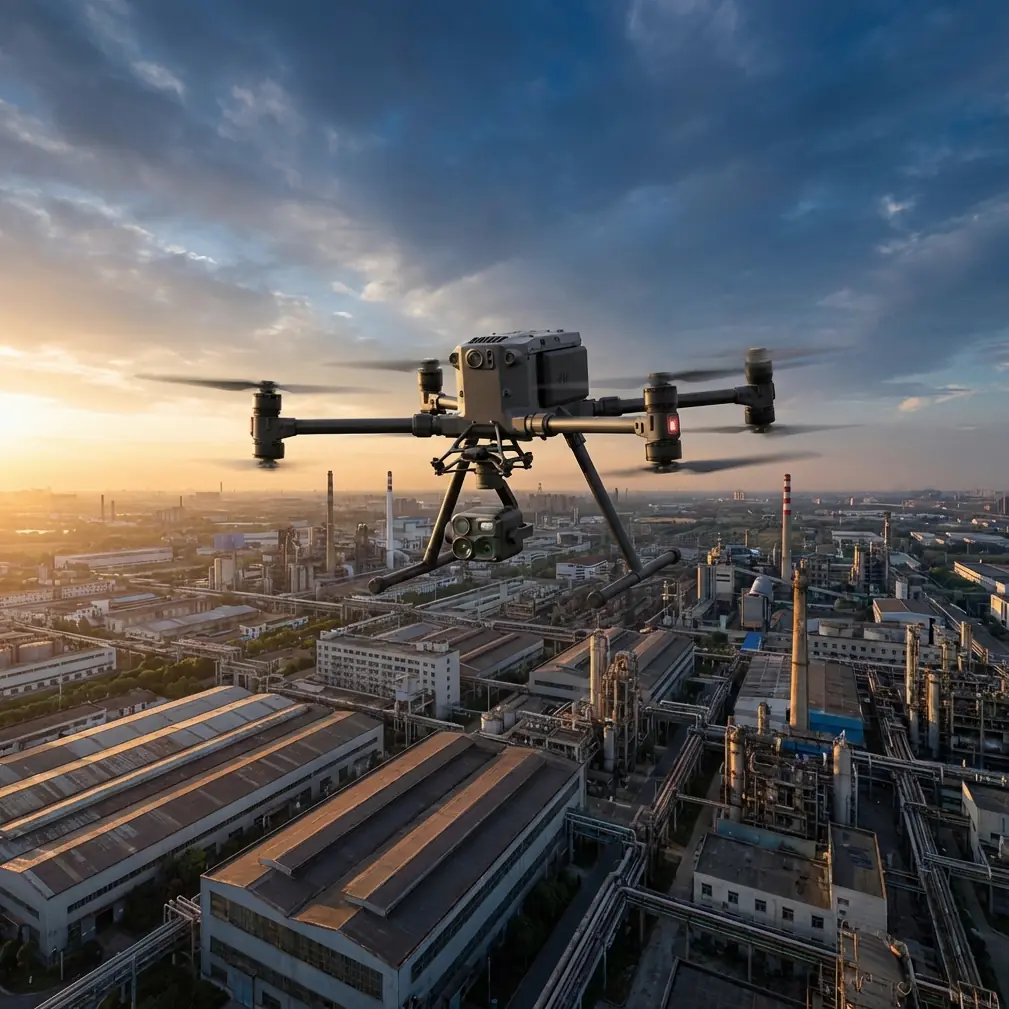
Matrice 4T in Complex Terrain: What a Drone Training Shakeout Means for Survey Teams on the Ground
META: A specialist case study on how tougher UAV training rules, shrinking flight schools, and real field conditions affect Matrice 4T operations for construction surveying in complex terrain.
The most useful Matrice 4T story this month is not a product announcement. It is a training story.
A recent industry report says China’s registered drone training institutions dropped from more than 4,200 at the end of last year to 2,703 by March 2026. That is a loss of more than 1,400 providers in roughly three months. The trigger was not random market fatigue. It followed the formal implementation, at the end of 2025, of the Norms for Civil Small and Medium Unmanned Aircraft Operator Training Institutions, a rule set that raised the bar for who is allowed to train pilots.
If you operate a Matrice 4T for construction surveying in difficult terrain, that number matters more than it seems.
It changes who touches the aircraft, how consistently missions are flown, and how much confidence a project manager can place in the data collected on a steep cut slope, along a quarry face, or over an active worksite full of reflective steel, moving machinery, and unstable radio conditions. A drone like the Matrice 4T is only as reliable as the people planning the mission, managing the sensors, and interpreting what the aircraft is actually seeing.
That is where the current training reset becomes operational, not bureaucratic.
Why this matters specifically for Matrice 4T users
The Matrice 4T sits in an interesting position in the UAV stack. It is not a toy, and it is not just a camera platform. For many site teams, it becomes a fast-response observation system that blends visual inspection, thermal signature analysis, topographic awareness, and documentation into one workflow. On complex construction sites, that combination can compress decisions that used to take several teams and multiple site walks.
But the aircraft only delivers that value when the pilot and payload operator understand more than takeoff and landing. They need to know when thermal data is trustworthy and when it is being distorted by sun-warmed rock, standing water, equipment exhaust, or roof materials that store heat differently across the afternoon. They need to know when photogrammetry is fit for measurement and when the terrain geometry or flight pattern will quietly degrade the model. They need to know when GCP placement is sufficient, and when the site’s elevation changes demand tighter control.
A shrinking training market, if driven by tougher standards, can be good news for serious operators. Fewer schools does not automatically mean less capability. In this case, it may mean fewer weak programs sending underprepared pilots into more regulated, more technical work.
For Matrice 4T teams, that could improve baseline competence across the industry.
A field case: surveying a stepped construction corridor in mixed terrain
Consider a realistic scenario. A contractor is building access infrastructure through hilly ground with broken vegetation, exposed aggregate, temporary haul roads, and a section of retaining works. Parts of the site sit in a shallow valley. Other sections climb onto ridgelines where wind behaves differently and signal reflections become harder to predict because of steel materials, temporary site cabins, and power systems.
The survey requirement is not purely cartographic. The client wants rapid situational awareness each week, progress verification on earthworks volumes, and thermal checks around temporary electrical installations and drainage lines after rain events. This is exactly the kind of job where a Matrice 4T becomes attractive. One platform can support visual inspection and thermal review while still contributing to a broader site documentation workflow.
Yet complex terrain exposes weak training immediately.
On a straightforward open field, a pilot can get away with mediocre route planning. In a stepped corridor with partial line-of-sight loss, variable winds, and localized electromagnetic interference, poor habits show up fast. The aircraft may remain stable, but the mission quality drops. Overlap gets inconsistent. Oblique imagery is captured at the wrong angle. Thermal passes happen at the wrong time of day. The team returns with files, but not with dependable answers.
That is why the reported drop from 4,200-plus training institutions to 2,703 is not just an education-sector headline. It is a signal that the market is being forced to separate casual instruction from professional-grade preparation.
Electromagnetic interference is not abstract. It changes survey outcomes.
One detail often ignored in marketing copy is antenna discipline. In real work, especially around construction power systems, communications gear, and metal-dense environments, transmission quality is not something you assume. You manage it.
On one ridge-side survey, a pilot flying a Matrice 4T began seeing unstable link quality while tracking a cut-and-fill boundary near temporary electrical infrastructure. The problem was not a dramatic loss of control. It was more subtle and more dangerous for data quality: intermittent degradation that could have encouraged the operator to rush the pass or accept lower confidence in framing and positioning.
The fix was simple, but it required proper training and calm execution. The pilot paused the progression, reassessed the aircraft’s orientation relative to the controller, and adjusted antenna alignment to better support the O3 transmission link. He also moved a few meters to improve geometry relative to the slope and reduce the shielding effect created by site cabins and machinery. Signal stability improved, and the team completed the segment without compromising image consistency.
That sounds minor until you connect it to outcomes. In survey work, even small interruptions in operator confidence can lead to uneven capture patterns, missed checkpoints, or an incomplete thermal sweep that has to be repeated later. A well-trained crew does not merely “keep flying.” It understands why the link is degrading, what variables can be changed safely, and how to preserve mission integrity.
This is exactly the kind of practical competence stronger training standards are supposed to produce.
Better training changes how thermal data is used, not just how drones are flown
The Matrice 4T’s thermal capability is a serious advantage on complex sites, but only when crews understand what thermal signature actually represents in context.
Take a post-rain inspection along a newly shaped slope and drainage path. A less experienced operator might interpret cooler or warmer patches as defects without considering sun angle, material density, moisture retention, runoff behavior, or buried infrastructure. A stronger operator uses thermal imagery as one layer of evidence. They compare it against visible imagery, terrain conditions, recent weather, and the site’s construction sequence.
That distinction matters.
If training providers were previously entering the market with low barriers, many pilots may have learned enough to pass a basic operational threshold without really learning sensor interpretation. The 2025 training norms appear aimed at changing that environment. When more than 1,400 institutions exit in one quarter, it suggests the compliance hurdle is no longer symbolic.
For Matrice 4T users, the practical benefit is that future crews may be better equipped to answer the question a site manager actually asks: “Can I trust this data enough to act on it today?”
Photogrammetry in rough terrain still depends on disciplined field method
Construction teams sometimes assume that a premium aircraft guarantees premium models. It does not.
In rough terrain, photogrammetry becomes unforgiving. Relief variation, narrow access corridors, repetitive textures, dust, and sharp grade transitions all place pressure on the mission design. The Matrice 4T can support efficient site intelligence, but it still needs a disciplined workflow: appropriate altitude, overlap planning, smart route geometry, and carefully thought-out GCP distribution where measurement-grade outputs are required.
On long and irregular sites, GCP strategy is often where rushed crews fail. They cluster control points where access is convenient rather than where terrain complexity demands them. The result may look fine in a quick viewer but drift where the grade changes hardest. That is a problem if the output is being used to compare progress, estimate volumes, or verify retaining features against design intent.
This is another place where the training consolidation could have a positive long-term effect. Stronger institutions tend to teach complete workflows, not isolated flight maneuvers. They teach where errors come from and how field decisions compound later in processing. For a Matrice 4T team, that means better alignment between airborne capture and downstream deliverables.
Security and continuity matter more as sites digitize
Surveying is no longer just a mapping task. It is part of a project information chain. Flight logs, image sets, thermal files, annotations, and progress records all move through digital systems. On high-value projects, that makes transmission reliability and data handling more than technical footnotes.
This is where features such as AES-256 encryption and disciplined mission procedures become relevant. They help support a safer chain of custody for sensitive project data, particularly when flights cover critical infrastructure, proprietary layouts, or restricted construction zones. Just as important, hot-swap batteries keep teams productive without repeatedly resetting a carefully staged workflow. On remote or segmented sites, continuity reduces the temptation to cut corners on reflights.
These are not glamorous topics, but they influence profitability and project trust. Good crews know that the mission is not finished when the aircraft lands. It is finished when the data is complete, secure, and usable.
What the mango story quietly reveals about aerial operations
The second news item, on the surface, seems unrelated. It describes more than 17,800 acres of mango trees flowering in a demonstration base in Liuhe Village, Sitang Town, in Baise’s Youjiang District, with the wider Youjiang River valley identified as one of China’s three major “natural greenhouses.” Since late February, the region’s mango trees have entered flowering season across a large subtropical landscape.
So why mention it in a Matrice 4T article about construction surveying?
Because it is a reminder that drone operations are always shaped by environment first. Large, contiguous acreage, changing seasonal conditions, and terrain-driven microclimates influence flight planning whether the mission is agricultural observation or infrastructure survey. The same operator discipline needed to read a flowering landscape from the air is needed when reading construction terrain: understanding light, surface texture, heat behavior, wind exposure, and line-of-sight constraints.
An experienced Matrice 4T crew does not treat the aircraft as the center of the mission. It treats the environment as the center. The platform is the tool that translates field conditions into actionable information.
That mindset separates professional surveying from casual flying.
The coming bottleneck: qualified crews, not aircraft availability
The deeper implication of the training contraction is simple. Organizations may find it easier to source capable drones than capable people.
As regulatory standards rise, the market may experience a short-term squeeze in pilot availability, especially for teams needing reliable field execution in challenging terrain. That can affect project schedules, internal training timelines, and the cost structure around certification and recurrent competency. It may also push construction firms to scrutinize subcontracted UAV teams more carefully.
For buyers or operators focused on the Matrice 4T, the lesson is not to panic about the number of schools. It is to become more demanding about training quality and field-readiness.
Ask sharper questions. How is antenna management taught under interference conditions? How are thermal missions validated against environmental factors? How are GCP workflows taught for uneven terrain? What scenario-based exercises are used to prepare crews for partial signal obstruction, shifting winds, or multi-sensor tasking? If you want to compare field workflows with a specialist, this direct channel is useful: message a Matrice 4T operations advisor.
Those questions now matter more because the industry is moving away from quantity and toward defensibility.
What this means for teams planning BVLOS-era workflows
Even if your current site missions remain within conventional visual frameworks, the direction of travel is obvious. As operational ambition grows toward more advanced corridor inspection and extended-range site intelligence, the foundation has to be stronger. BVLOS capability is never just a matter of aircraft performance. It rests on training depth, procedural discipline, transmission management, risk assessment, and data accountability.
The recent collapse in training institution numbers suggests regulators and the market are beginning to align on that point.
For the Matrice 4T community, that is ultimately constructive. The platform is powerful enough to be misused by undertrained operators and valuable enough to reward disciplined ones. In complex terrain, that difference shows up in every phase of the mission: preflight planning, antenna positioning, payload use, thermal interpretation, GCP strategy, battery rotation, and post-processing confidence.
The story here is not simply that training fees may rise, as the original report suggests. The bigger story is that cheap competence is disappearing.
And for serious construction surveying, that may be one of the healthiest developments the UAV sector has seen in years.
Ready for your own Matrice 4T? Contact our team for expert consultation.