
Matrice 4T Field Report: Mountain Construction Surveying
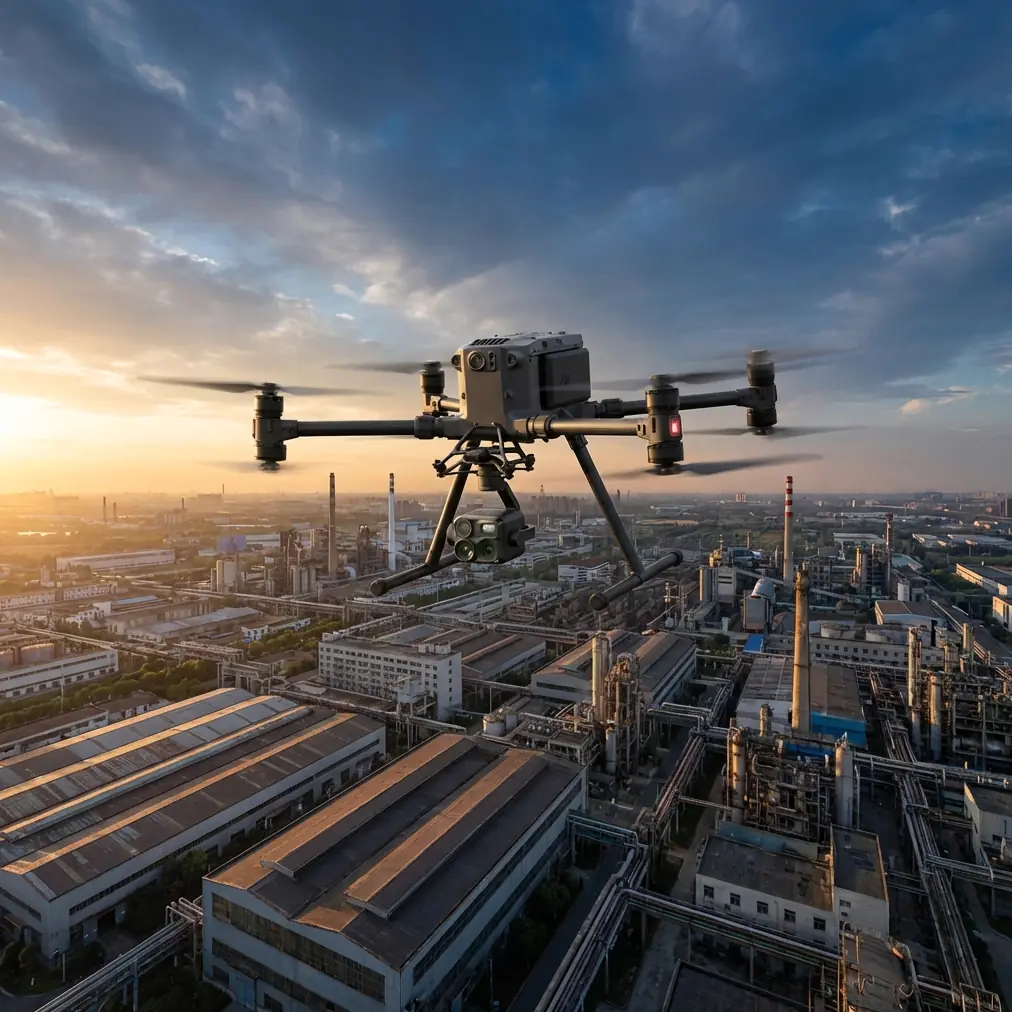
Matrice 4T Field Report: Mountain Construction Surveying Tips That Actually Hold Up On Site
META: Expert field report on using the Matrice 4T for mountain construction surveys, covering thermal checks, photogrammetry workflow, GCP strategy, O3 transmission, battery handling, and pre-flight safety practice.
Mountain construction surveying punishes weak workflows.
You are dealing with steep grade changes, sudden wind shifts, broken sightlines, dust on sensors, and crews who need usable data the same day. In that setting, the Matrice 4T is not simply a drone with a thermal payload. It becomes a field instrument, and the quality of the outcome depends less on the brochure specs than on how you prepare, launch, and interpret what it gives you.
I’ve been asked many times whether the Matrice 4T is a sensible platform for construction-site work in mountainous terrain. The short answer is yes, but only if the team understands what this aircraft is good at and where it can mislead you. That distinction matters. On a ridge road cut, a retaining wall, a tunnel portal, or a hillside staging area, one bad assumption can carry through an entire survey package.
This report is written for that exact use case: construction teams working in mountain environments who need reliable situational awareness, repeatable image capture, and practical thermal insight from the Matrice 4T.
Why the Matrice 4T fits mountain-site work
The Matrice 4T sits in an interesting category. It is not just aimed at one discipline. It crosses inspection, mapping support, safety review, and site documentation. That blend is useful in mountains because the job often changes by the hour. The morning mission may be a stockpile volume check. By noon, the superintendent wants a look at runoff paths above the haul road. Later, the safety manager wants to verify whether temporary power equipment is showing abnormal heat.
A single airframe that can contribute to all three tasks reduces friction. Fewer field transitions. Less kit spread across a muddy site. Less time retraining operators between missions.
Two capabilities matter most here.
First, thermal signature analysis gives teams a way to see beyond visible color and texture. On mountain projects, exposed rock, wet soil, compacted fill, drainage lines, and temporary equipment can look deceptively similar in standard imagery, especially under flat light. Thermal data introduces another layer of interpretation. It will not replace engineering judgment, but it often reveals where attention should go next.
Second, the aircraft’s transmission and data security stack are operationally relevant, not just technical footnotes. O3 transmission helps maintain a more stable link in terrain where ridges, cuts, and equipment can interrupt signal paths. AES-256 encryption matters when flight logs, imagery, and site conditions are part of controlled project documentation. On sensitive infrastructure jobs, that is not optional housekeeping. It is part of the job.
The pre-flight step too many crews rush: cleaning before safety checks
Here is the detail I insist on with every mountain deployment: clean the aircraft before you trust the safety features.
That sounds basic. It is not. On mountain construction sites, dust is finer, stickier, and more persistent than many teams expect. If the Matrice 4T has been transported in an open vehicle, set down near blasting residue, or flown after light precipitation turned the ground to slurry, contamination builds quickly around the vision system windows, camera glass, landing gear area, and battery contacts.
Crews often power up first and assume the obstacle sensing, positioning aids, and imaging system are ready because the aircraft initializes normally. That is the wrong sequence. A film of dirt on a sensor window can degrade obstacle detection confidence. Smudges on optics can reduce image quality enough to weaken photogrammetry outputs. Dust or moisture at contact points can create avoidable battery behavior concerns.
My preferred order is simple:
- Unfold and visually inspect the aircraft in a sheltered spot.
- Clean camera glass, thermal window, and vision sensors with the correct field materials.
- Check battery seating and contact cleanliness.
- Confirm propeller condition.
- Only then power up and run the rest of the pre-flight checks.
That small discipline pays for itself. In mountain operations, many safety problems begin as visibility problems. If the drone’s sensing and imaging surfaces are compromised before takeoff, you are asking software to compensate for dirt.
Thermal is useful, but only when you ask the right question
A surprising number of teams launch thermal missions without defining what a meaningful temperature pattern would look like on that site, at that hour, under those weather conditions.
Thermal signature work on a mountain construction project is highly context dependent. Early morning can be excellent for identifying moisture pathways, uneven heat retention in recently disturbed surfaces, and equipment anomalies before solar loading flattens the contrast. Midday can be far less informative on exposed slopes because sun angle and rock heating introduce noise that inexperienced operators may misread.
The Matrice 4T is most valuable when thermal becomes a decision-support layer rather than a novelty view.
For example, on a mountain access road, thermal can help distinguish areas where subsurface moisture is influencing surface conditions, especially after cool nights and before direct sun equalizes temperatures. Around temporary electrical installations, pumps, generators, or distribution points, it can help identify abnormal hotspots that warrant a closer ground inspection. On retaining structures and cut slopes, it may highlight drainage irregularities, though never as a standalone geotechnical verdict.
The discipline here is restraint. Thermal tells you where to look harder. It does not tell you everything that is happening.
Photogrammetry in steep terrain: where the plan wins or fails
The most common mistake I see with mountain-site photogrammetry is trying to fly a standard grid as if the site were flat.
It is not.
Elevation changes distort overlap planning, image angle consistency, and ground sampling assumptions. A mission profile that works on a broad industrial lot may produce weak geometry on a stepped, terraced, or sharply sloped construction site. With the Matrice 4T, the answer is not simply “fly higher.” Flying higher may preserve coverage, but it can also reduce the detail needed for progress tracking, slope review, or earthwork verification.
Instead, think in segments.
Break the site into surfaces that behave differently: road benches, stockpile zones, structural pads, slope faces, drainage channels, and access corridors. Then choose capture geometry accordingly. Nadir passes may be adequate for flatter work areas, while oblique imagery becomes more important on slope faces, wall systems, and excavation edges where vertical relief is meaningful.
This is where Ground Control Points become especially valuable. In mountainous terrain, GCP strategy is not just about absolute accuracy. It is about controlling drift across irregular topography and preserving trust in the final model where crews actually make decisions. A poor GCP layout can leave you with a visually attractive reconstruction that shifts just enough to create trouble in cut-fill comparisons or progress verification.
For the Matrice 4T operator, the practical takeaway is clear: if the project depends on measurable outputs, do not rely on image capture alone. Build the mission around a proper GCP plan and verify point visibility from the air before you launch.
O3 transmission matters more in mountains than many teams realize
On paper, transmission systems often sound like marketing filler. In the mountains, they are part of flight risk management.
Ridges, equipment yards, cranes, temporary offices, and even stockpiles can interfere with line quality in ways that are much less pronounced on open, flat sites. A strong O3 transmission link improves confidence when the aircraft transitions across uneven terrain, briefly skirts behind relief features, or works at the edge of an operationally safe viewing corridor.
That does not make terrain disappear. It does mean the pilot has a better chance of maintaining responsive control and clean video feedback while working a more complex site.
This becomes operationally significant during repeat surveys. Construction teams often need to fly the same corridor or work zone again and again to compare progress. Consistent link performance supports more repeatable paths, fewer aborted runs, and less temptation to improvise from marginal positions. If your workflow depends on matching prior capture patterns for comparison, transmission reliability is not a luxury.
It is one of the quiet reasons the day runs smoothly.
Hot-swap batteries are not just a convenience feature
Battery management on mountain projects is a workflow issue before it is an endurance issue.
You may be operating from a narrow turnout, a temporary bench, or a logistics area that is inconveniently far from the target zone. Every relaunch adds time. Every interruption increases the chance of changing light, shifting winds, and inconsistent data. Hot-swap batteries help teams reduce these delays, especially during sequential documentation flights.
That matters in two ways.
The first is continuity. When you can turn the aircraft around quickly, you preserve similar environmental conditions across connected sorties. That improves data consistency for photogrammetry and visual comparison.
The second is safety. Mountain weather shifts fast. If a crew has to drag out battery changes because gear is disorganized or contacts are dirty, the aircraft may be grounded during the exact window when the mission should be completed. Efficient swaps reduce that exposure.
This is another reason I tie battery handling back to pre-flight cleaning. Dirty contacts and rushed handling are avoidable problems. A clean, disciplined hot-swap routine is one of the simplest ways to keep the Matrice 4T dependable in harsh field conditions.
AES-256 and site confidentiality
Not every reader gets excited about encryption, but project owners often do.
Construction surveys in mountain areas may involve transportation corridors, utilities, energy assets, water infrastructure, or restricted access developments. Images can reveal more than progress. They can expose logistics patterns, equipment positions, staging areas, and incomplete protective works. When that information moves through a drone platform, the chain of custody matters.
AES-256 support is one of those details that should be discussed before the first flight, not after a data-sharing argument begins. It supports a stronger posture around protecting operational information, especially when multiple contractors, consultants, and owner representatives are involved.
I tell clients to think of secure drone data as part of professional site hygiene. Not glamorous, but essential.
If your team is still refining how to structure secure field workflows around the Matrice 4T, I’m happy to share a practical checklist here: message me directly.
What about BVLOS?
BVLOS is one of those terms that gets used casually and planned poorly.
For mountain construction work, people are often tempted by the idea because the terrain is extensive and access is difficult. But the legal, procedural, and safety implications are real, and terrain complexity usually makes the operational planning harder, not easier. Even if the aircraft is technically capable enough to support advanced operations, the mission environment may require a much tighter risk framework than teams expect.
So the right question is not whether the Matrice 4T makes BVLOS possible in some abstract sense. The right question is whether your regulatory approval, crew structure, communications planning, emergency procedures, and terrain analysis support the mission you actually want to fly.
On most mountain construction sites, disciplined VLOS or tightly managed extended operations deliver better results than overambitious planning. Reliable data beats adventurous flight planning every time.
A practical mountain workflow for the Matrice 4T
If I were setting up a standard operating rhythm for a mountain construction team using the Matrice 4T, it would look something like this.
Arrive early enough to assess wind, sun direction, dust, and takeoff location without pressure from the site schedule. Clean the aircraft first, especially optics and sensing surfaces. Confirm battery condition and propeller integrity. Review the terrain with the mission objective in mind, not from a generic map-only perspective.
If the task is mapping, segment the site by topographic behavior and place GCPs where they actually constrain the model. If the task is thermal inspection, define the decision question before launch: moisture, equipment heating, drainage behavior, or surface anomaly. If the task is site documentation, choose flight paths that can be repeated later with minimal variation.
During flight, monitor signal quality closely and avoid letting the aircraft tuck into terrain-shadowed positions just because the image still looks usable. After landing, review sample outputs immediately. In mountain work, discovering a coverage gap back at the office is expensive.
That workflow is not flashy. It is dependable. On active construction sites, dependable is what saves time.
The real value of the Matrice 4T on mountain jobs
The Matrice 4T earns its place when a project needs one platform to bridge operational awareness and measurable documentation.
Its thermal capability is useful when treated as an investigative layer rather than a final answer. Its photogrammetry support becomes credible when paired with thoughtful mission segmentation and strong GCP practice. O3 transmission has real value where terrain complicates control and video reliability. AES-256 matters when site data needs proper handling. Hot-swap batteries help preserve tempo and consistency in narrow weather windows.
Those are not isolated features. In the field, they compound.
And the smallest habit in the whole workflow may be the one operators overlook most: cleaning the aircraft before trusting its safety systems and imaging stack. On a mountain site, dust and residue are not cosmetic. They can distort sensing, degrade imagery, and undermine confidence in the very data the team came to collect.
That is the difference between owning a capable aircraft and running a professional survey operation with it.
Ready for your own Matrice 4T? Contact our team for expert consultation.