
Matrice 4T Field Report: What Instrument
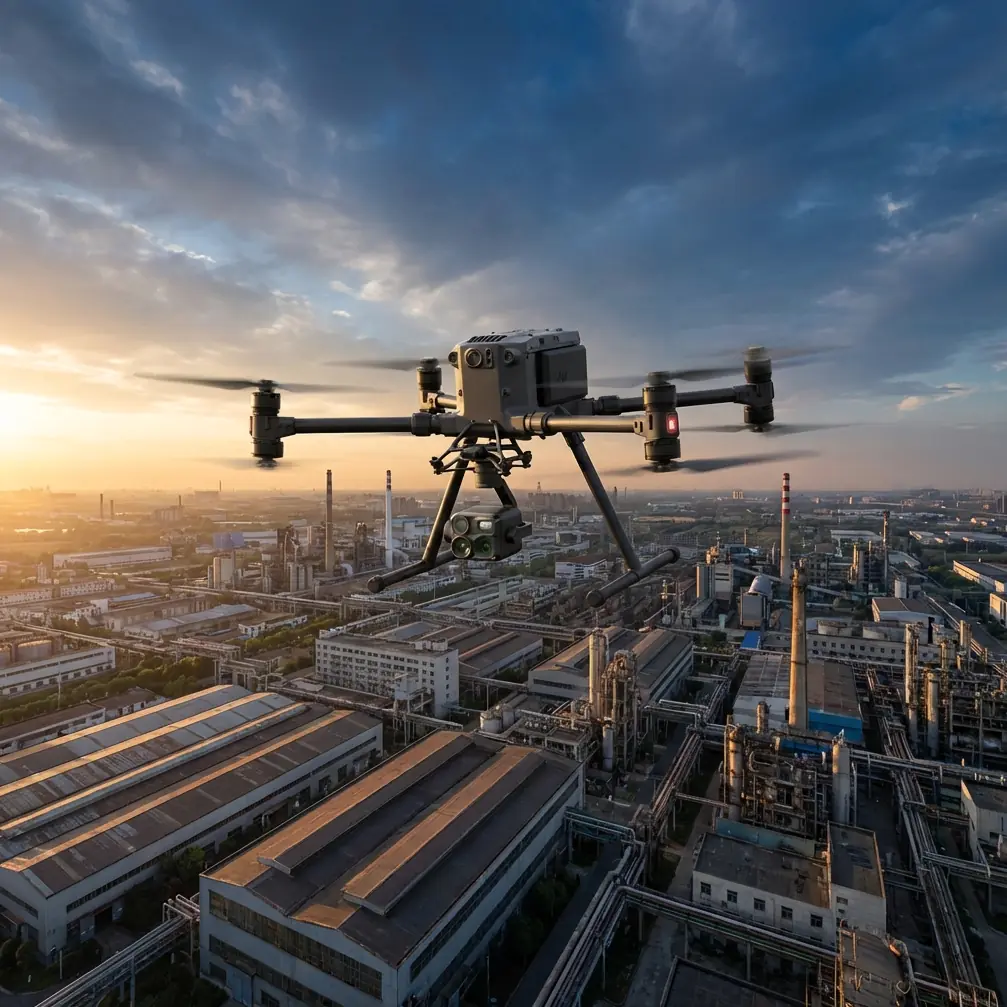
Matrice 4T Field Report: What Instrument-Grade Guidance Teaches Us About Surveying Remote Construction Sites
META: A field-based expert analysis of using Matrice 4T for remote construction site surveying, with practical flight altitude insight, transmission reliability, thermal workflow, and why aviation-grade signal discipline matters.
Remote construction surveys punish weak systems.
Distance stretches your link budget. Dust and heat distort visuals. Uneven terrain turns a simple roof check into a line-of-sight puzzle. And when the client wants both progress mapping and anomaly detection in one deployment, the aircraft has to do more than collect pretty imagery. It needs to hold a stable data picture, preserve positional consistency, and keep the operator confident when the site is far from the trailer, the road, and sometimes even reliable cellular service.
That is where the Matrice 4T deserves a more serious conversation.
I’m not interested in repeating brochure claims. What matters in the field is whether the aircraft behaves like a survey instrument when conditions become messy. The most useful lens for understanding that is not marketing at all. It is older, stricter aviation design logic: the way guidance systems were built to recover deviation information, monitor faults, and feed trusted data into other onboard systems.
One of the reference materials behind this discussion describes Instrument Landing System architecture in unusually practical terms. It explains that ILS exists to receive localizer, glide slope, and marker beacon signals, recover course deviation information, and provide standard approach guidance for display and for other flight systems. It also notes that the airborne receiver unit includes channel selection, RF energy reception, information recovery, fault monitoring, and function testing. That combination matters far beyond manned approach operations. It captures a design philosophy that remote construction drone teams should value: not just receiving a signal, but receiving the right signal, validating it, and turning it into dependable guidance input.
The Matrice 4T is obviously not an ILS receiver. But the operational lesson translates cleanly.
When you are surveying a remote construction site, especially one with steelwork, graded slopes, temporary utilities, and active machinery, your mission quality depends on the integrity of multiple linked systems. O3 transmission is not merely a convenience for a cleaner live feed. It becomes the bridge between sensing and decision-making. If your visual stream stalls while you are checking a retaining wall thermal signature or confirming overlap over a stockpile corridor, the workflow degrades immediately. You lose tempo first, then confidence, then accuracy.
That is why I like to evaluate the Matrice 4T the same way I evaluate any serious field platform: by asking whether each subsystem contributes usable, cross-checkable information.
The old ILS reference is blunt about subsystem architecture. Three distinct signal paths served distinct guidance functions, and each path had defined working ranges and monitoring roles. In one excerpt, the localizer and glide slope receiver units are described as operating across 108.00 to 111.95 MHz, with 40 working channels and paired tuning behavior. On paper that belongs to another era and another aircraft class. Operationally, it is a reminder that disciplined signal management is what makes guidance trustworthy. On a modern drone survey, the equivalents are transmission robustness, payload alignment, and clean handoff between thermal interpretation, visual inspection, and map capture.
For the remote construction reader, here is the practical takeaway: treat the Matrice 4T as a coordinated sensing platform, not a flying camera.
That changes how you plan altitude.
For broad progress mapping on remote sites, I generally see the best balance around 70 to 90 meters above ground level, assuming the project layout is varied but not vertically extreme. That altitude band often gives you enough area efficiency for photogrammetry while preserving the image consistency needed for reconstruction. If the terrain is broken, step your mission by topographic zones rather than forcing one blanket height across the whole property. On earthworks and corridor-style access roads, dropping toward the lower end of that window can improve texture definition and edge fidelity. If you are documenting broad stockpile relationships or staging layouts, the higher end buys time and coverage.
Why not just climb higher and finish faster? Because remote construction data usually needs to do two jobs at once. It has to satisfy management reporting and support technical interpretation. Once you start asking imagery to reveal drainage issues, slope irregularities, surface cracking, or subtle thermal differences around electrical enclosures and temporary mechanical systems, excessive altitude starts taking value away even if it saves minutes.
This is where the 4T’s thermal capability changes the survey discussion.
Thermal data on remote construction sites is often misunderstood as a specialist add-on. In reality, it is one of the fastest ways to prioritize where your detailed inspection effort should go. Fresh backfill over buried services can present different heat behavior than surrounding surfaces. Electrical distribution points, portable generators, HVAC units, and material curing zones can all show thermal patterns that deserve a closer look. The phrase “thermal signature” gets used loosely, but the operational point is simple: thermal helps you see where the site is behaving differently from expectation.
For that reason, I do not recommend trying to capture thermal insight only during a dedicated, separate flight unless the scope absolutely demands it. With a Matrice 4T workflow, you can often use your primary site survey pass to build a heat-informed map of attention areas, then descend for targeted captures. That approach is faster and produces a cleaner audit trail for project stakeholders.
Transmission quality becomes critical here. If you are surveying in remote terrain, ridgelines, cranes, temporary structures, and even stacked materials can interrupt your signal geometry. O3 transmission helps, but good mission design still matters more than raw spec sheets. Maintain clean line-of-sight wherever practical. Launch from a point that gives you the broadest command of the site rather than the shortest walk from the vehicle. If the site has elevation breaks, reposition between sorties instead of trying to brute-force one launch position into serving the entire property.
Security should also be part of the planning discussion, especially for infrastructure or confidential developments. AES-256 matters because construction data is not trivial. Orthomosaics, thermal observations, progress records, and location-linked site imagery can expose project sequencing, contractor presence, equipment deployment, and vulnerabilities in temporary works. In remote areas where teams may rely on portable networks or field laptops, disciplined encryption is not just an IT feature. It is part of professional handling of project intelligence.
Then there is endurance management.
Hot-swap batteries sound like a convenience until you work a site that is 90 minutes from the nearest reliable support point. On remote survey jobs, battery handling is logistics, not comfort. If you can rotate packs without a long cold restart in the middle of a carefully staged documentation run, you protect continuity. That matters most when light conditions are shifting or when you are holding a precise photogrammetry plan that needs consistency from one sortie to the next. Progress mapping over a large site often fails quietly through inconsistency rather than through obvious mistakes. Battery workflow is one of the hidden causes.
Ground control points still deserve respect too. The Matrice 4T can move quickly, but speed does not exempt a site from survey discipline. If the deliverable has contractual or engineering significance, use GCPs where the terrain, scale, and required accuracy justify them. On remote projects, I prefer clearly visible, well-distributed ground control across grade changes and near the operational edges of the map, not just clustered around easy access zones. The goal is not to satisfy a checklist. The goal is to stabilize the dataset where distortion risk is highest.
This is where the second reference source, though fragmentary, contributes something useful. It points toward structural mechanics, stiffness, stability, and finite element model correction. That may seem far removed from a drone mission, but for construction surveying it is directly relevant. Your drone data often feeds decisions about shape, load path assumptions, deformation checks, temporary support conditions, and whether what was built matches what was intended. If downstream engineers are diagnosing structural behavior or reconciling models, they need clean spatial inputs. A survey flight is not just documentation. It can become evidence inside a technical decision chain.
That is why I push operators to separate “inspection altitude” from “mapping altitude” in their thinking.
For remote construction sites, my rule of thumb is this:
- Use roughly 70 to 90 meters AGL for general photogrammetry and progress mapping where coverage efficiency matters.
- Drop to around 40 to 60 meters for areas where geometric detail starts influencing engineering interpretation.
- Go lower still, with controlled manual capture, when thermal anomalies, facade irregularities, connection points, or material transitions need to be read rather than merely seen.
Not every site needs all three layers. But the best Matrice 4T results usually come from a tiered approach, not one universal mission height.
BVLOS always attracts attention in remote work discussions, and rightly so. Large, isolated projects tempt teams to think in straight-line distances first. My advice is to treat BVLOS as a framework issue, not a shortcut. The Matrice 4T is capable enough to make long-range site operations realistic, but capability does not remove the need for proper authorization, risk assessment, and mission-specific procedures. For many construction operators, a well-planned series of VLOS or extended visual-line operations from intelligent launch positions still produces a better dataset than a loosely managed long-distance run.
What I appreciate most about the Matrice 4T in this context is not any single feature. It is the way the platform supports layered decision-making.
You can run a broad photogrammetry mission, check thermal deviations, validate questionable areas through live transmission, preserve data security, and keep sortie cadence tight with hot-swap battery workflow. That combination is what makes the aircraft genuinely useful on remote construction sites. It behaves less like a camera drone and more like a mobile field instrument.
The aviation reference I mentioned earlier includes another detail worth dwelling on: the receiver unit did not merely tune channels. It also performed fault monitoring and functional testing. That mindset is exactly what separates casual drone use from dependable site operations. Before each remote mission, ask the same hard questions that certified systems designers asked in principle: Is the signal path reliable? Is the output interpretable? Can I detect faults before they contaminate the mission? Can the data feed another system or decision process without creating false confidence?
If you build your Matrice 4T workflow around those questions, your deliverables improve immediately.
You stop flying just to collect imagery. You start flying to produce decisions that hold up.
For remote construction surveying, that is the real standard.
If you are working through mission planning, altitude selection, GCP layout, or trying to blend thermal and photogrammetry into one cleaner field workflow, you can message James directly here and continue the discussion from a real project perspective.
Ready for your own Matrice 4T? Contact our team for expert consultation.