
Matrice 4T for Coastal Construction Surveying
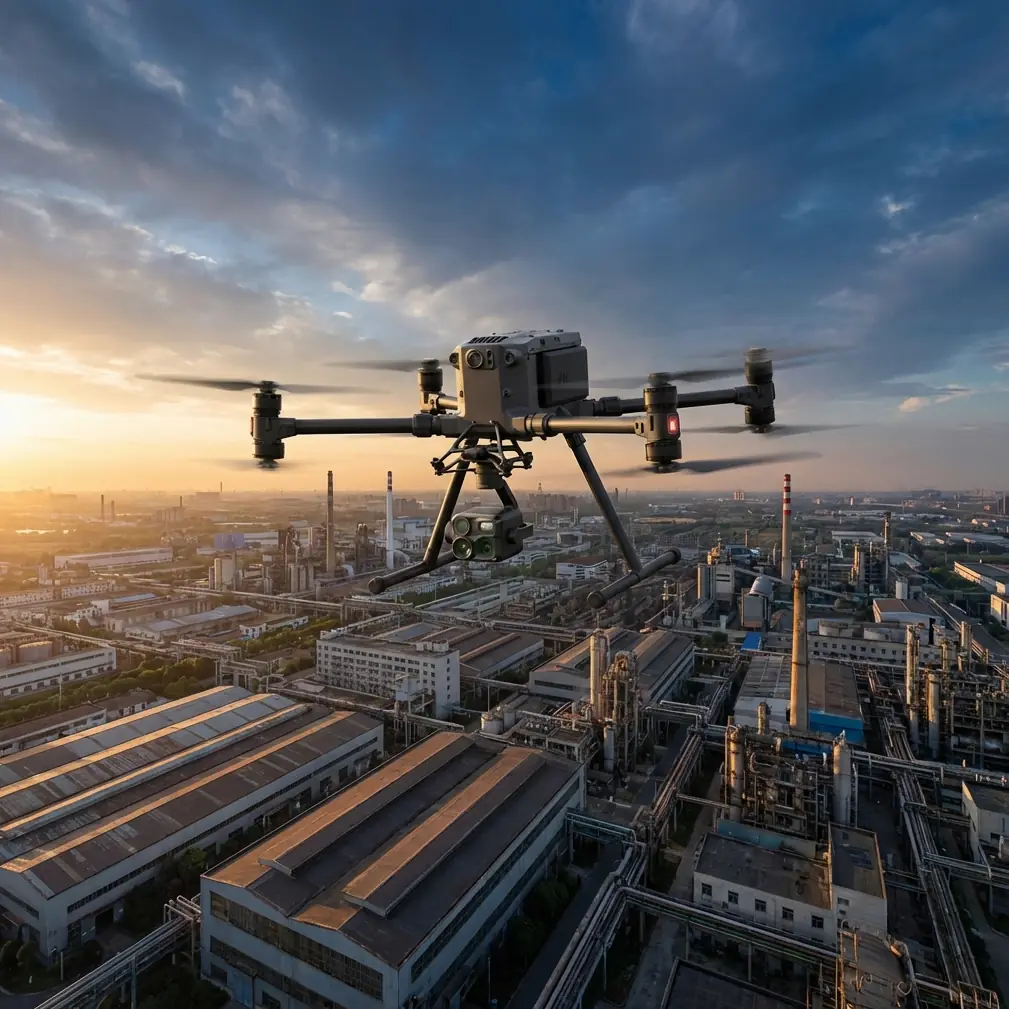
Matrice 4T for Coastal Construction Surveying: What Actually Matters in the Field
META: A technical review of Matrice 4T for coastal construction surveying, covering stability, thermal use, transmission reliability, battery handling, and why vibration and control discipline matter offshore.
By Dr. Lisa Wang, Specialist
Coastal construction work punishes weak drone workflows.
Salt in the air. Reflective surfaces. Fast-moving weather. Wind curling around unfinished structures. Barges, cranes, temporary platforms, and long linear assets that stretch radio links farther than a typical inland site. A drone that looks excellent on a spec sheet can become frustrating very quickly if its sensing, transmission, and power management do not stay predictable under those conditions.
That is the real lens through which the Matrice 4T should be judged for coastal surveying. Not as a generic enterprise aircraft, but as a working platform asked to document progress, detect anomalies, and maintain repeatable data capture in an environment where airflow and vibration are never trivial.
Why coastal construction is a different test
Most site managers think first about wind speed. That is only part of the story.
Near the shoreline, the aircraft is also dealing with turbulent air shaped by superstructures, sea walls, cranes, stacked materials, and partially enclosed buildings. Rotary-wing aviation literature has wrestled with this for decades. One helicopter design reference notes that shipboard operations become harder as sea state rises because wind, wave-driven vessel motion, and airflow disturbances from upper structures complicate approach, hover, and touchdown. It also emphasizes the need for clear control authority in pitch, roll, and yaw during takeoff and landing, especially when the platform itself is moving.
That matters for a Matrice 4T operator even if you never launch from a vessel.
The same aerodynamic logic appears on coastal construction sites whenever you are operating near elevated decks, temporary marine platforms, quay walls, or tall concrete cores with sharp edges. The aircraft may be stable in open air and then abruptly face crossflow, eddies, or localized downdrafts when it rounds a structure. In practical terms, this changes how you plan photogrammetry lines, façade passes, and thermal inspection orbits. It also changes how much trust you place in a “perfectly good” takeoff point if the return-to-home path crosses a disturbed wind corridor.
The Matrice 4T’s value here is not just that it can carry multiple sensing modes. It is that it gives one crew a way to verify conditions visually and thermally while staying connected over a longer working envelope through O3 transmission, with AES-256 protection for transmitted data. On coastal infrastructure jobs, where project information may include progress imagery, subcontractor sequencing, and thermal records tied to quality control, keeping the link both robust and secure is not a side issue. It is part of professional site governance.
A better way to think about the 4T payload mix
For construction surveying, the Matrice 4T is often discussed as if thermal is a niche add-on. That misses the point.
On a coastal site, thermal signature data can help identify moisture intrusion paths, insulation inconsistencies in newly enclosed sections, overheated temporary electrical components, and drainage irregularities that are easy to miss in visible light during bright midday conditions. Thermal does not replace photogrammetry. It sharpens the survey team’s decision about where to spend more time with it.
This is where the aircraft becomes more than a flying camera. The efficient workflow is usually:
- Fly a broad visible-light mission for site context and geometry.
- Overlay thermal observations to identify suspect zones.
- Return for targeted high-overlap passes or manual detail capture.
- Tie critical reconstruction areas back to GCP-supported control if the outputs will be used for measurement or contractual documentation.
That sequence matters because coastal jobs generate huge visual datasets, and not all of them are equally valuable. Thermal lets the crew prioritize where model fidelity or closer inspection is worth the battery budget.
The Matrice 4T is strongest when used this way: as a triage tool and documentation platform in one airframe, rather than as a pure mapping drone or pure thermal drone.
Stability is not only about flying feel
A lot of drone reviews stop at “it handles wind well.” That is too shallow for serious site work.
In classical aircraft hydraulic design, engineers pay close attention to pressure pulsation because vibration and pulsation can shorten system life, damage components, and create failures indirectly. One design source warns that pressure pulsation mainly comes from pump flow fluctuation, hydraulic accessories, and improper throttling. It also states that when pulsation amplitude exceeds 10% of rated pressure, the condition is dangerous and unacceptable. Even before that point, excessive pulsation can cause pipe vibration, clamp wear, and reduced service life. For a 21 MPa hydraulic system, foreign research cited in the source found that keeping pulsation amplitude below a very small fraction of rated pressure was a key target.
Now, the Matrice 4T is not a manned aircraft hydraulic circuit. But the engineering lesson transfers cleanly: repeated oscillation, vibration, and load fluctuation do not need to cause immediate failure to degrade performance and reliability over time.
For coastal drone surveying, that shows up in three places:
1. Image quality during oblique and façade work
Small airframe corrections in gusty, structure-disturbed air can soften image consistency. Not enough to ruin every frame, but enough to reduce reconstruction confidence in edge zones and repetitive surfaces.
2. Gimbal and sensor longevity
High-frequency vibration exposure is cumulative. If you routinely operate near hard-edged turbulence around marine structures, you need to care about post-flight inspection discipline, not just mission completion.
3. Battery and connector health
Power systems do not like repeated harsh loading cycles combined with salt exposure and abrupt thermal changes. You may not notice degradation in one week. You will notice it over a season.
This is one reason the Matrice 4T’s hot-swap battery workflow matters beyond convenience. If you can change packs quickly without rushing a full aircraft reset cycle, you are more likely to keep the mission tempo controlled. Crews make fewer bad decisions when battery management is calm.
A field battery tip that saves trouble
Here is the battery habit I recommend on coastal sites, especially during repetitive progress surveys.
Do not fly both batteries in a pair down to a similar low percentage before swapping. Instead, rotate packs so that the “freshest” pair is reserved for the longest or most wind-exposed segment of the mission, usually the farthest shoreline edge, elevated deck run, or return leg against the prevailing breeze.
That sounds obvious until a crew gets comfortable and starts burning batteries evenly.
In the field, the better approach is to stage the mission by aerodynamic risk, not by geometry alone. Put short, near-home, low-altitude captures on the less critical battery pair. Hold your strongest pair for the segment where reserve margin matters. This becomes even more valuable when one side of the site is sheltered and the other opens directly to the sea.
I also advise crews to pause for a quick connector and bay check every few swaps. Salt haze and fine dust are a bad combination. Hot-swap systems speed operations, but speed should not erase inspection. A twenty-second visual check is often the difference between a smooth afternoon and a preventable interruption.
If your team wants a practical setup checklist for this kind of rotation, you can message our field desk here.
Transmission reliability offshore is a productivity issue
O3 transmission is often praised for range. In coastal surveying, range alone is not the headline.
The real benefit is link resilience while working around long corridors, reflective water, and mixed elevation. On many shoreline projects, the aircraft is not simply flying away from the pilot in a clean line. It is moving laterally behind steel, concrete, temporary scaffolding, and machinery. Video confidence affects whether the crew can make useful judgment calls in real time about overlap, shadowing, thermal contrast, and access risk.
The security side matters too. AES-256 is a practical feature for enterprise operations that move data through contractors, consultants, and asset owners. Coastal construction often involves phased handovers, utility interfaces, and commercially sensitive planning details. Secure transmission is part of professional standards, not a marketing extra.
BVLOS discussion needs discipline
BVLOS gets mentioned often with enterprise aircraft, but coastal work demands restraint here.
Yes, the Matrice 4T sits in the class of platform that naturally enters BVLOS planning conversations because of transmission capability, enterprise sensing, and corridor-style jobs. But on active construction sites, especially near shoreline infrastructure, the operational question is not whether longer-distance work is theoretically possible. It is whether the site, airspace, visibility, procedures, and regulatory framework support it safely and legally.
For most teams, the more realistic advantage is not immediate BVLOS deployment. It is that a platform designed with serious link performance, sensor utility, and operational redundancy tends to behave better even when used conservatively within visual-line workflows.
That distinction matters. Mature drone programs get more value from predictable VLOS operations than from aspirational BVLOS talk that never survives actual site risk review.
How I would deploy the Matrice 4T on a coastal build
For a typical coastal construction survey cycle, I would split missions into three layers.
Layer one: baseline geometry capture
Use planned photogrammetry to record the whole site consistently. If outputs must support measurement, control the mission with well-placed GCPs, especially where feature contrast is poor or where uniform surfaces near water can confuse reconstruction.
Layer two: thermal sweep
Run a targeted thermal pass over drainage zones, roof edges, temporary power installations, façade interfaces, and recently enclosed building sections. The aim is not artistic thermal imagery. It is anomaly filtering.
Layer three: discretionary detail collection
Based on findings from the first two layers, capture manual obliques and close visual records for problem areas. This is where the Matrice 4T earns its keep. One aircraft can move from survey context to thermal assessment to confirmation imagery without forcing a full platform change.
That reduces time on site, and on coastal sites, shorter exposure windows matter. Conditions often shift faster than the morning forecast suggests.
What the reference material gets right about real operations
The two source references may seem far removed from a modern enterprise drone, yet they point to the same operational truth.
The helicopter reference stresses that operations near moving decks and disturbed airflow depend on clear pilot cues, control response, and the ability to maintain safe takeoff, approach, and hover behavior despite environmental disruption. On a construction site near the coast, those environmental disruptions appear in milder but still meaningful forms: localized turbulence, unstable visual references over water, and changing approach geometry around structures.
The hydraulic design reference focuses on fault awareness, recorded system warnings, and the damage that pressure pulsation can do long before catastrophic failure occurs. The significance for a Matrice 4T program is not hydraulic theory itself. It is maintenance culture. Good drone operations treat vibration, repeated warnings, unusual noise, or reduced stability as engineering signals, not annoyances to be worked around.
That mindset is what separates dependable survey output from fragile output.
Final verdict
The Matrice 4T makes sense for coastal construction surveying when you use it as an integrated inspection and documentation tool, not just a camera platform. Its strongest case is operational efficiency: visible imaging, thermal signature review, secure O3/AES-256-linked field awareness, and a hot-swap battery workflow that supports steady mission pacing.
But the aircraft only shows its value when the crew respects the environment it is flying in.
Coastal air is rarely uniform. Structures create their own weather. Vibration and repeated load fluctuations have consequences even when they do not trigger an obvious fault. GCP discipline still matters. Battery rotation strategy matters. Conservative planning matters. If your team understands those realities, the Matrice 4T is not merely capable of surveying coastal construction sites. It is well suited to doing the job in a way that is faster, cleaner, and more operationally intelligent.
Ready for your own Matrice 4T? Contact our team for expert consultation.