
Matrice 4T in Windy Field Surveys: A Practical Case Study
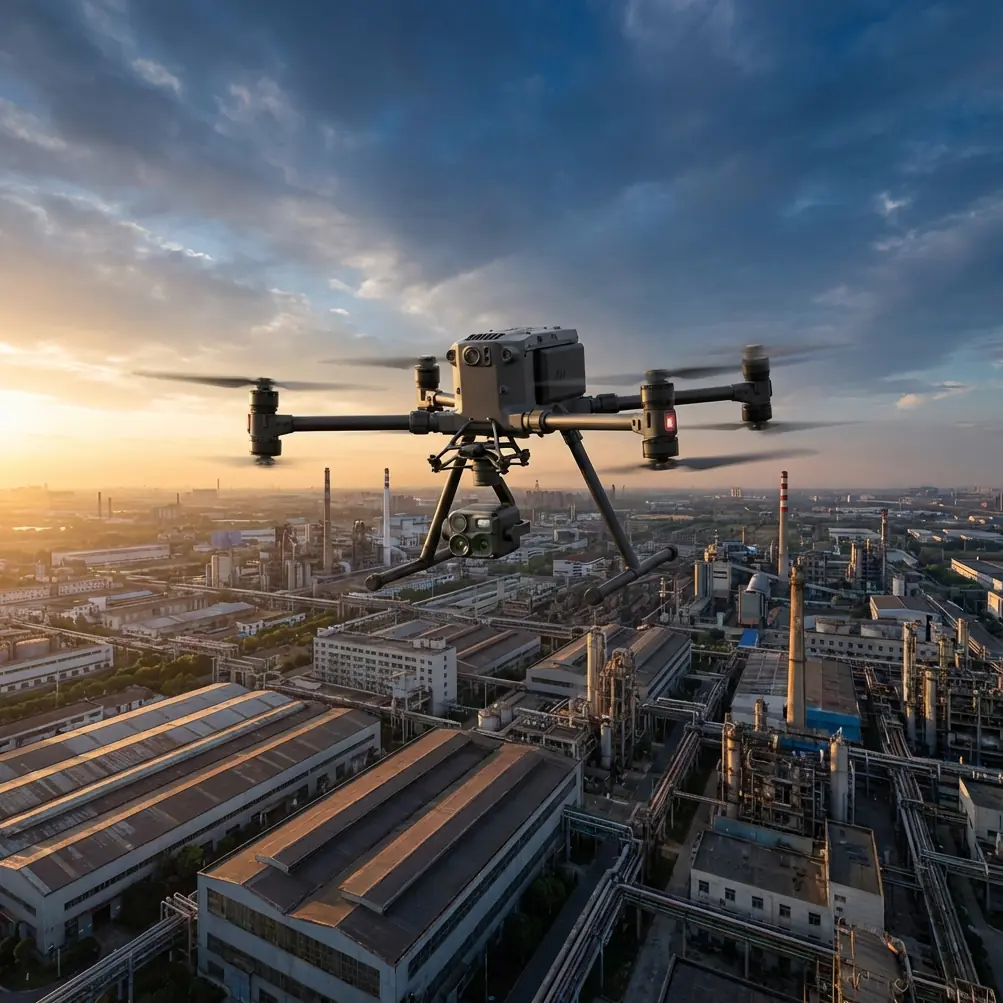
Matrice 4T in Windy Field Surveys: A Practical Case Study from the Edge of Usable Conditions
META: Expert case study on using the DJI Matrice 4T for windy field surveying, with practical insights on thermal work, photogrammetry, O3 transmission, GCP workflow, AES-256 security, and field-ready battery strategy.
Wind changes everything in agricultural surveying.
Not in an abstract way. In a very literal one. It alters overlap consistency, pushes the aircraft off line, softens image quality if you ask too much of the gimbal, and exposes every weakness in your field workflow. When a crew says they need to survey fields “in windy conditions,” they are not asking for a brochure summary. They are asking whether the aircraft can still produce usable data when the environment stops cooperating.
That is where the Matrice 4T becomes interesting.
I want to frame this around a real-world style operating scenario rather than a spec recital: a field team surveying large agricultural parcels during a narrow weather window, dealing with persistent crosswinds, intermittent cloud cover, and the need to collect both visual mapping data and thermal observations in a single deployment cycle. The aircraft in focus is the Matrice 4T, and the question is simple: how well does it hold up when the field is open, the wind is steady, and the data still has to be defensible?
Why the Matrice 4T fits this kind of job
The Matrice 4T is often discussed for its multi-sensor flexibility, but that only matters if those sensors remain useful under stress. Windy agricultural work is exactly that kind of stress test.
A typical field survey mission in these conditions is rarely just “fly and take pictures.” It usually has at least three layers:
- A visible-light dataset for orthomosaic generation and field condition review
- A thermal pass to identify irrigation inconsistency, drainage issues, or localized plant stress signatures
- A verification workflow using GCPs so the final map can stand up to agronomic planning or contractor review
The value of the Matrice 4T is that it can compress those requirements into one aircraft platform. That reduces setup friction in the field. Less gear switching means fewer delays, which matters when wind speeds are climbing and the crew has maybe two workable hours before conditions deteriorate further.
The operational problem with wind in agricultural mapping
Field surveying looks easy from a distance because the terrain is open. In practice, open terrain is exactly why wind becomes such a problem.
There is little shelter. Gusts tend to stay organized across long lanes. Crops create visual uniformity that can make image stitching less forgiving if overlap drops. If the aircraft is making small but repeated corrections during the route, the mapping result may still process, but not always at the standard a consultant or farm manager expects.
This is where photogrammetry discipline matters more than the airframe alone.
With the Matrice 4T, crews working in windy conditions should think less in terms of “maximum area per flight” and more in terms of “consistency of capture geometry.” That means conservative route planning, stronger overlap margins, and a willingness to reduce groundspeed when the wind is attacking the line from the side. A mission that finishes five minutes faster but produces inconsistent edge alignment is not efficient. It is just expensive rework hidden inside a rushed sortie.
The thermal side: where the 4T becomes more than a mapping drone
The “T” in Matrice 4T is what often changes the mission from routine coverage to actual diagnosis.
In windy field environments, visible imagery can show crop variation, standing water patterns, or damaged rows, but thermal signature adds another layer. It helps crews see where temperature differentials suggest blocked irrigation, uneven moisture retention, or stressed zones developing before they become obvious in RGB imagery. That is not theoretical. In practical crop management, catching a heat anomaly early can shift a farmer’s response from broad intervention to targeted correction.
The catch is that thermal interpretation in open fields must be done carefully. Wind can cool surfaces and blur thermal contrast, especially later in the day. So the aircraft matters, but timing matters just as much. The Matrice 4T gives a surveyor the ability to collect thermal and visual data from the same platform, which improves alignment between what is seen and what is inferred. That pairing is often more useful than thermal data in isolation.
A crew that knows what it is doing will usually use the thermal dataset as a diagnostic layer, not as a standalone answer. The Matrice 4T supports that style of work well because the handoff between thermal observation and visual confirmation is immediate.
O3 transmission is not just a comfort feature
One detail that gets treated too casually in field operations is transmission reliability.
For windy agricultural surveys, stable live transmission is not merely about pilot convenience. It affects confidence, route supervision, and the ability to make on-the-fly decisions when conditions shift. O3 transmission matters here because open farmland often gives you long visual corridors, but also exposes the aircraft to atmospheric inconsistency and distance that can punish weaker links. If the pilot is dealing with wind corrections and simultaneously fighting unstable downlink, the chance of a poor data run rises fast.
On a windy survey day, you want the pilot’s attention on aircraft behavior, overlap integrity, and obstacle awareness around treelines, irrigation rigs, or utility crossings. You do not want that attention drained by uncertainty about link quality. O3 transmission is operationally significant because it helps preserve decision quality when the mission already has enough variables.
For teams exploring expanded workflows, including operations where the route may eventually fit a compliant BVLOS framework under local civil rules, link confidence and planning discipline become even more central. The Matrice 4T does not eliminate regulatory complexity, but it does align better with serious operational planning than lighter, more casual platforms.
Security and data handling matter more than many farm operators realize
Agricultural survey data is often underestimated.
People think of “just field imagery,” but the data can reveal irrigation layout, crop stress distribution, infrastructure condition, access roads, storage placement, and seasonal operational patterns. For contractors, consultants, and larger agribusiness operators, that is commercially sensitive information. AES-256 is therefore not a throwaway checkbox. It has operational significance.
Why? Because the survey process is no longer just about capture. It is also about custody. If a service provider is documenting field health across multiple sites, the client wants assurance that mission data, transmission integrity, and stored records are treated seriously. The Matrice 4T’s AES-256 security support helps position the aircraft within a professional data-governance workflow rather than a hobby-grade one.
That distinction becomes particularly relevant when a surveyor is working for cooperatives, large farms, or land managers who want a repeatable process and clear boundaries around data access.
Hot-swap batteries change the rhythm of field work
Battery strategy is one of the easiest things to underestimate until the wind is stronger than forecast.
In still conditions, mission timing is relatively straightforward. In windy conditions, energy use becomes less predictable because the aircraft is constantly making corrections and holding positional authority against the air mass. A platform that supports hot-swap batteries has an immediate advantage in field productivity. The benefit is not only reduced downtime. It is continuity of workflow.
That continuity matters when ground conditions are messy, GCPs are already laid out, and the crew has a narrow block of acceptable light for thermal and RGB collection. With hot-swap battery handling, the Matrice 4T can stay embedded in an efficient field sequence: land, change, relaunch, continue. The team keeps momentum. The GCP layout remains relevant. The weather window is used instead of wasted.
That kind of efficiency does not sound glamorous, but in practice it is what separates profitable survey operations from long days full of small avoidable delays.
A third-party accessory that genuinely helped
One of the better field upgrades I have seen paired with the Matrice 4T for agricultural work is a third-party high-visibility GCP kit with weighted ground targets and durable survey paint markers. Not exotic. Very effective.
In windy conditions, lightweight targets can shift or curl at the edges, especially in exposed fields with uneven stubble or dry soil. A weighted GCP target system keeps control points stable and readable. That has a direct effect on photogrammetry quality because the control points remain where they were measured, and they remain visually distinct in the captured imagery.
This sounds minor until you are trying to refine output accuracy after a long day in difficult conditions. If your ground control is compromised, the best aerial data in the world will not rescue the geospatial result. A robust third-party GCP kit enhanced the Matrice 4T workflow by making the survey more trustworthy, not just more convenient.
That is the kind of accessory worth discussing: one that improves the final product rather than just adding another gadget to the case.
The case workflow: how a windy field mission actually runs
Let’s break the scenario into the sequence that matters.
1. Preflight planning
The team checks wind direction first, not just speed. A crosswind-heavy route needs different planning than a headwind-tailwind profile. Flight lines are adjusted to support cleaner image geometry and reduce aggressive lateral corrections.
2. GCP deployment
Weighted targets are placed at sensible intervals with attention to field edges, elevation changes, and reference distribution. This is where the third-party accessory earns its place. Stable, visible targets save time later.
3. RGB photogrammetry pass
The crew prioritizes overlap consistency over raw area coverage. Windy conditions often reward restraint. Fly a bit slower. Keep capture geometry clean. Make the dataset easier to process.
4. Thermal verification pass
Rather than treating thermal as a decorative add-on, the operator uses it to inspect irrigation lines, drainage anomalies, and heat patterns that deserve follow-up. Thermal signature is only useful when interpreted in context, so suspicious areas are immediately cross-checked against visible imagery.
5. Battery turnover
Hot-swap battery capability keeps the aircraft in rotation while preserving the timing of the mission. The team does not lose twenty minutes to a cold restart cycle and field reshuffle.
6. Data handling and transfer
With AES-256 in the wider security conversation, the mission data can be managed in a way that better suits commercial clients who care about information control.
7. Review in the field
The O3 transmission link and stable situational awareness reduce guesswork. The pilot and observer can make sensible decisions before leaving the site instead of discovering preventable gaps back at the office.
Where the Matrice 4T is strongest in this scenario
The Matrice 4T is strongest when the job is not purely one-dimensional.
If all you need is a basic fair-weather map of a small field, many aircraft can produce something acceptable. The Matrice 4T starts to justify its role when the mission includes layered requirements: wind resistance in practical terms, thermal interpretation, map-grade discipline with GCP support, secure handling expectations, and efficient battery turnover.
That stack of needs is common in commercial agriculture and land management. A farm consultant may need to compare suspected irrigation stress against orthomosaic data. A contractor may need a documented baseline before drainage work. A grower may want thermal checks on a windy morning because waiting for a perfect weather day means missing a critical intervention window.
The aircraft is not magic. Wind can still degrade outcomes if the operator gets greedy with mission speed or area. But the Matrice 4T gives a competent team room to work professionally in conditions that would expose the limits of less capable platforms.
What I would tell a field team before deployment
Three things.
First, respect the wind early. Do not assume the aircraft’s capability means the mapping plan should stay unchanged.
Second, use thermal with intent. The Matrice 4T’s thermal payload is most useful when tied to a question: irrigation issue, drainage irregularity, crop stress, equipment leak, or infrastructure check.
Third, do not skimp on control. GCP discipline is what turns aerial imagery into decision-grade survey output. If you need help thinking through a field-ready setup, including target kits and workflow planning, this WhatsApp field coordination line is a practical place to continue that discussion.
For windy field surveys, that is the real story of the Matrice 4T. Not hype. Not broad claims. It is a platform that makes sense when conditions are imperfect and the data still needs to hold up. Its O3 transmission improves command confidence. AES-256 supports professional data handling. Hot-swap batteries protect mission tempo. Thermal broadens the value of each sortie. And with the right third-party GCP accessory, the whole workflow becomes more reliable where it counts: in the final output.
Ready for your own Matrice 4T? Contact our team for expert consultation.