
Matrice 4T for Low-Light Highway Survey: A Field Case Study
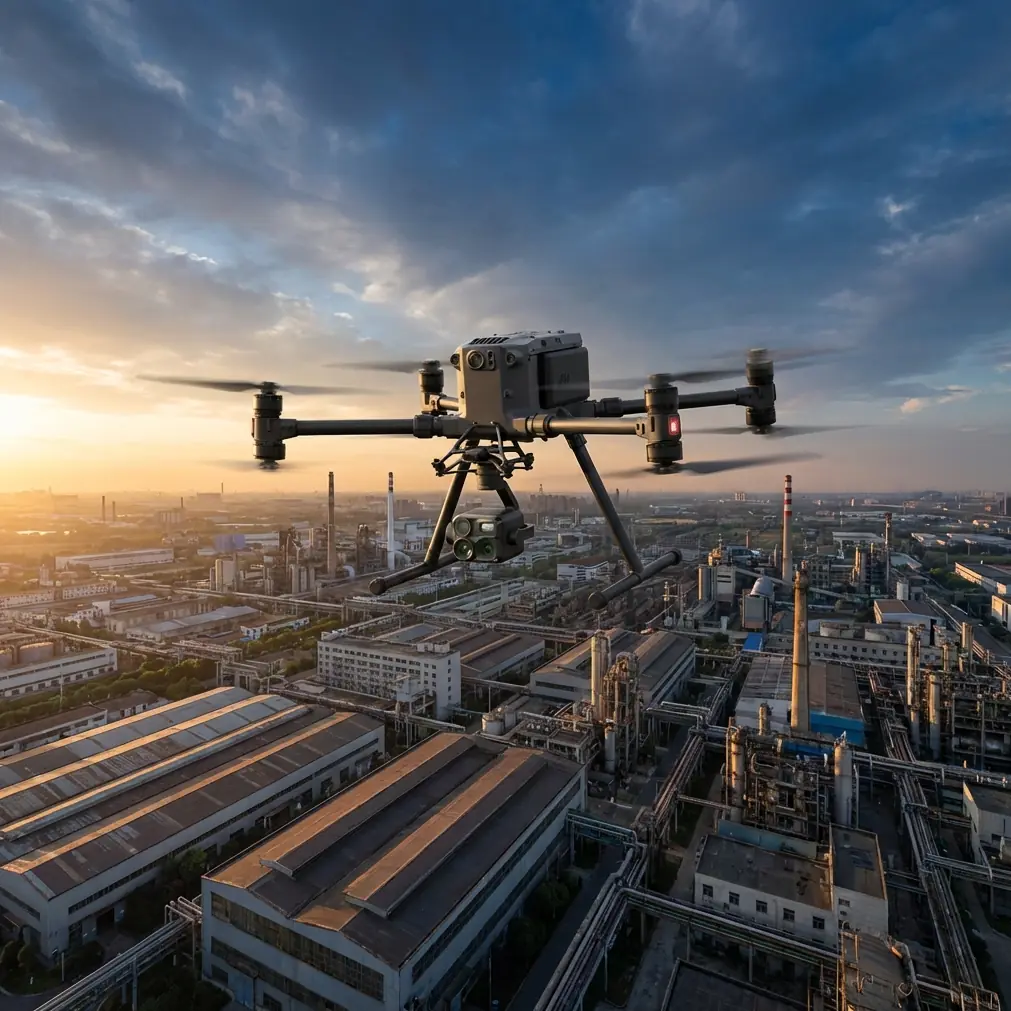
Matrice 4T for Low-Light Highway Survey: A Field Case Study in Testability, Uptime, and Data Confidence
META: Expert case study on using the Matrice 4T for highway surveying in low light, with a focus on thermal signature capture, photogrammetry workflow, diagnosability, uptime, and operational reliability.
Highway survey work changes character after sunset.
Traffic patterns calm down. Surface heat behaves differently. Expansion joints, recently patched asphalt, drainage issues, roadside electrical assets, and embankment anomalies start to separate themselves from the background in ways daylight imagery often misses. Yet low-light work also exposes a truth many drone teams learn the hard way: image quality is only part of the job. The real bottleneck is system confidence. Can the aircraft tell you what is wrong before it costs you a shift? Can your crew isolate a fault quickly enough to keep the mission on schedule? Can the data pipeline stay stable when the aircraft is asked to collect thermal signature, visible imagery, and geo-referenced documentation in one pass?
That is where the Matrice 4T becomes more interesting than a simple “night-capable drone.”
For highway surveying in low light, its value is not just in payload capability. It is in how the platform supports a more testable, diagnosable field operation. That distinction matters far more than spec-sheet theater when you have a narrow lane-closure window and a team waiting on deliverables by morning.
The job: low-light highway survey is a systems problem
Let me frame this through a real-world operating pattern rather than a brochure view.
A typical evening highway survey may combine:
- corridor inspection over several kilometers,
- thermal review of pavement and roadside assets,
- visible-light documentation for reporting,
- georeferenced image capture to support photogrammetry,
- repeat passes over areas flagged earlier in the day,
- and fast redeployment between access points.
On paper, those tasks are straightforward. In practice, they stack competing requirements onto one airframe: transmission stability, battery continuity, fault reporting, operator awareness, and enough onboard intelligence to avoid wasting time diagnosing preventable issues in the field.
This is why the most useful reference point here is not a drone ad. It is an old aircraft design principle from 飞机设计手册 第20册 可靠性、维修性设计, page 546. That page makes a blunt engineering point: testability requirements should be defined early at the system level because they directly affect maintainability, reliability, safety, supportability, availability, and life-cycle cost. It also stresses that this is an iterative tradeoff process, not an afterthought.
For highway survey teams, that philosophy translates neatly into drone operations. A platform that helps the crew detect, isolate, report, and record faults early will usually beat a platform that merely carries a strong sensor stack. On a night highway job, availability wins.
Why the Matrice 4T stands out in this scenario
The Matrice 4T fits this use case because it handles the mission as an integrated aircraft system rather than a camera with propellers.
That difference shows up in the field in three ways.
1. It supports multi-layer evidence, not single-sensor guesswork
Low-light highway assessment often produces ambiguous findings if you rely on only one imaging mode. A warm patch on pavement might indicate material differences, recent work, trapped moisture effects, or harmless thermal lag. Thermal signature is powerful, but without context it can lead to overcalling.
The Matrice 4T’s practical strength is that teams can correlate thermal observations with visible imagery during the same deployment. For road agencies, consultants, and asset managers, that shortens the path from “something looks unusual” to “here is the exact location, context, and likely explanation.”
That is operationally significant because it reduces return visits. Night work is expensive in time even when nobody is talking about budgets. If one sortie can capture thermal evidence plus supporting visuals for the same defect candidate, the reporting chain moves faster and with less interpretive drift.
Competitor platforms often force harder compromises here. Some deliver good thermal output but become clumsy once the team also needs corridor documentation and repeatable mapping support. Others may offer decent daytime mapping behavior but feel less coherent in low-light mixed-sensor work. The Matrice 4T tends to excel because it is comfortable living in that overlap zone.
2. O3 transmission matters more on highways than many teams admit
A highway corridor is not a clean open field. You are dealing with reflective surfaces, light poles, sign gantries, passing vehicles, roadside clutter, and long linear geometry that can punish weak links in transmission consistency. For survey crews working near legal and procedural limits, stable command-and-video performance is not a luxury.
This is where O3 transmission enters the conversation as a practical advantage rather than a buzzword. In low-light corridor work, stable situational awareness reduces hesitation. That means smoother flight execution, fewer unnecessary pauses, and less time spent double-checking whether a visual dropout is environmental noise or a genuine aircraft issue.
If the mission involves sensitive infrastructure imagery or pre-release construction documentation, AES-256 also matters. Not because encryption is glamorous, but because survey programs increasingly need to show that captured data and transmission practices align with client security expectations. This is especially relevant on transport infrastructure jobs tied to concessionaires, engineering firms, or public-sector documentation controls.
3. Hot-swap batteries keep the mission rhythm intact
Highway surveys rarely fail because one battery runs low. They fail because the workflow gets broken. The crew lands, swaps power, re-establishes settings, loses continuity, or misses the ideal thermal window after the pavement starts cooling unevenly.
Hot-swap batteries are one of those features that sounds small until you operate without them. On a low-light corridor mission, battery exchange speed supports data continuity. Thermal conditions change by the minute. Traffic dissipates, wind shifts, road surfaces cool at different rates, and equipment cabinets release heat differently over time. Faster turnaround between sorties preserves comparability.
That is not just convenience. It supports more consistent interpretation.
A note from aircraft design that applies directly to drone crews
The handbook reference on page 546 also states that before engineering development begins, the system-level fault detection and isolation requirements should be defined and then allocated down to lower product levels such as subsystems and LRUs. In manned aviation language, this is about making sure diagnosability is not vaguely desired but structurally built into the aircraft and its components.
Why does that matter to a Matrice 4T operator surveying highways at night?
Because field efficiency improves dramatically when fault handling is not improvised. If the aircraft ecosystem is designed around detection, indication, reporting, and recordkeeping, then the operator can make cleaner decisions:
- continue,
- re-fly a segment,
- change batteries and resume,
- isolate a suspect subsystem,
- or abort before corrupted data spreads across the project.
This is one of the least appreciated dividing lines between professional UAV operations and hobby-grade thinking. The mission is not complete when the drone lands. The mission is complete when the data is defensible and the aircraft is ready for the next launch with minimal uncertainty.
The handbook’s phrasing around fault indication, reporting, and recording requirements is especially relevant here. Night highway work leaves little margin for “we think it’s fine.” Good crews need system feedback they can trust.
Photogrammetry in low light: where expectations need adjustment
The Matrice 4T can support photogrammetry-related corridor documentation, but this is the point where operator discipline matters more than platform marketing.
Low-light missions are rarely ideal for classic high-precision mapping compared with controlled daylight collection. If your deliverable demands strict measurement confidence, GCP planning still matters, and expectations around overlap, shutter conditions, and reflight criteria need to be explicit. The drone can gather usable corridor imagery, but survey-grade rigor still depends on field control and workflow design.
This is where the second reference document, the mathematics handbook on pages 96–97, offers an unexpectedly relevant lesson. Those pages cover partial derivatives, composite function differentiation, and total differentials. That sounds abstract until you think about how mapping errors actually accumulate. In a drone survey workflow, output accuracy is not driven by one variable. It is the result of interacting inputs: altitude, viewing angle, timing, control placement, image quality, thermal contrast, and georeferencing behavior. Small changes in one parameter can alter the final model through compound effects.
That is essentially a field version of a composite-function problem.
For a highway team using the Matrice 4T, the operational takeaway is simple: do not treat thermal collection, visible capture, and photogrammetry as isolated tasks. They influence each other. A flight plan optimized only for thermal anomaly detection may not produce the image geometry you want for later modeling. A mapping grid that looks elegant on screen may miss the temporal thermal behavior you came to observe.
The best crews build around the interactions.
A practical case pattern: what a strong M4T highway workflow looks like
Here is the workflow I recommend for low-light highway survey programs using the Matrice 4T:
Pre-mission
Define the mission at the system level, not just the flight level.
That means deciding in advance:
- which assets require direct diagnostic attention,
- what constitutes a thermal anomaly worth escalation,
- what visible imagery must accompany each thermal finding,
- which sections need photogrammetry-grade coverage,
- and what fault conditions trigger immediate pause or reconfiguration.
This mirrors the aircraft handbook’s idea that testability and diagnostic requirements should be established early, not improvised later.
In the field
Use the first pass to establish corridor context.
Then use targeted revisits over:
- patched pavement sections,
- drainage transitions,
- bridge approach slabs,
- retaining wall interfaces,
- utility boxes and roadside electrical points,
- and areas where surface temperature deviates from adjacent material.
The Matrice 4T is especially effective here because it can help collapse multiple observation tasks into one aircraft deployment without turning the operation into a sensor juggling act.
Battery turnover
Treat battery change as part of data design.
With hot-swap batteries, keep turnaround tight enough that your second sortie remains thermally comparable to the first. That matters when you are trying to confirm whether a hotspot is persistent or simply changing with environmental cooling.
Data security and transmission
If the corridor involves critical infrastructure or client-sensitive construction records, document your transmission and data handling process. Mentioning AES-256 and your operational controls can help satisfy stakeholders who care about more than image output.
Post-flight review
Do not only inspect images. Review aircraft health indications and mission logs with equal seriousness. If there was a signal irregularity, sensor inconsistency, or system warning, tie that event to the relevant data segment before issuing findings.
That is textbook testability logic applied to UAV work.
Where the Matrice 4T beats weaker alternatives
The most common weakness I see in competing platforms for this exact use case is fragmentation.
One drone might offer acceptable thermal imaging but poor mission continuity. Another may fly well enough but lacks the integrated feel needed when the operator is balancing corridor awareness, image capture, and quick troubleshooting under time pressure. A third may be marketed heavily for mapping, yet become awkward once low-light multi-sensor inspection enters the picture.
The Matrice 4T tends to outperform in low-light highway work because it reduces friction between sensing, flying, and diagnosing. That is a bigger advantage than a single headline spec.
For teams planning corridor programs, the smarter question is not “Which aircraft has thermal?” Nearly all serious contenders can answer yes. The better question is: Which aircraft helps the crew maintain availability and confidence when thermal, visual documentation, and operational reliability all matter at once?
That is where the Matrice 4T separates itself.
The human factor: training beats technology drift
Even with a strong platform, highway survey quality still depends on people who understand interaction effects.
The aircraft handbook emphasizes not only built-in test capability but also the role of technical documents, personnel skill levels, and training schemes across maintenance levels. That old aviation lesson still holds. A Matrice 4T program performs best when pilots, observers, and data reviewers share the same diagnostic thresholds and reporting language.
Without that, advanced hardware simply produces sophisticated inconsistency.
If your team is refining a low-light corridor workflow and wants to compare planning notes or operational setup, I’ve found it useful to keep the conversation direct through a quick project chat here.
Final assessment
For highway surveying in low light, the Matrice 4T is not compelling because it makes night flights look futuristic. It is compelling because it behaves like a professional survey system should: one that supports evidence layering, stable corridor operations, secure transmission, efficient battery turnover, and a more testable mission structure.
That last point deserves emphasis. The strongest insight from the reference material is that diagnosability is not a side feature. In aircraft design, it affects availability, maintainability, safety, and supportability from the start. The same logic applies to drone survey operations. If your platform helps you detect issues early, isolate them clearly, and preserve mission continuity, your deliverables improve and your field risk drops.
For low-light highway work, that is exactly the kind of advantage that matters.
Ready for your own Matrice 4T? Contact our team for expert consultation.