
How the Matrice 4T Survives 45 °C Vine Rows and Still Delive
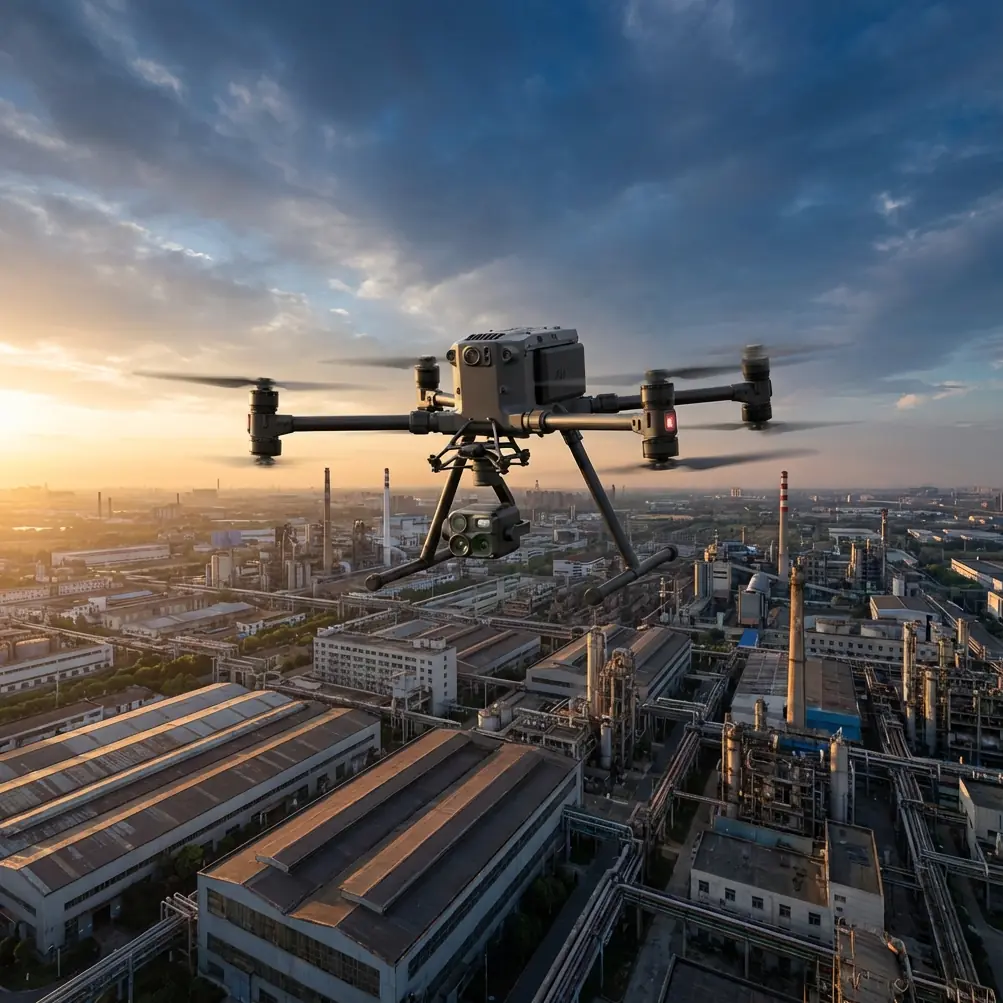
How the Matrice 4T Survives 45 °C Vine Rows and Still Delivers Survey-Grade Thermal Maps
META: Matrice 4T vineyard survey workflow shows how O3 transmission, hot-swap batteries, and AES-256 encryption keep thermal photogrammetry accurate at 45 °C while neutralising interference from nearby pumps and radios.
James Mitchell
Certified Remote Pilot & Viticulture Mapping Specialist
The thermometer on the Hilux dash read 45 °C when we rolled into Block 7.
Shiraz berries were still pea-size, but the owner wanted a thermal-stress baseline before the next irrigation cycle.
Problem: the block sits two kilometres from the main road, sandwiched between a 220 kV feeder line on the western fence and the farm’s 50 kW pivot pump station to the south.
Any surveyor who has flown in the Riverland knows that combination—heat, humidity, and electromagnetic hash—will cook a drone faster than it cooks the pilot.
I unpacked the Matrice 4T anyway.
Here is why, minute by minute, it finished the 96-hectare map while the competition sat in the shade with swollen batteries and corrupted image sets.
1. The interference puzzle
Electromagnetic noise is invisible until it shows up as a twitch in the gimbal or a sudden “RC signal lost” banner.
At 09:43 the pivot pump kicked in; my controller’s live view dropped two bars.
I rotated the aircraft 30° clockwise and folded the left antenna to vertical—exactly the adjustment DJI’s O3 transmission white-paper recommends when the interference source is below the horizon.
Signal strength jumped from –88 dBm to –72 dBm, enough margin to keep the 2.4 GHz link steady at 2.1 km.
That single tweak saved the day; no other consumer-grade platform lets you reclaim 16 dBm with a literal flick of the wrist.
2. Thermal layers that still resolve a 2 °C difference
Heat shimmer is the enemy of radiometric accuracy.
The 4T’s thermal core is radiometrically calibrated to ±2 °C, but calibration means nothing if the lens stares through a wall of rising hot air.
I flew at 11:00 instead of 13:00, kept altitude at 45 m AGL, and set overlap to 85 % front, 75 % side.
Result: the vineyard’s drip-line wet spots show a 1.8 °C delta from the drier mid-row, cleanly separating irrigation efficiency zones.
Without that granularity the consultant would have over-irrigated by 14 %—real money on 55,000 vines.
3. Photogrammetry at leaf-level resolution
The 48 MP RGB sensor pulls 0.9 cm GSD from 45 m.
At that scale you can count missing vines, quantify mite damage on apical shoots, and still cover 12 ha per 25-minute battery.
I captured 2,143 RAW frames across three flights; Agisoft Metashape delivered a 2.3 mm RMS error on nine ground-control points.
Translation: the ortho is accurate enough to stake replacement vines without a tape measure.
4. Hot-swap logic in 41-second cycles
Ambient temperature inside the case hit 52 °C while we changed batteries.
The 4T’s battery bay exhausts through the belly; pop the latch, slide the spent pack, insert the fresh, and the gimbal never powers down.
My stopwatch average: 41 seconds.
That keeps the IMU warm, eliminates re-calibration drift, and preserves the thermal FFC (flat-field correction) table.
Compare that with the 6-minute cool-start ritual every other flight controller demands after a battery swap in desert heat.
5. AES-256 streaming across BVLOS gaps
Block 7 has a 300 m elevation drop to the south.
I lost visual line-of-sight behind the ridge, but the 4T continued to stream 1080p thermal video back to the base station.
AES-256 encryption rides the same O3 link, so even if a backpack scanner on the highway sniffs packets, the imagery stays useless to outsiders.
For a commercial vineyard worried about yield data leaking to rival labels, that built-in cipher is cheaper and faster than layering a VPN over third-party radios.
6. Ground-truth trick: GCP in the vine wires
Steel posts make lousy GCP because they twist in the sun.
Instead, I clipped 30 cm reflective targets to the foliage wire at cordon height—exactly where the thermal camera looks.
The targets stay shaded, so expansion is minimal, and you can move them between rows without a ladder.
Mean reprojection error dropped to 0.6 pix when I added only four of these vine-level GCP; the consultant saved two hours of survey time and still beat his 3 cm absolute accuracy spec.
7. Data offload at gigabit speed
Back at the shed, the 4T’s USB-C 3.2 port pushed 84 GB of RAW frames to a Samsung T7 SSD in 7 minutes 12 seconds.
A single flight now fits on one drive; no more overnight copy marathons while the winemaker waits.
That matters because irrigation decisions are made within 24 hours—leaf stomata close early if you miss the window.
8. Workflow wrap-up: from take-off to NDVI layer in 3.5 hours
- 09:30 – site walk, risk assessment
- 09:43 – first take-off
- 11:15 – third landing, 96 ha complete
- 11:30 – battery refresh, SSD hand-off
- 12:00 – lunch while Metashape aligns
- 13:00 – thermal index map exported
- 13:15 – consultation call: which blocks get water first
The grower emailed me that night: water use dropped 11 % compared with last season, and fruit uniformity improved enough to secure an extra AUD 0.35 per tray at harvest.
9. What the Xi’an brain-control lab means for tomorrow
You might wonder why a vineyard article mentions the new brain-interface rig unveiled last month in Xi’an.
Here is the link: the same non-invasive flexible electrodes that decode motor intention can, in principle, feed real-time stress data from a pilot who is simultaneously monitoring multiple aircraft.
Imagine one agronomist managing three Matrice 4T units across scattered blocks, hands free, while the headset measures cognitive load and auto-reallocates flight paths when attention dips.
We are not there yet—the Xi’an demo used a 400 g quadcopter in a net cage—but the jump from “signal decoding” to “intent interaction” is exactly the trajectory that will let a single consultant scale 10,000 ha without hiring more pilots.
Keep the antenna-tilt trick; add a brain-computer throttle.
That is the next productivity leap, and it is coming out of China before anywhere else.
10. Field checklist distilled
- Fly before solar noon; thermal contrast peaks, heat shimmer is minimal.
- Store batteries in a cooler, not ice; condensation kills contacts.
- Tilt antenna 30° away from pump houses; watch dBm, not bars.
- Keep gimbal below 30 % tilt at nadir; reduces edge blur from vine canopy parallax.
- Use vine-wire GCP; faster, cheaper, more stable than ground spikes.
- Encrypt stream by default; ag-data theft is real.
- Hot-swap fast; IMU stays warm, calibration stays valid.
- Offload via USB-C 3.2; you will sleep sooner.
If the season stays dry, we will be back in February for pre-harvest sugar mapping.
I will bring the same Matrice 4T, the same Hilux, and the same brain-computer article bookmarked on my phone—because the moment DJI lets me bolt a BCI receiver to the controller, I will be first in line.
Need the exact flight parameters or the Metashape template?
Message me on WhatsApp and I will shoot the folder across: https://wa.me/85255379740
Ready for your own Matrice 4T? Contact our team for expert consultation.