
Field Report: Tracking an Urban Coastline With the DJI
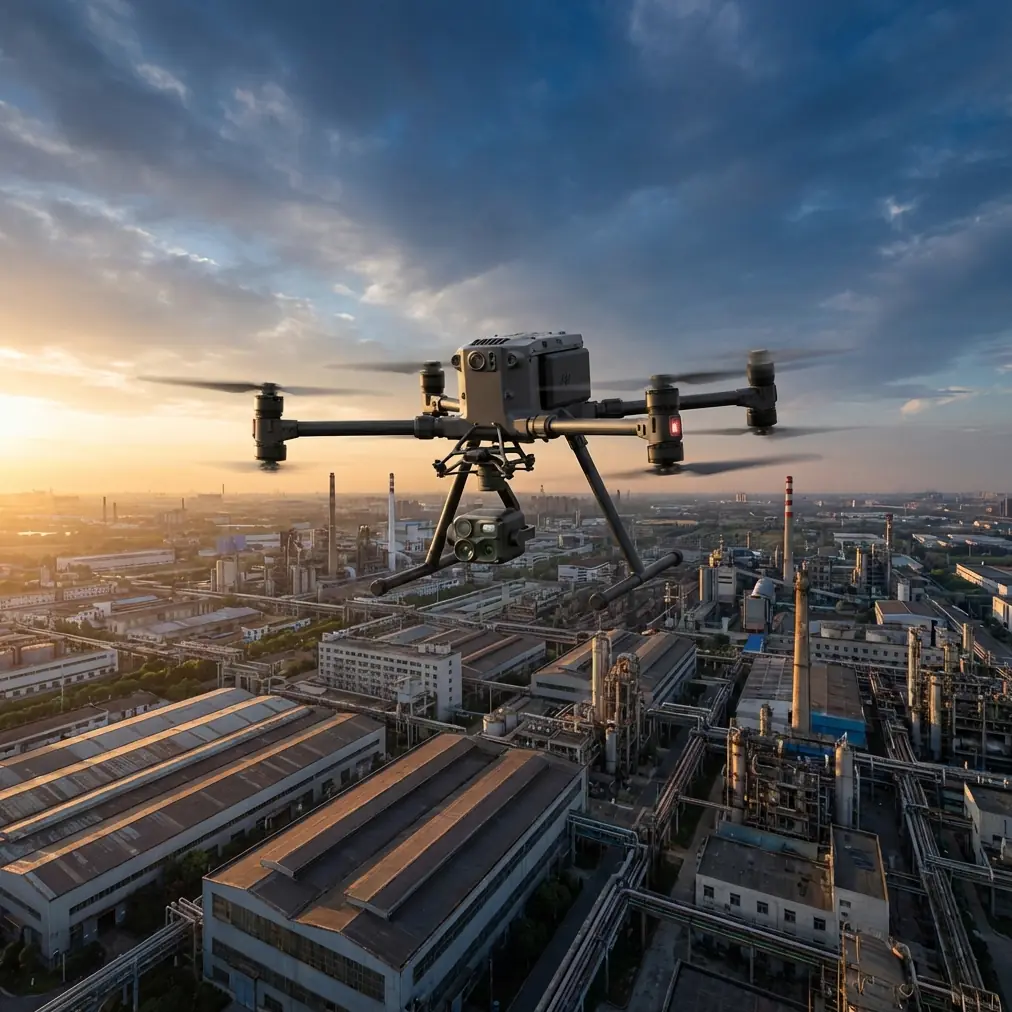
Field Report: Tracking an Urban Coastline With the DJI Matrice 4T
META: Expert field report on using the Matrice 4T for urban coastline tracking, with thermal workflows, O3 transmission, AES-256 security, GCP planning, and real operational lessons.
Urban coastlines look simple on a map. In the field, they are anything but. You are dealing with shifting waterlines, concrete heat bloom, gulls cutting across the flight path, reflective surfaces, radio clutter, and the constant problem of documenting change without losing positional accuracy. That is where the Matrice 4T earns its place—not as a spec-sheet trophy, but as a practical aircraft for teams that need to see more than the visible scene.
I spent the last stretch of shoreline work using the Matrice 4T in a dense coastal district where seawalls, marinas, pedestrian paths, drainage outlets, and light industrial lots all converge within a narrow corridor. The assignment was straightforward on paper: track shoreline condition, identify heat anomalies near outfalls, and produce usable site intelligence for follow-up inspections. The execution demanded much more. This platform’s mix of thermal sensing, secure transmission, and field-ready power management changed how the mission could be run.
The most instructive moment came just after sunrise near a concrete revetment behind a public promenade. Through the visible feed, the edge conditions looked unremarkable—wet rocks, algae sheen, scattered debris, a line of birds lifting off as the tide turned. In thermal, the scene told a different story. A compact hotspot appeared in the lee of a retaining wall where runoff had pooled. At first glance it suggested a warm discharge path. Then the signature shifted, elongated, and moved against the rock line. It turned out to be a seal pup tucked into a wind shadow, almost invisible in the cluttered visual background but distinct enough thermally to trigger a pause and reroute. That single encounter justified the layered sensor approach. On an urban coastline, wildlife does not stay in tidy conservation zones. It appears in infrastructure margins, and crews need tools that help them detect it before they become the hazard.
That is why thermal signature matters here beyond the usual search-and-inspection talking points. Along a built coastline, temperature contrast helps separate living subjects, moisture patterns, failing equipment, and suspect runoff when the visible scene is visually noisy. The Matrice 4T lets an operator move from broad situational scan to targeted verification without changing airframes or restarting the mission. For shoreline work, that continuity matters. Tidal windows are narrow. Wind rarely improves with time. You do not want to spend the best part of the mission reconfiguring the aircraft while conditions drift.
There is another practical reason the aircraft fits this kind of job: transmission resilience. O3 transmission is not a glamorous feature until you fly beside apartment towers, road traffic, marine antennas, and waterfront commercial buildings all competing for signal space. Then it becomes central to mission quality. On this coastline run, route planning was shaped as much by line-of-sight preservation as by geography. Even so, there were legs where the aircraft had to work near signal-hostile structures, especially around steel pier hardware and service buildings. A stable feed meant decisions could be made in real time rather than from delayed assumptions. That changes pilot behavior. Instead of flying overly conservative, wide-offset lines to protect link quality, you can hold tighter, more useful geometry while still maintaining control confidence.
For readers focused on urban coastal monitoring, that operational significance is easy to miss if you only think in aviation terms. Better transmission does not simply reduce stress. It improves the quality of collected evidence. If the pilot can keep a reliable view while tracking a seawall edge or drain outlet, the resulting imagery is cleaner, the revisit passes are fewer, and the handoff to engineers or environmental teams is stronger. Signal reliability turns into survey discipline.
Security also deserves more attention than it usually gets in drone discussions. AES-256 encryption is one of those details that can sound abstract until you remember what urban shoreline missions often capture: port-adjacent infrastructure, utility corridors, stormwater assets, restricted perimeters, and public movement patterns. Not every coastline survey is sensitive, but many contain pieces that become sensitive when combined. A secure transmission architecture reduces exposure during collection and is particularly relevant for municipal, contractor, and utility workflows where flight data may sit inside broader compliance requirements. For organizations operating near critical infrastructure or populated waterfronts, security is not an extra box to check after the mission. It has to be built into the mission design from the start.
The Matrice 4T also lends itself to mixed-output work, which is exactly what these coastal tasks require. You are rarely flying for one product only. One pass may support thermal anomaly detection. The next may feed photogrammetry. Then you need context stills for reporting and a closer inspection angle for maintenance planning. Trying to split those needs across multiple systems sounds neat in procurement documents and messy in the field. A single platform that can bridge these outputs keeps teams moving.
Photogrammetry on an urban coast comes with its own traps. People assume the challenge is mainly over-water overlap, but the bigger issue is control. You need dependable GCP placement where access is constrained by fencing, slippery rock, tidal exposure, and public space restrictions. Ground control points along promenades, access roads, and stable hardscape features give you the backbone for useful mapping, but only if you plan them around the tide cycle and pedestrian traffic. The Matrice 4T is not just helping gather imagery here; it is enabling a smarter sequence. Thermal and visual reconnaissance can identify the most meaningful zones first, then the mapping block can be tightened around them. That means fewer wasted passes over low-value segments and more attention on retaining walls, erosion pockets, outfalls, and surface deformation.
One benefit that became obvious over repeated flights was how hot-swap batteries reshape mission tempo. Coastline monitoring is full of interruptions: marine traffic enters the frame, pedestrians move into launch areas, weather shifts, wildlife appears, access gates open late, tide timing compresses your window. If each battery change forces a cold restart in your planning rhythm, the day gets fragmented fast. Hot-swap capability keeps the workflow coherent. We were able to land, rotate power, and get back into the air without rebuilding the whole operational picture. For long linear assets like coastal paths and seawalls, that continuity is valuable. The aircraft stays part of one evolving mission, not several disconnected short flights.
That matters even more for teams thinking ahead to BVLOS-aligned operating models. I am not suggesting every urban coastline job should be flown beyond visual line of sight. Regulations, risk assessments, and local operating conditions will dictate that. But the workflows built on the Matrice 4T point in that direction: secure data links, reliable transmission, repeatable sensor use, battery continuity, and the ability to collect inspection-grade and mapping-grade information in a single sortie architecture. Even when you are flying within current visual constraints, building procedures around that level of discipline prepares crews for more advanced operational approvals later.
There is a subtle but important human factor here too. The Matrice 4T reduces the need to choose between pilot workload and data quality. Coastal jobs are cognitively busy. You are watching wind over water, maintaining separation from birds, tracking public movement, checking reflections, managing return paths, and continuously deciding whether a thermal irregularity is a maintenance issue, a wildlife subject, or just solar loading on wet concrete. A system that presents dependable sensor information and stable link performance gives the crew more room to think clearly. Good drone operations are rarely about raw flight time. They are about decision quality per minute in the air.
On this assignment, the most useful pattern was to start with a shallow-angle visual sweep to understand traffic, birds, and surface conditions; switch to thermal for anomaly screening along drainage points and revetments; then run the photogrammetry section with pre-positioned GCPs on stable surfaces above the high splash zone. That sequence is not flashy, but it works because each stage informs the next. The seal pup encounter was a reminder that thermal is not just a detection tool for asset issues. It is also a risk-reduction layer that protects the environment the mission is supposed to study. In an urban coastal setting, that dual purpose is hard to overstate.
If your operation manages this kind of shoreline work regularly, it helps to build communication around field realities rather than generic drone capability lists. A better conversation starts with questions like these: Are you trying to identify subtle thermal differences near stormwater discharge? Do you need map products tied to GCPs for repeatable change detection? Are you flying in RF-dense corridors where O3 transmission stability directly affects route geometry? Are you handling sensitive site data where AES-256 should be part of the procurement discussion, not an afterthought? Those are the questions that separate useful deployment from expensive underuse. If you want to compare notes on a similar mission profile, you can message our field team here.
What stood out after several shoreline sessions was not a single dramatic capability, but the way the aircraft compressed uncertainty. We could identify heat irregularities without overcommitting resources. We could maintain a reliable operational picture in a busy signal environment. We could support mapping without breaking the mission into separate technology silos. We could pause for wildlife, re-plan, and continue without losing the day’s rhythm. That is what professionals actually need from a coastal drone platform.
The Matrice 4T is especially effective when the coastline is not pristine and open, but constrained, engineered, and crowded with competing signals—literal and figurative. It gives urban environmental teams, inspectors, and infrastructure managers a practical way to read the edge where land, water, and city systems collide. For tracking coastlines in these conditions, that combination of thermal awareness, secure connectivity, and efficient field workflow is not just useful. It is operationally decisive.
Ready for your own Matrice 4T? Contact our team for expert consultation.