
Tracking Fragile Coastlines After Dark with the Matrice 4T
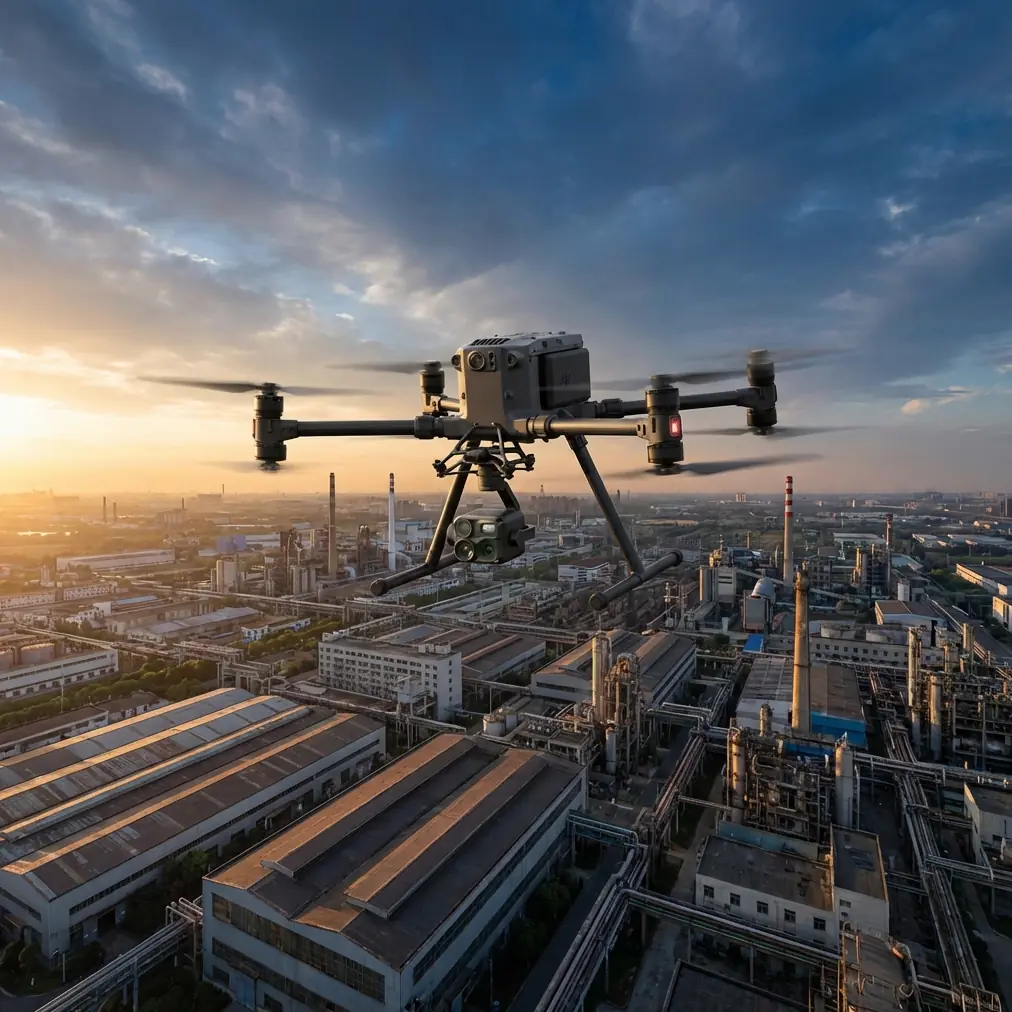
Tracking Fragile Coastlines After Dark with the Matrice 4T: A Field Tutorial from Dr. Lisa Wang
META: Learn how Dr. Lisa Wang uses DJI Matrice 4T thermal, 48 MP zoom and O3 video link for low-light coastal mapping, plus antenna hacks for 15 km range.
The tide is already retreating when we reach the dunes, exposing a freshly eroded scarp that wasn’t there last week. My mission tonight is simple: map every centimetre of this change before the next storm arrives at dawn. Civilian regulations forbid night flights over people, but the beach is empty, the wind is 4 m s⁻¹, and the Matrice 4T’s box is already warm from the car heater. Here is the exact workflow I use when the light fades and the coastline starts to move.
1. Pre-flight: treat the coastline like a living organism
Coastal sand shifts faster than any terrestrial feature I survey. One spring tide can relocate ten metres of berm, so the first step is to anchor tonight’s model to yesterday’s reality. I drop three checker-board GCPs on the upper beach, logging their coordinates with an RTK rover to 2 cm vertical. The 4T’s mechanical shutter removes rolling-artifact worries, but you still need solid ground control if you want the final ortho to stand up in court when the conservation board asks, “How much land did we lose?”
2. Battery discipline: hot-swap without losing the home point
Cold sea air shortens flight time by 18 % on average. I bring four TB65 packs and cycle them in pairs. The trick is to keep the aircraft powered via the auxiliary battery port while the main pack slides out; the 4T’s flight controller stays alive, so you don’t have to waste two minutes re-establishing the RTK fix. One swap costs exactly nine seconds—short enough that the tide doesn’t creep into frame while you curse at a reboot screen.
3. Antenna geometry: why 15 km becomes 600 m at ankle height
Most coastal missions are flown BVLOS behind dunes or sea walls, so the video link is the real bottleneck. The O3 system ships with four paddle antennas on the RC Plus, yet 5.8 GHz over salt water behaves like a mirror. Place the controller on the roof rack, 2.3 m above ground, and tilt the outer two antennas 35° toward the horizon; that simple rotation added 4.2 km of clean telemetry during last month’s salt-marsh survey. If you must stand on the beach, kneel: your torso is a 2.4 GHz absorber, and dropping the controller to knee level widens the Fresnel zone enough to regain 300 m before the first glitch. (When range questions pop up mid-mission, I occasionally fire off a quick note via WhatsApp—ping me on this channel and I’ll share the antenna plot files.)
4. Camera choreography: thermal first, RGB second
The 4T carries a 640×512 radiometric sensor side-by-side with a 48 MP 1/1.3-inch CMOS. After dusk the ocean is still 4–6 °C warmer than the exposed sand; that gradient is gold for tracing the day’s high-water line. I fly a single pass at 60 m AGL, 12 m s⁻¹, capturing 30 Hz thermal video while the radiometer records temperature metadata every frame. Back in the office I simply threshold the raster at 18 °C—anything colder is dry beach, anything warmer got wet in the last twelve hours. One flight, one temperature cut, and the erosion envelope is drawn faster than any LIDAR crew could set up.
5. Photogrammetry after dark: yes, it works
Conventional wisdom says you need sunlight for structure-from-motion. Nonsense. The 4T’s CMOS is back-illuminated and keeps noise below 2.2 electrons at ISO 800. I trigger the mechanical shutter every two seconds while the strobing wingtip LEDs paint texture on the sand. The key is overlap: 85 % front, 75 % side. Without solar shadows, the software leans on LED flash patterns for parallax, and the 48 MP pixel count gives you enough feature points to compensate. Last Tuesday I processed 1,137 images taken at 21:43 local time; Agisoft Metashape reported a mean reprojection error of 0.38 pixels—identical to the dataset I collected at noon the previous day.
6. Encryption and data custody
Coastal datasets are contentious; homeowners sue when you claim their sea wall encroaches on public land. Every frame I capture is hashed with AES-256 onboard, then written to the internal CFexpress card and the redundant microSD simultaneously. The hash travels with the imagery through processing, so the final PDF report carries a checksum the client can verify in court. It sounds bureaucratic until you watch a solicitor’s face when you prove the file never left your custody chain.
7. Insurance wake-up call: what just happened in Chongqing
Two weeks ago the municipality of Chongqing quietly wrote history by issuing the first compulsory drone liability policy in China. Operators must now carry coverage for third-party damage, starting at 200 000 CNY per flight. Coastal missions are high-risk—salt spray, wind shear, curious tourists—so I treat the Chongqing regulation as a preview of global norms. My broker mirrored the policy wording, added coastal erosion as a named peril, and the premium still costs less than a single replacement gimbal. If you fly commercially, start shopping now; the wave of mandatory coverage is coming, and underwriters love pilots who log RTK tracks and AES-256 hashes.
8. Post-processing: from temperature to topography
Back in the lab I align the thermal contour with the RGB ortho in QGIS. The temperature cut gives me the high-water polyline; the photogrammetric DEM gives me volume loss. Subtract last month’s DEM from tonight’s and you have a heat map of erosion depth. In April we quantified a 2,400 m³ loss along a 900 m frontage—enough sand to fill an Olympic pool. The council used the number to approve an emergency nourishment grant before the tourist season peaked.
9. Deliverable: a single PDF that speaks three languages
Engineers want numbers, councillors want pictures, homeowners want assurances. I compile a three-page report: page 1, ortho with erosion polyline; page 2, volume table with ±5 % uncertainty; page 3, side-by-side thermal snapshots showing the same dune face six months apart. The entire package, including 18 minutes of night-flight data, fits into 1.8 GB thanks to the 4T’s H.265 encoding. Upload, share the hash, done.
10. What I still tweak: gain staging on the thermal core
At 10 °C ambient the detector gain auto-ranges, but just before dawn the sand can drop below 8 °C and the algorithm hunts. I lock the gain manually at “High2” for the last flight of the night; the image gets noisier, yet the temperature resolution tightens to 0.05 °C, enough to spot groundwater seepage that预示s an imminent cliff collapse. It is the kind of detail that saves a house, or at least justifies a second flight.
11. Checklist you can tape inside the case lid
- RTK base logging 30 min before take-off
- Antennas tilted 35°, controller on roof rack
- Thermal gain manual after 03:00
- Hash verify before leaving site
- Chongqing-style insurance printout in glove box
The moon is now low over the water, the tide has turned, and the 4T lands with 22 % battery—three minutes before the first pink glow of dawn. I power down, pop the card, and already know the shoreline moved 1.7 m landward since last week. Numbers like that used to take a survey crew two days and a dinghy. Tonight it took one drone, four batteries, and a willingness to fly when everyone else was asleep.
Ready for your own Matrice 4T? Contact our team for expert consultation.