
Matrice 4T Field Report for Remote Coastline Tracking
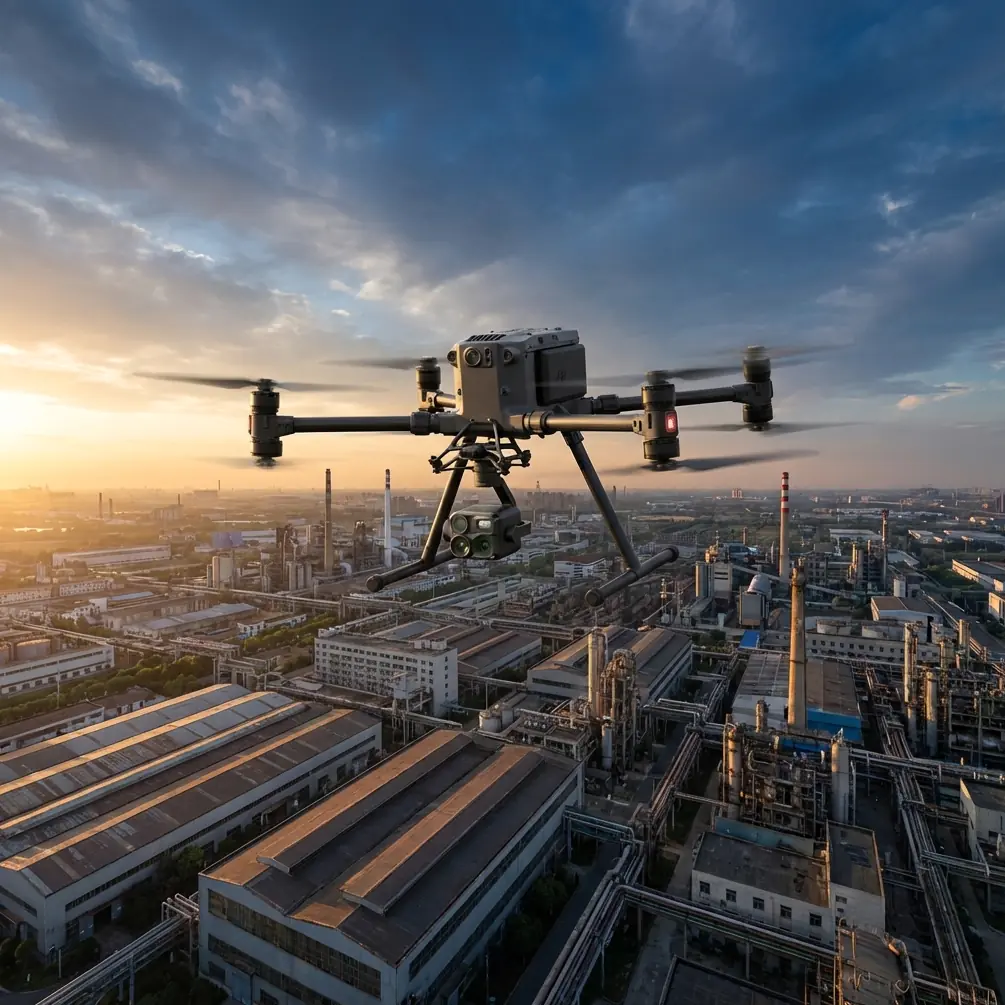
Matrice 4T Field Report for Remote Coastline Tracking: Small Prep Steps, Big Stability Gains
META: Expert field report on using the Matrice 4T for remote coastline tracking, with practical pre-flight cleaning, balance logic, transmission planning, thermal workflows, and mission reliability insights.
Remote coastline work exposes a drone to the kind of friction most spec sheets never capture. Salt haze settles on lenses. Fine grit works its way into seams. Wind direction shifts around cliffs and inlets. And when you are trying to follow shoreline change, heat anomalies, erosion lines, stranded assets, or surface disturbance across a long stretch of coast, tiny setup errors have a way of becoming expensive gaps in the data.
That is why the Matrice 4T earns its place less through headline features and more through how well it tolerates disciplined field use. This report is built around one practical idea: if you want reliable thermal signature capture, stable photogrammetry output, and confident long-range operations in remote coastal zones, pre-flight handling matters as much as the aircraft itself.
I want to start with a step many operators rush through: cleaning.
The pre-flight cleaning step most crews under-rate
Before launch, I treat the Matrice 4T like any serious survey instrument headed into a marine environment. The safety check starts with the obvious components—camera glass, thermal window, obstacle sensing surfaces, battery contacts, landing gear, and airframe seams—but the reason is deeper than cosmetics.
Salt residue is not just dirt. It alters clarity, raises the chance of false readings on vision-related systems, and can interfere with secure electrical contact over time. On remote coastline jobs, especially after repeated takeoffs near surf or rock shelves, I wipe exposed sensor surfaces with approved lens materials, inspect the battery bay for grit, and check for any crusting or moisture trace before the packs go in.
This sounds mundane. It is not. The best airborne intelligence in the world means little if your thermal image is slightly veiled by residue or if a battery seating issue creates an avoidable mission abort. For a platform like the Matrice 4T, which operators often depend on for long linear missions along exposed terrain, that cleaning step is really a reliability step.
The old model-aircraft world understood this well. In one construction guide for a small jet, the author recommends reinforcing fragile foam surfaces with clear tape before rolling them to prevent cracking, and even specifies using a 20 mm plastic pipe as a forming tool. Different aircraft, different era, different mission profile—but the lesson is timeless: materials and surfaces behave differently when stressed, and careful preparation prevents structural or operational problems later. Coastal drone work is the same in spirit. You are not just “getting ready.” You are reducing the chance that environment-induced weakness shows up in flight.
Why balance still matters on a modern enterprise drone
Another useful idea comes from that same manual: moving servos forward helped balance the aircraft. That was a simple mechanical solution, but the principle applies directly to the Matrice 4T operator mindset. Even though you are not manually placing elevator servos in a fin, you are still managing balance in a broader operational sense.
Every payload decision, battery condition check, accessory mount, and flight profile affects how the aircraft behaves in wind and how confidently it can hold a consistent imaging geometry. Along remote coastlines, that consistency matters. If you are building shoreline models through photogrammetry, uneven flight behavior can weaken overlap quality. If you are scanning for thermal signature changes across rocks, vegetation bands, tidal pools, or man-made structures, inconsistent angles and vibration can add interpretation noise.
Balance in the enterprise UAV context is not just center of gravity. It is systems balance: aircraft state, payload cleanliness, battery health, wind planning, and communications margin all working together.
That second reference source, a civil aircraft design handbook section on weight and balance, reinforces the same idea from a full-scale design perspective. It discusses correction factors for flap configurations and notes that even the weight of lifting devices can change depending on layout, with values such as 1.05, 1.15, 1.30, and 1.45 used to account for design differences. That level of engineering detail is not something a Matrice 4T pilot needs to calculate directly in the field. The operational significance is this: configuration changes always carry weight and performance consequences, and disciplined aviation thinking treats them as measurable, not intuitive.
For remote coastline tracking, that mindset pays off. If conditions are marginal, you should think less like a consumer drone user and more like a systems manager. Clean sensors. Verify payload state. Confirm battery fit. Recheck mission geometry. Then fly.
O3 transmission is only as good as your route planning
A lot of people talk about transmission in terms of maximum confidence. In the field, confidence comes from terrain awareness.
The Matrice 4T’s O3 transmission capability is valuable on remote shoreline missions because coastlines are deceptive radio environments. An open beach can feel simple, then a headland, bluff, marina structure, or stand of coastal trees starts clipping line quality. Add moisture-heavy air and distance, and signal assumptions get punished quickly.
This is where route architecture becomes more important than raw range. I typically split a long coastline task into sections based on terrain shadowing rather than map distance alone. If there is a rock face or inlet geometry likely to interrupt signal integrity, I plan around that obstruction early. Even where regulations require visual line of sight rather than BVLOS, the same logic applies: treat communications as a corridor, not a promise.
AES-256 matters here too, especially for infrastructure-heavy coastlines that include ports, utilities, aquaculture sites, or private industrial assets. Secure transmission is not a marketing bullet in those settings. It is part of responsible data handling. If your mission includes thermal scans over restricted commercial property or detailed mapping products tied to clients, transmission security belongs in your mission brief.
Thermal work on coastlines is about contrast, not just detection
The “T” in Matrice 4T often draws attention for obvious reasons, but coastal thermal work is rarely as simple as finding a hot object against a cold background.
On a shoreline, heat behaves unevenly. Wet rocks cool differently from dry stone. Sand retains and sheds heat on a shifting schedule. Vegetation near brackish water may present subtle thermal differences that only become meaningful when viewed in relation to adjacent terrain. Human-made materials—pipe runs, retaining walls, service boxes, solar-backed monitoring sites, even temporary shelters—can produce patterns that are easier to interpret when matched against RGB context and map coordinates.
That is why I prefer to treat thermal as one layer in a multi-sensor workflow rather than the whole mission. A thermal signature is useful, but it becomes operationally valuable when paired with location certainty and visual confirmation. On a Matrice 4T coastline job, that usually means capturing thermal observations, then tying them back into a photogrammetry or reference image set so anomalies can be revisited, measured, and tracked over time.
You are not just spotting things. You are building a repeatable record.
Photogrammetry over shorelines: where GCP discipline earns its keep
Coastline mapping can fool operators into thinking the terrain is “simple” because it is long and linear. In reality, shorelines can be some of the more deceptive environments for photogrammetry. Repeating textures, reflective water edges, wave movement, and transitional surfaces all complicate reconstruction.
That is where GCP use becomes especially valuable. If your project calls for measurable erosion tracking, asset positioning, or repeat-change analysis over months or seasons, ground control points can turn a nice-looking map into a defensible dataset. The Matrice 4T is fully capable of contributing to that workflow, but the operator has to define the standard.
I recommend placing GCPs with the same seriousness you would apply to any engineering-adjacent site. Make them visible, stable, and relevant to the corridor you actually need to model. Don’t cluster them for convenience near the launch point and assume the far end will behave the same. Along irregular coastlines, local geometry changes constantly. Control should reflect that.
And remember the lesson from aircraft weight-and-balance methodology: every adjustment changes the system. In mapping terms, every change in tide line, sun angle, moisture level, or flight altitude can alter data quality. Repeatability comes from controlling what you can.
Hot-swap batteries reduce downtime, but only if your ground process is clean
Remote operations punish sloppy battery handling. The Matrice 4T’s hot-swap battery approach is a major advantage because it compresses turnaround time and helps teams keep momentum on long shoreline corridors. But that advantage disappears if battery transitions are rushed.
My process is simple. Before landing, the replacement set is already checked, wiped if necessary, and staged in a protected area. Once the aircraft is down, there is no fumbling, no loose debris near contacts, and no guessing about charge pairing. Coastal air introduces enough uncertainty already. Battery exchange should be the calmest part of the mission.
This is another place where pre-flight cleaning has downstream value. When operators maintain clean battery bays and contact surfaces from the start, field swaps become safer and faster. On remote sites with only a narrow weather window, those minutes matter.
If your team is building a coastline workflow and wants to compare staging methods, mission planning, or maintenance habits for this platform, a direct field conversation often solves more than a product sheet can. You can reach out here: message a Matrice operations specialist.
BVLOS thinking is useful even when you are not flying BVLOS
Even when the mission stays inside local line-of-sight requirements, the discipline associated with BVLOS planning can improve every remote coastal flight. That means defining decision points before takeoff, setting communication thresholds, identifying alternate landing zones, and knowing where terrain could force a route adjustment.
The Matrice 4T supports serious operations, but professional results come from crews who think beyond the launch. Where will signal be weakest? Which part of the coast creates the biggest thermal ambiguity? What section is most likely to suffer from wind shear? If you lose your preferred survey line, what is the secondary path that still preserves usable overlap?
These are not abstract checklists. They shape whether your output is clean enough to support inspection, environmental reporting, habitat documentation, or infrastructure monitoring.
What the reference details reveal about field discipline
The two source documents behind this article are not about the Matrice 4T directly, yet both point to habits that matter in the real world.
From the BD5 build manual, two details stand out: using clear tape on Depron before rolling to prevent cracking, and using a 20 mm pipe to form the material predictably. Operationally, that reminds us that preparation protects performance. In coastline drone work, cleaning sensor surfaces, protecting key contact points, and handling the aircraft with environmental stress in mind does the same thing. It reduces the chance that subtle damage or contamination undermines the mission.
A second detail from that manual is the decision to move servos up front to help with balance. Operationally, this translates into respecting the effect of configuration on flight behavior and data quality. For the Matrice 4T, that means not treating batteries, payload condition, wind exposure, and route planning as separate topics. They are one flight system.
From the aircraft design handbook, the flap correction values—1.05, 1.15, 1.30, 1.45—show how seriously aviation treats configuration-driven weight differences. That matters because it reinforces a professional habit: do not assume one setup behaves like another just because the airframe looks similar. In drone operations, a coastal thermal survey, a photogrammetry corridor, and a repeat environmental monitoring run may all use the same platform, but they should not be approached with the same mission logic.
The real advantage of the Matrice 4T on remote coastlines
What makes the Matrice 4T useful in this setting is not any single feature in isolation. It is the way the platform supports disciplined fieldwork.
Thermal imaging helps reveal what the visible eye misses. Photogrammetry turns repeat flights into measurable records. O3 transmission supports long, complex shoreline tasks when the route is planned intelligently. AES-256 strengthens data stewardship. Hot-swap batteries keep teams moving when the coastline is longer than one sortie. But none of those capabilities excuses poor prep.
If I had to reduce this entire report to one field truth, it would be this: the mission usually goes wrong before takeoff.
A lens not properly cleaned. A battery contact not inspected. A route not adjusted for a headland. A shoreline section flown without enough control. These are the failures that quietly degrade output. The Matrice 4T is a strong tool for remote coastline tracking, but it rewards crews who approach it with the same respect that older aircraft builders and full-scale designers gave to surfaces, balance, and configuration.
That is what turns a flight into a dependable dataset.
Ready for your own Matrice 4T? Contact our team for expert consultation.