
Matrice 4T Guide for Forest Tracking in Complex Terrain
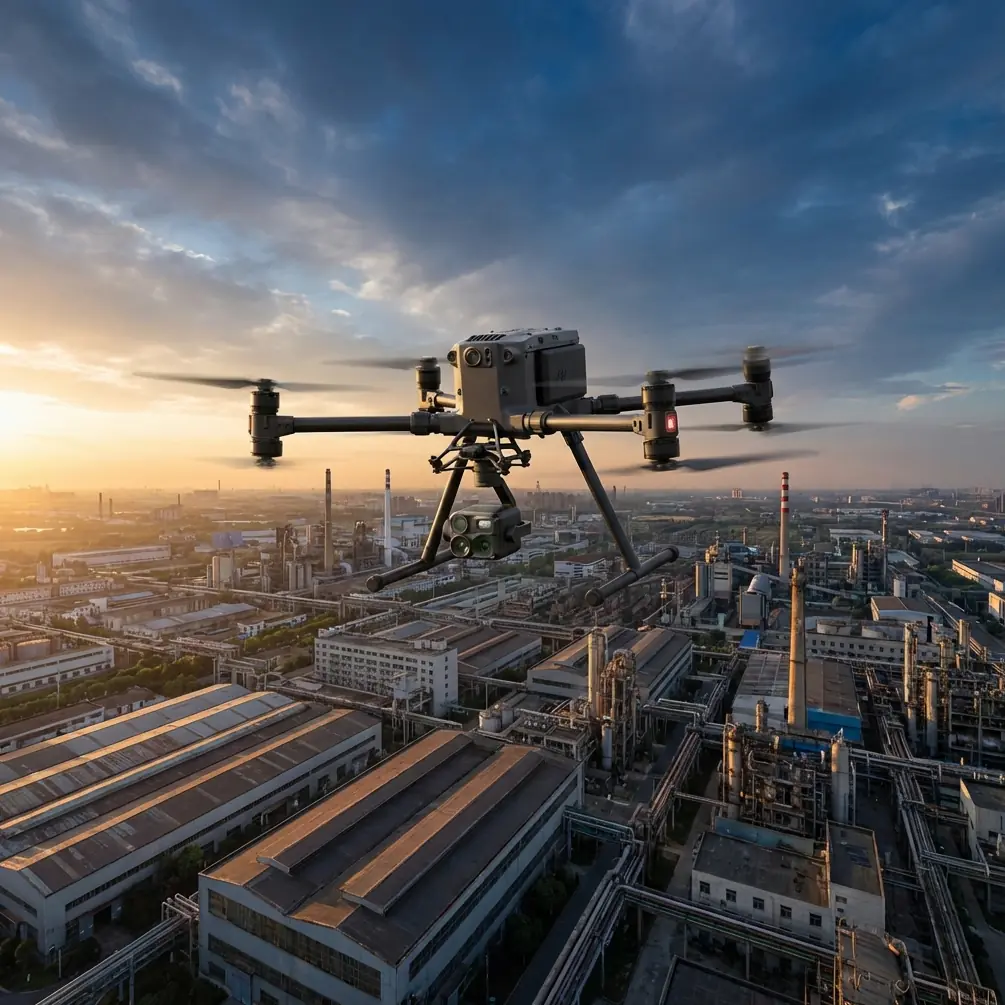
Matrice 4T Guide for Forest Tracking in Complex Terrain
META: A practical Matrice 4T tutorial for forest monitoring in steep, mixed terrain, covering thermal workflow, weather shifts, transmission reliability, GCP strategy, and efficient field operations.
Forest tracking sounds straightforward until the terrain starts making decisions for you.
A ridgeline blocks your signal path. A low valley traps cold air and changes the thermal picture. Midway through a flight, cloud cover rolls in, wind direction shifts, and the mission you planned at 9 a.m. no longer matches what the aircraft is seeing at 9:17. This is where the Matrice 4T earns its keep—not as a spec-sheet trophy, but as a field tool that can help a pilot keep a survey usable when conditions stop behaving.
I’ve found that crews working in forests usually need two things at once: broad situational awareness and enough sensor detail to make the data actionable. That could mean locating stressed tree clusters by thermal signature, revisiting a landslip edge after rain, documenting canopy gaps for restoration work, or checking whether a known trail corridor has changed after a storm. The challenge is not just collecting images. It’s collecting the right images despite terrain, canopy complexity, and weather drift.
This tutorial walks through how I would approach a forest-tracking mission with the Matrice 4T in complex terrain, with particular attention to thermal use, photogrammetry support, transmission stability, battery handling, and what to do when the weather changes mid-flight.
Start with the mission question, not the aircraft
Before takeoff, define what “tracking” means for your forest job.
That word gets used loosely. In practice, it usually falls into one of four categories:
- Repeated observation of a known area over time
- Locating thermal anomalies under changing environmental conditions
- Building a map or 3D model to compare terrain or canopy structure
- Following a corridor such as a firebreak, service path, watershed edge, or restoration zone
The Matrice 4T is most effective when you decide which of those jobs is primary. If your goal is change detection across a slope forest after erosion, your settings and flight geometry should favor repeatability and photogrammetric consistency. If your goal is finding heat-retaining zones in mixed woodland after sunset, your priorities shift toward thermal interpretation and timing.
That sounds obvious, but many weak datasets come from trying to do all four in one flight.
Why the Matrice 4T fits forest work
Forests create a bad mix for UAV operations: obstructed line-of-sight, uneven elevation, moving textures, variable light, and surfaces that absorb and release heat at different rates. The Matrice 4T suits this environment because it allows one aircraft to collect several kinds of evidence during the same field session.
The biggest operational advantage is sensor pairing. In forest tracking, thermal data alone can mislead you. A warm patch on the ground may be exposed rock, wet soil transitioning under sunlight, or a thinning canopy edge rather than a biological anomaly. Cross-checking thermal signatures against visible imagery reduces false interpretation. That matters in steep terrain where access for ground verification is slow and expensive.
The second advantage is transmission resilience. In forests, especially where slopes and ridges interrupt the radio path, stable command and image transmission matters more than people think. O3 transmission is especially relevant here because terrain interference is not theoretical. It’s constant. A strong transmission system gives the pilot more room to manage route adjustments without turning every ridge crossing into a decision point about whether the live feed will collapse.
The third is field endurance through hot-swap batteries. In forest operations, the aircraft is only one part of the time budget. Hiking to launch points, waiting for cloud movement, repositioning to maintain geometry, and coordinating with ground teams all consume time. Hot-swap battery capability matters because it cuts dead time between sorties. On a long day in variable weather, that can be the difference between finishing a repeat track before the light changes or having to return another day.
Build the flight around terrain, not the map
Complex terrain punishes flat assumptions.
If you use a simple grid over a forested hillside, image overlap and ground sampling consistency can break down quickly. Trees on the ridge may be much closer to the aircraft than trees in the valley. Thermal perspective changes too, particularly when viewing slopes at angle rather than near-nadir.
My standard workflow is to divide the area into terrain-driven blocks:
- ridge tops
- side slopes
- valley bottoms
- transition bands between canopy types
This improves both visible and thermal interpretation. Valley bottoms often hold colder, wetter air. Ridge edges may heat faster after cloud breaks. Mixed stands reflect and retain heat differently from uniform plantation zones. If you fly them all as one homogeneous area, your thermal comparison becomes messy.
For mapping-grade repeatability, add GCPs where practical. Forest environments are not ideal for ground control because canopy occlusion can hide markers, but even a modest GCP strategy helps anchor a photogrammetry workflow, especially in access tracks, clearings, logging pads, or stream-edge openings. The operational significance is simple: if you want to compare changes over time, small positional drift can look like environmental change when it’s really just alignment error.
A lot of forest teams skip GCP planning because they assume the onboard positioning is “good enough.” Sometimes it is. But if the mission is tied to compliance reporting, restoration monitoring, or repeatable slope analysis, GCPs can make the dataset much more defensible.
Thermal is useful, but timing decides whether it tells the truth
People often talk about thermal as if it reveals hidden reality on command. Forest work teaches the opposite. Thermal imaging is highly conditional.
A thermal signature in a forest is shaped by:
- canopy density
- recent sunlight exposure
- moisture
- wind
- ground material
- elevation change
- time of day
That means your thermal flight window matters as much as the aircraft.
For example, if you are tracking stressed vegetation or moisture variation, early morning and late afternoon usually produce cleaner contrasts than periods of strong direct solar loading. Around midday, the forest can generate thermal clutter. Rocks, bare soil, deadwood, and broken canopy openings all compete for attention.
The Matrice 4T becomes more valuable when you treat thermal not as the final answer, but as one layer in a structured interpretation workflow. Fly the thermal pass, flag anomalies, then verify against visible imagery and site context. In many cases, the thermal feed tells you where to look, while the visual sensor tells you what you are actually seeing.
That distinction prevents bad decisions in habitat work, replanting assessments, and storm-damage inspections.
What happened when the weather changed mid-flight
Let’s make this concrete.
On a forest mission in broken upland terrain, I had planned two repeat passes over a mixed canopy section with a drainage cut through the center. The morning began stable—light wind, thin cloud, decent visibility. The thermal layer was clean enough to distinguish the cooler drainage line from the surrounding slope.
Then the weather shifted fast.
Cloud cover thickened from the west, the slope lost direct illumination, and gusts began moving through the upper canopy. That changed three things immediately. First, visible contrast dropped. Second, the apparent thermal spread across exposed ground flattened. Third, flying the original route near the ridge became less sensible because the aircraft would face more variable airflow where the terrain rolled over.
This is exactly the kind of moment where a forest crew needs a drone platform that supports adjustment rather than stubborn adherence to plan.
I shortened the outer leg, lowered speed, and refocused the mission on the drainage corridor and the leeward slope where data quality was still recoverable. O3 transmission mattered here because the altered route kept the aircraft in a more terrain-protected position without sacrificing situational awareness. Signal reliability is not a glamorous topic, but in wooded relief it often determines whether you can adapt safely and keep your dataset coherent.
The battery side mattered too. Rather than stretching the sortie into degrading conditions, I brought the aircraft back, swapped batteries, reviewed imagery, and launched a tighter follow-up mission while the weather window was still acceptable. Hot-swap batteries are not just about convenience. They support better decision-making because they reduce the temptation to force one battery cycle to do everything.
The result was not the mission I first sketched. It was better than that. It was a usable dataset that reflected the conditions that actually existed.
Photogrammetry in forests: what still works
Dense forest is never the easiest place for photogrammetry. Uniform canopy texture, moving leaves, and shadow variability all work against clean reconstruction. Still, the Matrice 4T can be part of a strong photogrammetry workflow if you’re realistic about outputs.
For forest tracking, I usually separate expectations into three layers:
- terrain and access-feature documentation
- canopy surface representation
- temporal comparison of visible change
If the objective is bare-earth modeling under dense canopy, drone imagery alone is usually not enough. But for tracking canopy gaps, access routes, erosion edges, drainage disturbance, and changes around openings, photogrammetry can still be highly valuable.
Use GCPs where sightlines permit. Plan overlap generously. Avoid mixing radically different sun conditions within the same block if you can help it. If the weather is unstable, prioritize the sectors where repeat consistency matters most. In practice, that may mean abandoning the idea of complete area coverage in favor of a smaller, cleaner dataset.
That choice often feels conservative in the field. It pays off later in processing.
BVLOS and forest tracking: keep the discussion practical
BVLOS is often mentioned in forest operations because large wooded areas are difficult to cover from a single launch point. The practical takeaway is not that every mission should push farther. It’s that your planning should account for communications, terrain screening, regulatory limits, and recovery options from the start.
Forests make distance feel shorter than it is. A mission can be “nearby” on the map and still become operationally awkward once ridges, canopy obstruction, and weather enter the equation. If your framework allows BVLOS operations, your route design and risk controls need to be much tighter than they would be over open ground.
Even when you remain within line-of-sight, thinking with BVLOS discipline improves forest work. You plan alternates. You identify signal shadows. You define battery return thresholds conservatively. You decide in advance which data is essential and which is optional.
That mindset usually improves outcomes more than chasing maximum range ever will.
Data security matters when your survey area is sensitive
Commercial forestry, conservation sites, restoration zones, and private land projects often involve sensitive geospatial information. Boundaries, species recovery areas, and infrastructure corridors are not details every stakeholder wants casually circulated.
That’s where AES-256 enters the conversation in a practical way. Strong encryption is not just a line in a brochure. It matters when project imagery, live feeds, and operational records relate to managed land, environmental compliance, or client-controlled survey areas. If your workflow includes external pilots, consultants, or cross-border stakeholders, data handling standards should be part of your planning, not an afterthought.
For teams that need to coordinate quickly in the field, I usually recommend setting a defined communications path before launch. If you need a direct channel for field coordination on a forest job, using a simple message route like this WhatsApp contact for mission planning keeps logistics cleaner than scattering flight updates across multiple apps.
A practical field checklist for the Matrice 4T in forest terrain
Here’s the condensed method I’d use:
1. Define the primary output
Choose one main goal: thermal anomaly tracking, repeat mapping, corridor review, or change detection.
2. Break the site into terrain zones
Do not plan as though the entire forest block behaves the same way.
3. Time thermal flights deliberately
Thermal signatures are only meaningful in context. Avoid assuming every warm or cool pattern is significant.
4. Use visible imagery to verify thermal findings
This reduces false positives and saves unnecessary ground checks.
5. Place GCPs where the terrain allows
Even a few well-positioned points can improve photogrammetric trustworthiness.
6. Watch transmission behavior near ridges and deep cuts
O3 transmission helps, but route design still matters in obstructed landscapes.
7. Use hot-swap batteries as a tactical tool
Swap early if conditions are changing. Don’t stretch a sortie just because the aircraft can stay up longer.
8. Re-plan when weather shifts
A shorter, cleaner mission is better than forcing a full-area capture through degraded conditions.
Where the Matrice 4T stands out in forest tracking
The Matrice 4T is not magic. Forest work still depends on pilot judgment, timing, terrain awareness, and disciplined data interpretation.
What the platform does well is reduce compromise.
It lets one crew gather thermal and visible evidence in a way that supports faster decisions. It supports repeat operations in uneven terrain where battery handling and transmission reliability are not side issues but core operational constraints. Details like O3 transmission, AES-256, and hot-swap batteries may sound secondary until you are dealing with a blocked ridge line, a sensitive survey area, and a weather shift halfway through the morning. Then they become the difference between a mission that merely flies and one that actually delivers useful forest intelligence.
If your work involves tracking forests in complex terrain, the Matrice 4T is at its best when you stop thinking of it as a camera in the air and start using it as a decision platform. That means planning around thermal behavior, terrain geometry, repeatability, and the reality that weather will eventually rewrite your mission for you.
Ready for your own Matrice 4T? Contact our team for expert consultation.