
Tracking Urban Forests with Matrice 4T: What Actually
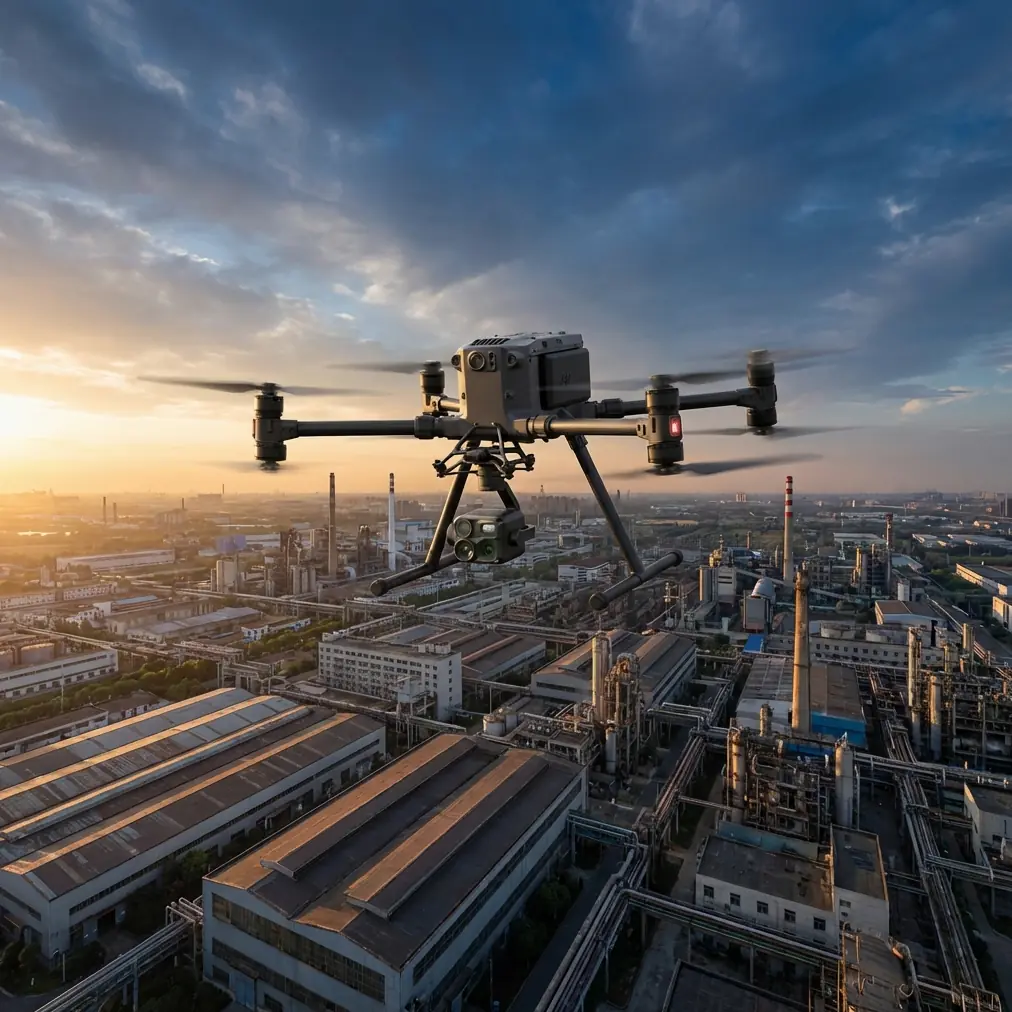
Tracking Urban Forests with Matrice 4T: What Actually Matters in the Field
META: A field-focused look at using Matrice 4T for urban forest tracking, thermal signature detection, stable control, photogrammetry workflows, and safer operations in mixed city environments.
Urban forest tracking sounds simple until you try to do it in a real city.
Tree canopies break line of sight. Heat from rooftops contaminates thermal scenes. Wind tunnels form between buildings. Birds move unpredictably. The crew is often trying to document canopy health, heat stress, drainage patterns, and habitat activity in the same mission. That is where the Matrice 4T becomes interesting—not because it is a generic “advanced drone,” but because urban forestry demands a very particular mix of sensing, control stability, and workflow discipline.
I’ve seen that difference most clearly during a twilight survey along a green corridor bordering several apartment blocks and a school sports ground. The target was a mixed stand of camphor, banyan, and younger native planting stock that had shown signs of uneven water stress. About eleven minutes into the flight, a fruit bat crossed from the darker canopy edge into a warmer open zone above a paved service lane. On a normal visible feed, it would have been easy to lose. On the thermal view, its signature separated cleanly from the background for a brief window, and the aircraft’s positioning and gimbal response gave the pilot enough control to hold the track without overcorrecting. That short wildlife encounter said a lot about what urban forest teams actually need: not cinematic footage, but a platform that can stay composed while the environment is messy.
The real problem: urban forests are data-rich and sensor-hostile
Tracking forests in urban settings is not the same as broad-acre environmental surveying. The operating space is compressed. There are more reflective surfaces, more electromagnetic noise, more sudden occlusions, and more public-safety constraints. Crews are typically balancing several objectives at once:
- identifying canopy gaps and stressed trees
- detecting warm-blooded wildlife activity near roosting or nesting zones
- documenting drainage and soil moisture patterns indirectly through thermal contrast
- building measurable map layers through photogrammetry
- preserving secure data handling for municipal or contractor workflows
That combination pushes a drone platform hard. Thermal signature work needs clean interpretation, but urban backgrounds are noisy. Mapping requires consistency, but urban airspace often means frequent repositioning. Routine visual inspection is not enough when crews also need traceable outputs for arborists, planners, ecologists, and infrastructure teams.
Why control behavior matters more than spec-sheet bravado
One of the least discussed parts of successful drone work is control behavior under mixed-speed maneuvering. That matters in forestry because tracking is rarely a straight-line exercise. You may be drifting slowly along a canopy edge one minute, then correcting rapidly to reacquire a subject moving across a gap.
The reference material here comes from aircraft nose-wheel steering design, not drones, but the engineering lesson is highly relevant: stable response is never accidental. One cited design criterion sets steering rate at 20 degrees per second at maximum powered steering torque, with full steering rate reached after a small input-output difference of roughly 3 to 5 degrees. The operational significance is clear even outside manned aircraft. If a control system responds too lazily, you lose target continuity. If it responds too abruptly, the operator overshoots, which is exactly how wildlife tracking and close-structure inspections become sloppy.
Applied to Matrice 4T urban forest work, that means the drone should be flown and configured with a bias toward measured response rather than aggressive stick behavior. When moving from open canopy to alley-like corridors between trees and buildings, a pilot benefits from response tuning that avoids the human tendency to oversteer. In practical terms, the best footage and the most useful thermal captures often come from resisting the urge to “fight” every small drift. Stable command translation gives you cleaner datasets and lower pilot workload.
The same source also highlights another crucial point: deadband and hysteresis should be kept as small as possible, with a recommended neutral-position deadband of 1 degree and total hysteresis of 2 degrees under a 30% rated load condition. For drone operators, the analogy is direct. If your control inputs around center feel vague, delayed, or inconsistent, then fine tracking around branches, trunks, and crown edges gets harder. Around urban trees, that can mean the difference between isolating a thermal anomaly in a cavity and smearing it across a shaky pass.
This is not just theory. In urban canopy work, small inconsistencies in response become large downstream errors:
- thermal hotspots are harder to verify
- image overlap for photogrammetry degrades
- branch-level inspection becomes less repeatable
- pilot fatigue rises faster during long missions
Dynamic stability is not a luxury when the mission profile keeps changing
The same aircraft design reference emphasizes dynamic stability analysis across the full operating envelope, including weight and center-of-gravity variation and speeds from zero up to 1.3 times stall speed. It also recommends validating the analysis through testing, ideally with realistic full-scale components, while accounting for wear, tolerances, and imbalance.
That principle maps neatly onto the Matrice 4T in field operations. Urban forest crews rarely fly one perfect, laboratory-style mission. They launch with one payload state, consume battery, perhaps swap batteries, change altitude bands, transition from hovering thermal inspection to corridor mapping, and work through shifting wind and temperature gradients. A drone that feels stable only in one narrow slice of the mission is not a serious professional tool.
This is why hot-swap batteries matter operationally. In urban forestry, continuity is not just convenience. If you are tracking canopy temperature changes during a specific time window—say, just after sunset when thermal separation between living canopy, masonry, and wildlife activity is most informative—restarting a mission from scratch can break the dataset. Hot-swap capability helps preserve momentum, crew focus, and target context.
It also reinforces a larger truth from the reference material: stability has to be maintained across changing conditions, not assumed. Experienced operators should think less in terms of “Will it fly?” and more in terms of “Will it remain predictable after payload heat builds up, battery state changes, and the wind shifts around the buildings?”
Thermal signature work: where Matrice 4T earns its place
For urban forest tracking, thermal imagery is often the sensor that turns a rough visual survey into an actionable one. A visible camera can tell you that a tree crown looks thin. Thermal can help indicate where moisture stress, canopy density variation, or cavity-associated animal presence deserves closer inspection.
The phrase “thermal signature” gets overused, so let’s be precise. In urban forest practice, you are often trying to separate one of four things:
- vegetation temperature differences within a canopy
- tree-to-surface contrast against roads, roofs, walls, and drains
- wildlife movement against cooling foliage
- structural heat anomalies near roots, retaining walls, or irrigation infrastructure
The fruit bat example earlier is a good case. The reason the sighting mattered was not novelty. It demonstrated that a fast, small subject can become detectable only when the sensor package, gimbal behavior, and pilot control work together. In a dense city-edge forest strip, that capability can support habitat-sensitive scheduling for maintenance crews, especially when arboriculture teams need to avoid disturbing active roosting patterns.
Thermal also helps when broad visual impressions are misleading. A canopy can appear uniformly healthy from above yet show uneven temperature behavior around edges affected by reflected heat from nearby buildings. That is often where urban stress reveals itself first.
Photogrammetry still matters, even on a thermal-first mission
Many teams treat thermal and photogrammetry as separate worlds. That is a mistake.
The second reference document deals with structural effective width in stiffened panels, including a formula where effective skin width is expressed as Wen = 0.958… under a same-material condition, with a reduced coefficient of 0.85 for weaker stiffeners. On the surface, this has nothing to do with drones. But the engineering mindset behind it matters enormously: not every visible surface contributes equally to useful structural behavior. Some portions are “effective,” some are not.
The urban forest equivalent is this: not every image you capture contributes equally to a reliable map or model.
In Matrice 4T workflows, photogrammetry should not be treated as blind image accumulation. If the mission objective is tracking forest conditions in a city, the useful data band is shaped by canopy texture, shadow geometry, overlap quality, branch movement, and the relationship between tree surfaces and surrounding hardscape. Good teams focus on effective image coverage, not raw image volume.
That is where GCPs become essential. Ground control points anchor the model to reality, especially in urban forest environments where tall structures and partial canopy occlusion can introduce spatial uncertainty. If you are comparing canopy change over time, locating drainage depressions, or quantifying crown spread near property lines, GCP discipline is worth more than another batch of mediocre images.
A strong workflow often looks like this:
- use thermal passes to identify priority anomalies
- capture structured visible imagery for photogrammetry over those same zones
- tie outputs with GCP-backed control
- compare thermal behavior with measurable geometric context
That synthesis creates something useful for decision-makers. Arborists can assess stress patterns with location confidence. Urban planners can understand canopy distribution relative to built heat sources. Ecologists can review habitat corridors with better spatial consistency.
Transmission security and signal resilience are not side notes
Urban forest operations often involve municipal land, school-adjacent sites, utilities corridors, campuses, or contracted environmental reporting. Data integrity matters. So does stable transmission.
That is why O3 transmission and AES-256 belong in the practical conversation. O3 transmission supports link quality in complicated environments where buildings, trees, and interference all compete against clean control and video relay. The benefit is not abstract. It reduces the chance of broken observation exactly when the aircraft slips behind a canopy wall or passes along a structure edge.
AES-256 matters for a different reason: operational trust. If a team is collecting ecological data, infrastructure-adjacent imagery, or location-sensitive environmental records, encryption is not a checkbox. It is part of professional handling. Public and private stakeholders increasingly expect that drone programs can explain not only what they captured, but how they protected it.
BVLOS talk needs discipline in urban forestry
BVLOS is often mentioned too casually. In urban forest tracking, it should be approached as a regulated operational framework, not a badge of sophistication. In some projects, expanded operating range can make sense for corridor-style green belts or river-adjacent urban forestry studies. But the mission design has to match the environment, the approvals, the communications plan, and observer requirements where applicable.
The more useful point is this: Matrice 4T can support serious operational planning, but urban forest teams should prioritize defensible procedures over stretched mission ambition. Shorter, cleaner, well-controlled flights usually produce better environmental intelligence than trying to force a marginally sensible long-range profile through a cluttered city landscape.
A better way to use Matrice 4T for urban forest tracking
When crews get the most out of this platform, they usually stop thinking in terms of a single “inspection flight.” Instead, they build layered missions.
First, they define the ecological or arboricultural question. Is the target heat stress, wildlife presence, canopy encroachment, drainage influence, or longitudinal change?
Then they choose the sensor sequence. Thermal first if contrast conditions are time-sensitive. Visible mapping first if geometry is the priority. Sometimes both, but in a deliberate order.
Then they control the variables:
- flight speed aligned to image purpose
- overlap planned around canopy texture
- GCPs placed where canopy and hardscape interact
- battery swaps timed to preserve environmental comparability
- transmission path checked against likely occlusion zones
- data handling secured from capture to export
This is the difference between owning a capable aircraft and producing decisions a city forester can actually use.
If your team is designing that kind of workflow and wants to compare approaches for dense urban green corridors, you can share the mission profile directly through this field planning channel: https://wa.me/85255379740
What the references really teach us about using Matrice 4T well
The provided source material is old-school engineering, but the lessons are current.
From the steering-system design guidance, the major takeaway is that control precision, low deadband, and tested dynamic stability are not academic niceties. They are what let an operator hold a line through mixed-speed corrections in a cluttered environment. For a Matrice 4T flying urban forest missions, that directly affects thermal interpretability, subject tracking, and mapping repeatability.
From the structural effective-width discussion, the lesson is different but equally valuable: not all captured surface area contributes equally to useful analysis. In urban forest photogrammetry, quality and relevance of coverage matter more than brute-force image count. That is why disciplined overlap, GCP placement, and target-focused data collection still outperform casual “collect everything” habits.
Urban forest tracking is full of seductive distractions. Beautiful canopy visuals. Sharp thermal clips. Long lists of features. None of those matter if the data is unstable, poorly referenced, or difficult to trust.
Matrice 4T is at its best when used like a professional environmental instrument. Stable controls. Purposeful thermal work. Mapped outputs with ground truth. Secure transmission. Clean battery management. Sensible operational envelopes.
That is how you move from flying over trees to actually understanding an urban forest.
Ready for your own Matrice 4T? Contact our team for expert consultation.