
Matrice 4T on Highways in Extreme Temperatures
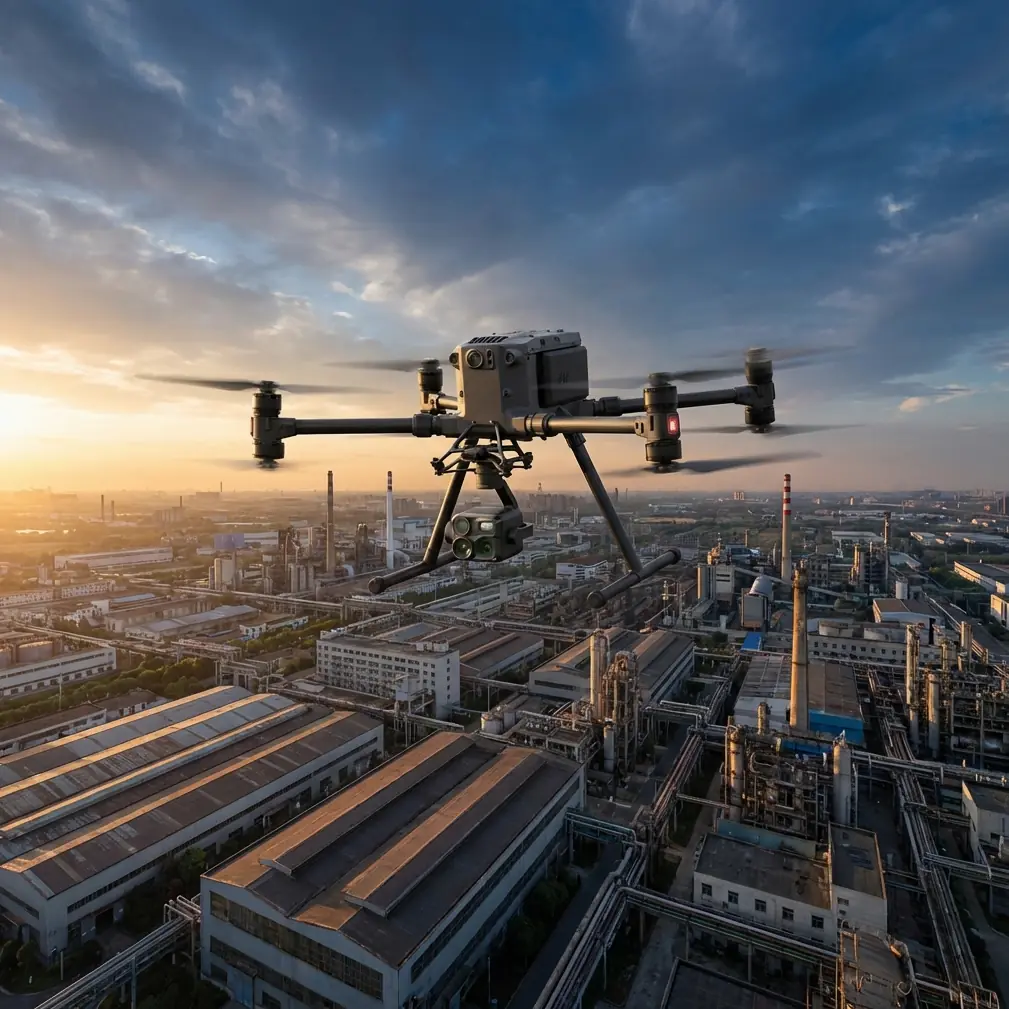
Matrice 4T on Highways in Extreme Temperatures: A Practical Case Study on Flight Height, Thermal Reading, and Mission Reliability
META: Expert case study on using the Matrice 4T for highway tracking in extreme temperatures, with practical altitude guidance, thermal workflow insight, and mission reliability considerations.
Highway tracking sounds simple until the temperature turns hostile.
Heat shimmer over asphalt can distort visual detail. Winter air can sharpen visibility while draining batteries faster. Long, linear corridors force the aircraft to repeat a disciplined pattern for mile after mile, and the real challenge is not just seeing the road. It is maintaining consistent detection quality across changing surfaces, vehicle speeds, and thermal conditions.
For operators considering the Matrice 4T for this kind of work, the right question is not “Can it fly the route?” It can. The better question is: how do you structure the mission so thermal signature, visual confirmation, transmission stability, and endurance all work together when conditions are pushing the aircraft and the payload?
This case study is built around that exact scenario: tracking highways in extreme temperatures with the Matrice 4T, with special attention to optimal flight altitude.
Why highway tracking is different from a standard inspection mission
A highway is a moving system, not a static asset.
That changes everything. In a bridge inspection, you can dwell on one structure. In a crop survey, you can rely on repetitive grid geometry and photogrammetry logic. Highway work sits in between. You need corridor discipline like a mapping mission, but you also need the reactive awareness of a live monitoring operation.
The Matrice 4T fits this environment because it combines thermal and visual intelligence in one platform. Thermal signature matters most when pavement temperatures diverge sharply from ambient air, when stalled vehicles retain heat differently from their surroundings, or when a person or animal near a shoulder needs to be distinguished from the background quickly and safely. In extreme heat, that contrast can collapse at certain times of day. In severe cold, it can become extremely pronounced. Both conditions change how high you should fly.
The flight altitude insight most operators get wrong
If your goal is highway tracking rather than broad-area scanning, the best altitude is rarely the maximum legal or practical height.
For the Matrice 4T, a useful operational starting point is to treat 60 to 90 meters AGL as the primary working band for highway observation in extreme temperatures, then adjust according to thermal contrast and traffic density.
That range matters for three reasons.
First, it preserves enough scene width to follow multiple lanes, shoulder zones, and nearby embankments without constant aggressive yaw corrections. Second, it keeps thermal targets large enough in the frame to interpret confidently when contrast is weak. Third, it reduces the atmospheric distortion penalty that gets worse as you climb over hot pavement.
When the road surface is radiating heavily in summer afternoons, climbing higher often feels safer because it widens coverage. In practice, the thermal picture may become less useful. Heat bloom from the pavement, air shimmer, and reduced target pixel density can make vehicles and pedestrians blend into the scene. In those conditions, I usually favor the lower half of that band, closer to 60 to 70 meters, and fly slightly offset from the centerline instead of directly overhead. That angle often improves separation between vehicles, road edges, and adjacent terrain.
In bitter cold, the equation shifts. Targets with active engines or human heat output often stand out more cleanly against the environment. You can afford to push altitude slightly higher, often toward 80 to 90 meters, while preserving useful thermal discrimination. That gives a more forgiving corridor view and reduces the frequency of track corrections over long stretches.
The point is not that one number solves everything. The point is that highway tracking with the Matrice 4T works best when altitude is set by thermal readability, not by habit.
A field workflow that holds up in extreme heat and cold
Here is the mission structure I recommend for this use case.
1. Start with a short thermal calibration pass
Before the full route, fly a one- to two-minute pass over a representative section of road. Look at three things:
- pavement brightness and thermal uniformity
- whether vehicle outlines are clean or bleeding into the background
- whether shoulder-side objects are separating clearly from the terrain
This first pass tells you whether the day favors lower altitude for detail or higher altitude for corridor coverage.
2. Fly the corridor with overlap in mind, even if you are not mapping
A lot of teams think overlap only matters for photogrammetry. That is too narrow. Even in live highway tracking, consistent visual overlap between adjacent observation segments improves review quality later and helps when cross-checking incidents.
If the mission could feed later measurement or site reconstruction, then photogrammetry logic becomes even more relevant. In that case, tie points, GCP strategy, and repeatable geometry start to matter. The Matrice 4T is not just a live-view tool; it can support structured documentation when the route requires evidence-quality records of surface conditions, roadside encroachments, or work-zone changes.
3. Use thermal as the detector, visible imagery as the confirmer
This is the rhythm that keeps operators efficient.
Thermal signature is excellent at pulling attention toward anomalies: an overheating vehicle, a person beyond the shoulder line, an object holding a different temperature than the road surface, or a patch of pavement behaving unlike its surroundings. But highway decisions should not be made on thermal alone. Use the thermal channel to spot, then switch to visual detail for confirmation.
On high-temperature days, this sequence becomes even more valuable because thermal scenes may flatten during peak solar loading. On freezing days, thermal can become so prominent that operators may over-trust it. Confirmation prevents false calls.
What old aircraft design teaches us about drone mission discipline
The reference materials behind this article are not drone brochures. They are older aircraft design texts, and they reveal something useful about how to think like a serious operator.
One source describes a nosewheel control and anti-shimmy hydraulic distribution system in which one control valve is operated from a cockpit handwheel through a cable transmission, while another is driven by pedals through a rocker arm and linkage. That is not about the Matrice 4T directly, but the operational lesson is relevant: aircraft systems become reliable when control paths are clearly separated, feedback is deliberate, and neutral return is engineered rather than assumed.
The same reference explains that the return sleeve includes 9 grooves, and that its role is to return the distribution valves to neutral so the nosewheel can stop at any selected angle. That is a beautifully practical idea. In highway drone operations, your equivalent of “neutral return” is repeatable camera discipline and route geometry. When the aircraft finishes a tracking adjustment, it should settle back into a predictable corridor pattern, not drift into improvised flying.
Why does that matter on a highway in extreme temperatures? Because heat stress and cold stress both increase the operator’s tendency to chase the scene manually. Predictable recovery behavior reduces that. Build the mission so each deviation snaps back into a standard track line. That is how you keep data usable over distance.
There is another small but telling detail in that source: sealing at the fixed coupling points used rubber and fluoroplastic gaskets, with reinforced sealing around shafts and bearing seats. Again, different aircraft, different era, different purpose. But the significance is familiar. Environmental resilience is not one feature. It is the result of many small design decisions that prevent dust ingress, thermal stress, vibration issues, and control inconsistency. When evaluating a platform like the Matrice 4T for highway work, that mindset is better than chasing a headline spec. Reliability comes from how the system behaves after repeated exposure, not how it looks on a product sheet.
Why structural thinking matters for a thermal highway mission
The second reference deals with sandwich structures and notes that honeycomb core density is directly tied to strength performance. It specifically references Table 28-7, where the relationship between core density and strength is laid out for a hexagonal honeycomb configuration bonded with SF-2 adhesive.
Again, this is not a direct Matrice 4T specification. It is a design principle. Lightweight structures only perform well when the density-strength balance is chosen correctly. Too light, and the structure gives away stiffness or durability. Too heavy, and endurance suffers.
That tradeoff matters in the highway scenario because extreme temperatures punish weak balances. A drone used over long corridors needs enough structural integrity to stay stable in gusts and thermal currents, but it cannot carry excess mass without sacrificing time on task. This is why experienced operators care so much about platform behavior during long, repetitive runs. Stability is not cosmetic. It directly affects thermal readability, visual sharpness, and the operator’s confidence in what they are seeing.
The practical takeaway: when you are flying the Matrice 4T for highway tracking, think less about isolated payload capability and more about total mission composure. Stable flight supports better thermal interpretation. Better thermal interpretation supports smarter altitude choices. Altitude choices drive coverage, detail, and battery planning.
Transmission, security, and long-corridor control
Highway work often stretches the aircraft away from the launch point in a narrow but lengthy operational box. That makes transmission quality more significant than in compact site inspections.
A robust O3 transmission workflow helps maintain clean situational awareness across those elongated routes. If you are documenting public infrastructure or contractor activity, secure handling of records matters too, and AES-256 is part of a sound data protection posture when teams are managing sensitive commercial or industrial files.
Those terms get tossed around casually, but on a highway they have real meaning. You are not just trying to maintain a link. You are trying to preserve decision quality while the aircraft moves through changing terrain, reflective surfaces, and temperature layers.
Battery planning in weather that punishes assumptions
Extreme temperatures expose lazy battery planning fast.
Hot-swap batteries are not just a convenience in this scenario. They are mission continuity tools. On a highway corridor, the cost of stopping is not measured only in downtime. It is measured in broken route consistency, changing thermal baselines, and harder comparison between passes.
In very cold conditions, battery swaps should be scheduled before the aircraft forces the issue. In high heat, the bigger risk is often not just endurance but cumulative system stress over repeated sorties. The answer in both cases is disciplined sortie segmentation. Split the corridor into logical legs, maintain overlap between segments, and relaunch with the same altitude logic unless thermal conditions visibly shift.
Can the Matrice 4T support BVLOS-style corridor planning?
Where regulations and approvals allow, BVLOS concepts make obvious sense for long highway routes. Even when you are operating within visual constraints, planning the mission as if it were a corridor system rather than a local site improves performance. It pushes the team to think in terms of communication continuity, handoff logic, battery staging, and repeatable data structure.
That planning style is what separates a clean corridor operation from a drone simply wandering above traffic.
One real-world adjustment that improves detection rates
If the day is brutally hot and the objective is to identify stopped vehicles, roadside activity, or heat anomalies along the shoulder, do not insist on a single fixed altitude for the entire route.
Use a two-band approach.
Fly the primary corridor at around 70 to 80 meters for coverage. Then descend selectively to around 60 meters when thermal contrast degrades over certain pavement sections or where complex interchanges create clutter. This sounds minor, but it often restores target separation without compromising route tempo.
If your team wants to compare notes on corridor setup or thermal interpretation for this sort of mission, I’d suggest using this direct field coordination link: message our UAV team here.
The operator mindset that gets the best from the Matrice 4T
The Matrice 4T is most effective on highways when flown with the mindset of an aircraft systems operator, not just a camera user.
That means:
- building repeatable control patterns
- using thermal as a cue, not a verdict
- choosing altitude based on thermal readability
- segmenting long routes intelligently
- preserving stable geometry for later review or photogrammetry-grade reconstruction where needed
The old reference texts behind this discussion may seem distant from a modern UAV mission, yet they point toward the same truth. Reliable aerial work depends on disciplined control, sound feedback, structural balance, and environmental resilience. A handwheel linked by cable, a valve returned to neutral, a sealed bearing seat, a honeycomb core chosen for the right density-strength ratio—these are all examples of a design culture that respects operational reality.
That is exactly the culture highway drone missions need.
And if you want one concise answer to the altitude question for extreme-temperature highway tracking with the Matrice 4T, here it is: start at 60 to 90 meters AGL, lean lower in strong surface heat, lean higher in strong cold contrast, and let the thermal image decide the final number.
Ready for your own Matrice 4T? Contact our team for expert consultation.