
Expert Tracking with Matrice 4T: A Power Line Case Study
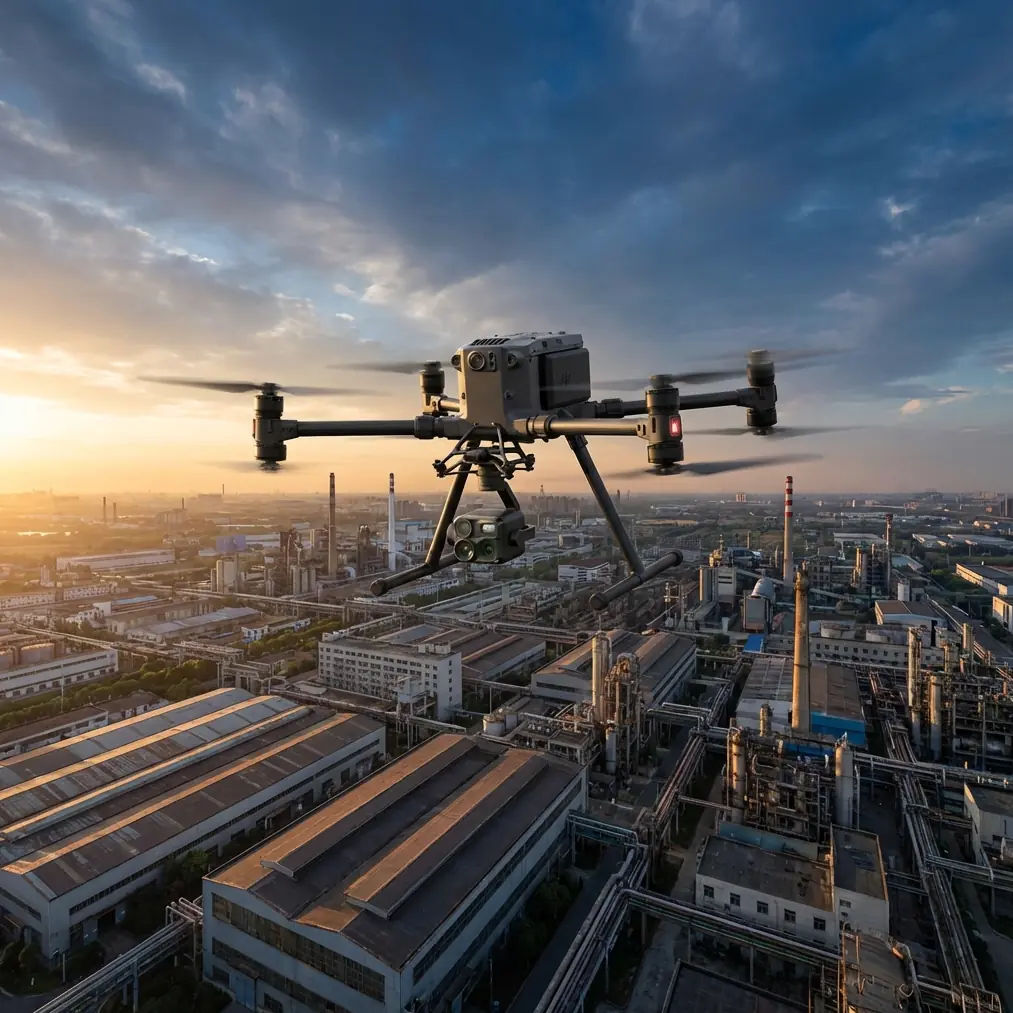
Expert Tracking with Matrice 4T: A Power Line Case Study in Changing Weather
META: A field-based Matrice 4T case study on tracking power lines in complex terrain, with operational insight on thermal visibility, control timing, anti-fog principles, and reliable data capture when weather shifts mid-flight.
By Dr. Lisa Wang, Specialist
Power line inspection sounds straightforward until the terrain starts making decisions for you.
On paper, this Matrice 4T mission was simple: follow a transmission corridor across broken ridgelines, verify several suspect spans, and document thermal anomalies before a forecasted weather front moved in. In reality, the line crossed shaded gullies, exposed rock faces, and a patchwork of humid low points where visibility could change in minutes. That last part mattered more than the planning team expected.
The mission became a useful example of why the Matrice 4T is not just a sensor platform. In difficult utility work, the aircraft is a moving system-of-systems: optics, thermal sensing, transmission stability, control logic, and environmental resilience all have to work together. If one part loses clarity or timing when conditions deteriorate, the inspection loses value quickly.
The job: power line tracking where terrain hides problems
The corridor in question was known for two inspection headaches.
First, the line was visually inconsistent. Towers on ridge crests were easy to identify, but conductor segments dropping into tree-lined depressions created mixed backgrounds that confused purely visual review. Second, the weather at lower elevations often behaved differently from what the launch point suggested. A clear start could turn into shifting mist or moisture near the line itself.
That is where the Matrice 4T’s thermal signature work became central. In power line operations, thermal is not just about finding a hot component. It is about preserving interpretability when contrast in the visible image starts collapsing. A damp atmosphere, backlit conductors, or low cloud pushing through a valley can make standard optics harder to trust. Thermal helps restore separation between the asset and its surroundings.
But that benefit only holds if the imaging system stays clear and stable.
Why this flight reminded me of old aircraft design principles
One of the more interesting lessons from legacy aircraft design literature is that anti-fogging is not the same thing as anti-icing, and it is definitely not the same thing as structural heating. That distinction sounds academic until you are in the field.
A technical reference on aircraft environmental and visibility systems describes how an internal dry-air layer can be directed parallel to an inner surface through slot nozzles or closely spaced holes, creating a buffer between moisture-laden cabin air and the transparent surface. The purpose is anti-fogging: maintain clarity by controlling the moisture boundary layer. In the same source, electrically heated transparent surfaces are discussed with typical input power figures in the range of 775 to 1550 W/m², with a representative set temperature around 32°C in certain high-performance applications.
Why mention that in a Matrice 4T article?
Because the same operational logic applies in drone inspection: keeping the sensing path clear is often less about brute-force heating and more about managing the conditions that create visual degradation in the first place. When humidity rose in the valley during this mission, the practical challenge was not ice. It was loss of image confidence from moisture effects, glare, and reduced contrast. The Matrice 4T’s value in that moment came from maintaining workable sensing options across visible and thermal channels, rather than depending on one camera mode to survive every microclimate.
For utility operators, that distinction matters. If your workflow assumes the RGB payload will carry the whole job, then a mid-flight weather change can quietly degrade your dataset before anyone notices. If your workflow is built to pivot between optical interpretation and thermal confirmation, the mission is far more resilient.
The weather turned halfway through the inspection
Roughly midway along the route, conditions changed faster than the forecast window suggested. Warm air coming up the slope met a cooler pocket in the low terrain. A thin haze developed first, then intermittent moisture drifted through the corridor. It was not dramatic weather. It was worse than dramatic weather, actually. It was the kind that looks manageable from the pilot’s position while slowly stripping detail from the scene downrange.
This is where operators get into trouble. They continue flying because the aircraft itself is still stable, but the inspection quality is already slipping.
With the Matrice 4T, we adjusted the sequence rather than forcing the original plan. The pilot reduced speed through the most visually compromised section, and the inspection lead shifted priority from broad visible sweeps to targeted thermal review of structures and hardware transitions. Suspect points were marked immediately instead of waiting for end-of-flight annotation. That preserved context while the corridor still had acceptable transmission and image continuity.
The weather shift also changed how we thought about line tracking. In clear conditions, long visual continuity across spans makes it easier to read alignment and vegetation encroachment at once. In variable moisture, the better strategy is often to inspect node by node: tower body, insulator strings, attachment hardware, conductor zones, then environmental context. The Matrice 4T supported that change without forcing a return and relaunch.
Control timing matters more than most utility teams realize
There is another reference point worth borrowing from classical flight-control design. In fly-by-wire systems, shorter system cycles produce better real-time responsiveness. A design reference notes that highly maneuverable aircraft may use system periods around 10 to 15 milliseconds, while less demanding aircraft can tolerate something like 50 milliseconds. The same source emphasizes synchronized timing to avoid accumulated error between processors and describes the role of watchdog timers, DMA controllers, interrupt control, and layered memory types such as RAM, Flash, EPROM/EEPROM, and NVRAM.
No, the Matrice 4T is not a crewed fly-by-wire aircraft. But the principle is directly relevant to utility drone work in rough topography.
When you are tracking power lines through terrain-induced signal complexity, changing wind, and intermittent visibility loss, responsiveness is not a luxury feature. It is what keeps the aircraft behavior predictable enough for the payload to do meaningful work. Stable position hold, prompt control response, and clean system timing are the invisible foundations of a useful image set.
This is especially true when you are making small, repeated adjustments near structures while preserving safe stand-off distance. A laggy aircraft creates soft operational errors: slightly off-angle images, inconsistent overlap, partial thermal framing, and more pilot workload. Those mistakes rarely look dramatic in the moment, but they weaken the final inspection record.
The lesson from traditional control-computer design is simple: reliability is built from disciplined timing and redundancy, not from a marketing claim. For drone teams, that translates into confidence when conditions stop being ideal.
Transmission discipline in terrain: O3 is part of the story, not all of it
The corridor crossed several sections where terrain could partially mask line of sight. In practice, robust O3 transmission performance helped sustain command and image review continuity, but it did not eliminate the need for disciplined route design. That distinction is worth stressing.
Operators sometimes assume a strong transmission standard solves complex terrain. It does not. It gives you more room to work intelligently. In this case, the mission plan used vantage transitions that kept the aircraft from disappearing behind terrain features for long intervals. When haze increased, maintaining a clean live view mattered just as much as command reliability because the inspection team needed immediate thermal interpretation, not delayed forensic analysis after landing.
Security also mattered because utility infrastructure data is sensitive even in civilian contexts. AES-256 is not a visual feature, but it is operationally significant. A power line inspection captures tower locations, equipment states, access paths, and sometimes evidence of maintenance vulnerability. Strong data protection is part of professional utility workflow now, especially when teams are sharing observations across field and office roles.
Thermal did more than find “hot spots”
There is a lazy way to talk about thermal inspection: fly, spot hot component, take screenshot.
That is not what happened here.
The more valuable use of thermal on this Matrice 4T mission was comparative interpretation under unstable visual conditions. As the visible scene degraded in the damp valley air, thermal helped distinguish structural and electrical elements from the shifting environmental background. A questionable connector region on one span did not present as a dramatic anomaly from far out. What made it stand out was inconsistent thermal behavior compared with adjacent hardware under similar load exposure.
That is why thermal signature analysis should be paired with route logic and annotation discipline. The aircraft sees temperature differences, but the operator still has to understand context. Was the component sun-affected? Was the background retaining heat? Was the apparent anomaly repeatable from a second angle? The Matrice 4T made those checks possible without collapsing the mission timeline.
Visible data still matters, especially for follow-up photogrammetry
Even in a thermal-led moment, visible imagery remained essential. Once the suspect sections were identified, we captured a structured set of visual references to support follow-up review and possible photogrammetry planning. For utility teams, this is where many inspections become more useful after the flight than during it.
A thermal observation can tell you where to look. A photogrammetric follow-up can help you measure, compare, and communicate what changed over time. If a utility team later decides to generate a localized model around a tower or crossing, good geometry matters. That is where consistent image angles, overlap planning, and any GCP strategy become relevant. You do not need ground control points for every power line pass, but when a site is likely to feed engineering analysis, knowing in advance which structures may need precise spatial reference saves a second trip.
The Matrice 4T mission did not begin as a mapping task. Still, because the crew collected disciplined visual context around the flagged locations, the dataset remained useful beyond immediate defect screening. That is the difference between flying for evidence and flying for insight.
Battery management shaped the mission more than flight time did
In complex terrain, battery strategy is less about maximum endurance and more about decision freedom.
Hot-swap batteries mattered here because the weather front was advancing in uneven waves. We needed to preserve momentum between sorties while reassessing the route after the atmospheric shift. A slow battery turnaround would have forced a longer pause just as the corridor conditions were changing. Hot-swap capability kept the operation moving without rushing the crew into a poor launch decision.
This has practical consequences for line inspection. Fast turnaround lets teams break a corridor into smarter segments, react to local weather instead of broad forecasts, and revisit flagged points while the environmental context is still comparable. In utility work, that last point is easy to underestimate. A thermal irregularity observed under one set of ambient conditions can look different an hour later. Speed between flights preserves interpretive continuity.
Where BVLOS thinking enters the picture
This mission was conducted with conservative operational discipline, but it highlighted why BVLOS-minded workflow design is becoming more relevant for infrastructure operators. Not because distance itself is impressive, but because linear assets demand process consistency over distance.
For power line tracking, BVLOS planning principles improve even when an operation remains within tighter practical bounds: route segmentation, communication redundancy, observation handoff logic, and data labeling standards all become sharper. The Matrice 4T fits naturally into that mindset because its strength is not just sensing range. It is mission continuity across changing conditions.
If your team is building that kind of utility program and wants to compare corridor planning notes, field communication practices, or payload workflows, you can message our inspection desk here.
What this case says about the Matrice 4T
The strongest takeaway from this flight is not that the Matrice 4T handled bad weather heroically. The weather was manageable. The real point is subtler.
It handled a transition in information quality.
That is what derails many infrastructure missions. The aircraft remains airborne, but the data becomes less trustworthy. On this route, the combination of thermal interpretation, stable control behavior, secure transmission, and fast field recovery kept the inspection useful after conditions shifted. That is a much higher bar than simply finishing the flight.
Two technical ideas from traditional aircraft design help explain why. First, visibility management depends on understanding moisture and surface clarity, not just adding heat indiscriminately; the anti-fog references with 775–1550 W/m² heating ranges and a 32°C representative set point show how seriously aviation treats optical reliability. Second, responsive control systems depend on disciplined timing, where cycle periods on the order of 10–15 ms are associated with higher real-time performance. Those are not drone specifications, but they are excellent reminders of what matters in field robotics: clear sensing and timely control.
For utility inspectors working ridgelines, valleys, and unstable weather windows, that is exactly the operational profile that counts.
The Matrice 4T earned its keep on this mission not by doing one thing spectacularly, but by remaining coherent as a platform when the environment stopped cooperating.
Ready for your own Matrice 4T? Contact our team for expert consultation.