
Tracking High-Altitude Power Lines with Matrice 4T
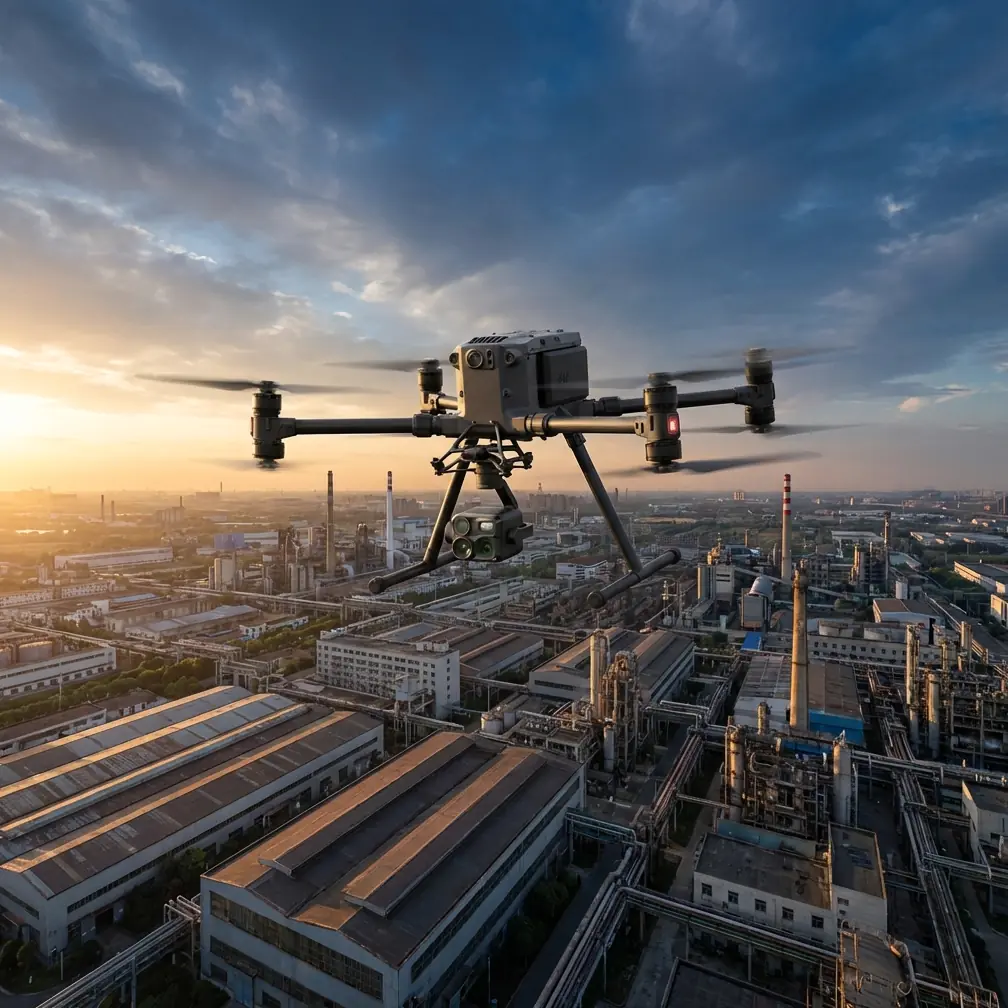
Tracking High-Altitude Power Lines with Matrice 4T: What Actually Matters in the Field
META: A technical review of using Matrice 4T for high-altitude power line tracking, with practical guidance on thermal signature capture, antenna positioning, transmission stability, reliability thinking, and workflow choices that improve inspection results.
High-altitude power line work exposes every weakness in a drone workflow.
Thin conductors are visually unforgiving. Mountain wind changes quickly. Signal geometry becomes less predictable as the aircraft moves across ridgelines and towers. Add cold morning air, strong noon glare, and the need to document anomalies with precision, and the job stops being a basic drone flight. It becomes a systems exercise.
That is where the Matrice 4T deserves a more serious discussion.
This is not a generic overview of specs. For transmission-line tracking at elevation, the aircraft has to do three things well at the same time: maintain stable situational awareness, preserve trustworthy data, and reduce operational interruption. The references behind this article may come from legacy aerospace design material rather than a product brochure, but they point to something many crews overlook: reliability is never just about the airframe. It is about inspection standards, material stability, failure analysis, and how the operator builds margin into each mission.
Why high-altitude line tracking is a different kind of inspection
On paper, power lines are linear assets. In practice, they create a messy sensing problem.
The target is narrow. The background is usually complex. Snow patches, rocks, tree canopies, insulators, steel lattice, and heat shimmer can all interfere with clean visual interpretation. A useful platform for this work needs more than a good zoom view. It needs a workflow that helps the pilot or payload operator verify what they are seeing, not just spot something suspicious and move on.
For the Matrice 4T, that usually means combining thermal signature review with visible imaging and, where needed, photogrammetry passes for context. A hotspot without location context is weak evidence. A visible anomaly without thermal confirmation can be misleading. And a crisp image without stable positional discipline often creates rework later, especially when engineering teams need to compare one tower span against the next.
That is why the M4T conversation should start with mission architecture, not camera hype.
Thermal data is only useful when the mission profile supports it
Power line inspections often lean heavily on thermal imagery, but the operator’s real task is not “collect heat.” It is to capture interpretable thermal contrast under changing environmental conditions.
At high altitude, the thermal picture can improve or deteriorate very quickly. Cooler ambient air can help separate a fault signature from its surroundings, but wind can also flatten or distort the pattern. The Matrice 4T’s value in this environment is not just that it can see thermal differences; it is that it can be flown in a repeatable way that supports comparison across poles, spans, and inspection windows.
That repeatability matters more than many teams admit.
One useful way to think about it comes from a very different source: aircraft component inspection standards. In the provided reference material, one acceptance framework uses an AQL of 1.5% for manufacturing-quality defects and an AQL of 1.0% for physical performance checks. Those numbers come from component inspection, not drones, but the operating lesson transfers well. If your workflow for high-altitude line tracking tolerates inconsistent capture angles, sloppy thermal dwell time, or unstructured anomaly classification, your effective quality level in the field is worse than most industrial hardware inspections would ever accept.
With the Matrice 4T, the professional advantage comes from building a capture protocol that is tighter than the minimum needed to “finish the flight.”
Transmission discipline: O3 range is not magic if your antennas are wrong
A lot of range complaints are not really range problems. They are antenna problems disguised as terrain problems.
For high-altitude transmission-line work, especially along steep corridors, crews often focus on distance while ignoring orientation. That is a mistake. O3 transmission performance depends heavily on maintaining clean geometry between the remote controller and the aircraft. In mountainous utility corridors, the controller can easily end up aiming signal energy poorly even when the aircraft is still within a workable distance.
Here is the field advice I give crews: do not point the antenna tips at the aircraft. Position the flat face of the antenna pattern toward the drone’s flight path. When the aircraft climbs above you along a tower line, many operators instinctively tilt the controller upward too aggressively. That often degrades the link. Instead, keep the controller stable, rotate your body with the route, and maintain the strongest broadside orientation possible as the drone moves laterally and gains height.
This becomes even more important when the inspection route bends around rock faces or transmission towers. A small correction in operator stance can be worth more than a large correction in controller settings.
If your team wants a quick field diagram for antenna positioning and mountain-corridor link management, I usually recommend sending the route profile in advance through this direct WhatsApp channel so the advice can be tailored to actual terrain rather than generic open-field assumptions.
O3 helps, certainly. AES-256 also matters for protecting inspection data and operational confidentiality when utilities are managing critical infrastructure records. But neither feature cancels out poor signal handling in the field.
Reliability is not a spec sheet item; it is a method
One of the most relevant reference themes for Matrice 4T power line work is not about cameras at all. It is about failure analysis.
The helicopter design material in the references highlights fault tree analysis, failure mode and effects analysis, functional hazard analysis, and system safety evaluation. That sounds distant from drone inspection until you look at how experienced utility teams actually work. The best crews already think this way, even if they do not use the formal labels.
Before a high-altitude line-tracking mission, ask the questions that a fault-tree mindset would force:
- What happens if transmission quality drops at the exact point the aircraft is passing a ridgeline?
- What happens if thermal interpretation is compromised by sun loading on hardware?
- What happens if a battery swap delays the return pass and changes the comparison temperature window?
- What happens if the visual operator loses direct view while the pilot still has telemetry confidence?
These are not abstract safety exercises. They directly affect data quality and mission completion.
The Matrice 4T fits well into this style of operation because it can support a layered workflow: route planning, transmission discipline, anomaly confirmation, and return-pass verification. But the aircraft only performs at a high level when the crew treats the mission as a controlled inspection system, not an improvised flight with a good camera.
What the aerospace material says about material stability — and why drone operators should care
One reference detail stands out because it appears so far removed from field inspection: dimensional stability after heat exposure.
The source specifies that sample rings should withstand air aging at 350 ±10°F (177°C) and then return to room temperature with only minimal circumference change. It also mentions dimensional stabilization through annealing at 500 ±25°F (260°C) before final machining. Again, these are not drone operating instructions. They are aerospace standards language for parts that must remain predictable under stress.
Why does that matter to a Matrice 4T operator tracking power lines on mountain routes?
Because this is the right mental model for the whole job. High-altitude inspection punishes anything unstable: unstable materials, unstable transmission, unstable workflows, unstable interpretation criteria. When you are assessing insulators, connectors, hardware fittings, or heating irregularities, consistency is everything. If your platform, batteries, controller habits, or data handling process introduce too much variability, you end up chasing noise.
That is also why hot-swap batteries are not just a convenience feature in this use case. On long corridor inspections, they protect mission continuity. A cleaner transition between flight segments means less drift in environmental conditions and less disruption to the operator’s observational rhythm. In mountain environments, where the lighting and wind profile can change within minutes, that continuity has real inspection value.
Photogrammetry still has a place, even in a thermal-first mission
Many utility teams treat thermal and photogrammetry as separate worlds. That separation is usually counterproductive.
When the Matrice 4T is deployed for line tracking, thermal imagery often identifies the probable issue first. But if the asset owner needs engineering review, maintenance planning, or vegetation context, photogrammetry can provide the surrounding geometry that thermal alone cannot. This is especially useful around towers, anchor structures, and terrain transitions where line clearance and access routes matter.
If the corridor requires higher positional confidence, introducing GCP-supported workflows on selected sections can improve the value of follow-up mapping outputs. Not every inspection needs that level of structure, but on complex mountain sections, it can reduce ambiguity when multiple anomalies cluster near the same support infrastructure.
The key is sequencing. Do not force a mapping logic onto the entire mission if the immediate objective is fault localization. Use thermal and visible data for rapid anomaly detection, then apply photogrammetric discipline where context or repeatability justifies it.
BVLOS thinking starts long before formal BVLOS operations
Even when a mission remains within current local visual and regulatory constraints, high-altitude line tracking often pushes crews toward BVLOS-style planning. Linear assets tempt people into “just a little farther” decision-making. That is where weak mission design shows up.
A more disciplined M4T workflow borrows from structured aviation reliability practice: predefine handoff points, signal risk areas, battery decision thresholds, and anomaly verification rules. If a route segment is likely to create transmission shadowing, identify it before takeoff. If a thermal alert requires a second pass from a different angle, build that logic into the mission rather than improvising it at the edge of battery reserve.
This is one reason the reference material on system safety evaluation feels surprisingly relevant. Formal analysis methods exist because complex systems fail in combinations, not in isolation. In drone utility inspection, the most expensive mistakes are rarely caused by one bad image. They come from stacked small errors: weak antenna orientation, delayed battery decision, poor sunlight timing, incomplete annotation, and overconfidence in first-pass interpretation.
A practical capture strategy for mountain power lines with M4T
For most high-altitude transmission jobs, I favor a three-layer approach:
1. Corridor awareness pass
Fly for route familiarity, obstacle awareness, and transmission confidence. This is where the pilot tests antenna orientation in relation to the terrain rather than assuming the first setup is good enough.
2. Targeted thermal inspection pass
Work span by span or structure by structure. Maintain consistent viewing geometry where possible. Watch for comparative anomalies, not isolated color differences.
3. Context and documentation pass
Capture visible detail and, if required, structured imagery for photogrammetry or engineering handoff. This is where disciplined naming, metadata retention, and AES-256-protected data handling become useful rather than merely technical.
That sequence keeps the Matrice 4T in its strongest role: a field tool for decision-quality inspection data.
The real advantage of Matrice 4T in this scenario
The Matrice 4T is compelling for high-altitude power line tracking not because it promises perfect autonomy or unlimited range, but because it can support a mature inspection method.
Used well, it helps a team maintain visual and thermal cross-checking, protect data integrity, manage flight continuity with hot-swap batteries, and keep link performance stronger through good O3 antenna discipline. Used poorly, it becomes another aircraft that gathered a pile of interesting images without enough operational rigor behind them.
That distinction matters.
Utilities and infrastructure teams do not benefit from dramatic drone footage. They benefit from findings they can trust, locate, compare, and act on. The reference materials behind this discussion point in the same direction from two very different angles: inspection quality has measurable thresholds, and system reliability depends on structured analysis. Bring those ideas into the Matrice 4T workflow, and the aircraft becomes much more than a thermal camera in the sky.
Ready for your own Matrice 4T? Contact our team for expert consultation.