
Tracking Solar Farms in Low Light With the Matrice 4T
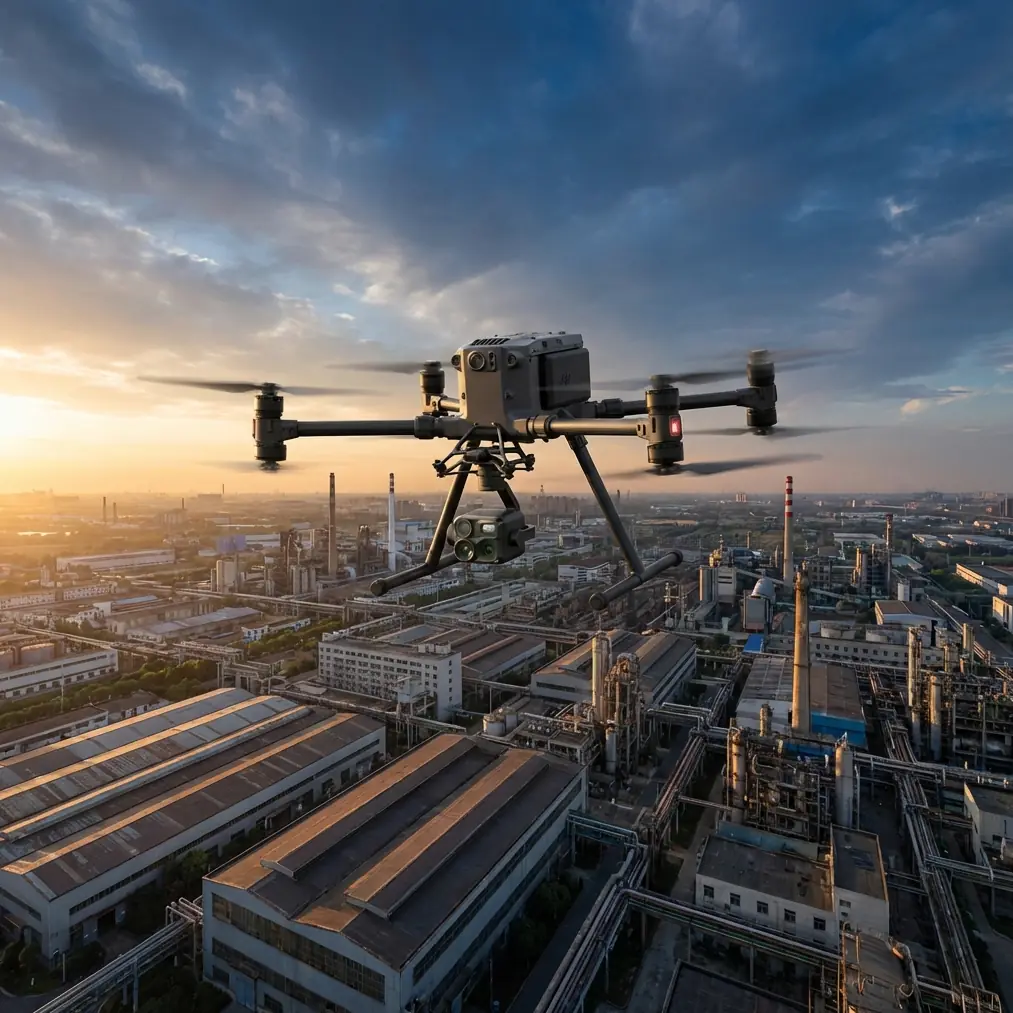
Tracking Solar Farms in Low Light With the Matrice 4T: A Practical Field Tutorial
META: Learn how to use the Matrice 4T for low-light solar farm inspections, thermal signature tracking, and safer, faster fault detection with practical field tips.
I’ve spent enough dawns and dusks on utility-scale solar sites to know where inspections usually go wrong. Not in the flying, necessarily. The real trouble starts when the light drops, panel rows begin to look identical, and small thermal anomalies hide inside a sea of repeating geometry. That’s when a drone stops being a convenience and becomes the difference between a useful inspection and a wasted morning.
For crews tracking solar farms in low light, the Matrice 4T sits in a very practical sweet spot. It is not just about getting airborne before sunrise or after sunset. It is about keeping visual context and thermal context aligned long enough to find the defective string, return to the exact row, and hand maintenance teams something they can act on without another site walk.
This tutorial is built around that problem.
The challenge that used to slow us down
A few years ago, one of the most frustrating parts of low-light solar inspection was reconciling thermal findings with the actual layout of the site. You would detect a hot module or an irregular thermal signature, but then spend too much time confirming whether it was row C-17, the adjacent tracker line, or a panel cluster offset by a maintenance lane. If the site was large enough, that ambiguity created real operational drag.
Low-light conditions make the issue worse. RGB imagery loses detail. Repeating rows flatten into a pattern. Wind can move tracker positions slightly. By the time the team gets to the suspected fault area, the confidence level drops.
The Matrice 4T changes that workflow because it lets the operator work with several layers of information at once rather than relying on one sensor and a memory of the map. For solar farms, that matters more than spec-sheet bragging rights.
Why the Matrice 4T fits low-light solar work
The value of the Matrice 4T on a solar site comes from how it combines thermal observation with enough visual and positional awareness to make findings actionable. In practice, that means you are not simply spotting heat. You are identifying where that heat belongs in the farm’s real layout.
Two details are especially significant in this context.
First, thermal signature interpretation becomes useful only when it can be tied back to a physical asset. A hotspot on a panel, a warm junction box, or a string-level imbalance is not much help if the operator cannot confidently relocate it. On a low-light mission, the Matrice 4T’s multi-sensor workflow helps hold that connection between thermal and visible context.
Second, O3 transmission matters more on a solar farm than many teams expect. These sites are often sprawling, with long rows, metallic infrastructure, and environmental conditions that can complicate signal consistency. A stable transmission link supports smoother framing, fewer hesitations during inspection passes, and more confidence when working across distant sections of the array. For larger properties or structured remote operations, that steadiness is a serious operational advantage.
If your workflow includes sensitive infrastructure data, AES-256 encryption also deserves attention. Solar assets are critical commercial infrastructure, and inspection imagery often reveals system layout, component placement, and maintenance status. Strong link security is not just an IT checkbox. It is part of responsible asset management.
A field-tested low-light workflow
Here is the workflow I recommend when using the Matrice 4T for low-light solar tracking.
1. Start before the site fully wakes up
The best low-light inspection windows often happen when ambient heating has not yet erased contrast. In the early morning, a defective module or stressed electrical component can stand out more clearly before the sun loads the field unevenly. The same logic can apply near dusk depending on the inspection goal.
This is where thermal work becomes less about “seeing in the dark” and more about using a cleaner temperature picture. On a solar farm, contrast is everything.
Before takeoff, I set a simple objective: am I trying to detect thermal outliers, confirm a previously reported issue, or build a repeatable condition log for trend comparison? That answer affects altitude, speed, and how much visual reference I need from the payload.
2. Build a visual anchor before chasing thermal anomalies
Even in low light, don’t begin by hunting hotspots blindly. Start with a broader pass to establish orientation. You need a mental map of access roads, inverter blocks, tracker sections, and any obvious breaks in row geometry.
This is the step crews often skip when they are eager to use the thermal feed. It costs them time later.
With the Matrice 4T, the advantage is that you can move from wide situational awareness into targeted anomaly review without breaking inspection flow. That reduces the classic problem of spotting an issue, then losing spatial context while repositioning.
3. Fly methodically, not aggressively
Solar arrays invite rushed flying because the geometry looks simple. It is not. Repetition creates false confidence.
Keep your track lines consistent. Use overlap discipline if you plan to connect findings to mapping outputs later. If your team relies on photogrammetry to build a site reference layer, low-light thermal observations can be paired with daylight visual mapping products to create a more complete maintenance picture. The key is repeatability. The same row naming logic, the same approach direction where possible, the same site segmentation.
This is also where GCP planning earns its keep. Ground control points are not always discussed in thermal inspection conversations, but they matter if you intend to tie anomalies back to a geospatially reliable site model. On large solar farms, small positional uncertainty can become a lot of walking. A tighter spatial framework reduces that waste.
4. Use thermal as a filter, not the whole story
Thermal imagery is powerful, but on a solar farm it can mislead operators who have not developed the habit of cross-checking. A hotspot may indicate a panel defect, but it could also reflect angle, temporary environmental influence, or localized loading conditions.
What the Matrice 4T does well in real operations is shorten the path between “that looks unusual” and “here is what that asset is.” For low-light missions, that cross-reference is often the make-or-break feature.
I tell teams to classify observations into three buckets:
- clear fault indicators
- probable anomalies requiring daylight confirmation
- contextual thermal variation with no immediate maintenance trigger
That discipline keeps maintenance teams from being flooded with ambiguous findings.
5. Plan for battery swaps as part of the mission, not an interruption
On large sites, coverage efficiency often depends on how smoothly you handle power management. This is where hot-swap batteries become more than a convenience. They help preserve mission rhythm.
When you are inspecting at dawn or dusk, the useful thermal window can be narrow. A slow battery change, system restart, or awkward reinitialization can cost the best contrast period of the morning. Hot-swap capability helps crews move through site sections with less downtime and fewer breaks in data continuity.
Operationally, that means you can divide a solar farm into inspection blocks and maintain a cleaner handoff between them. Less disruption. Fewer missed rows. Better consistency in the data.
What to look for in low-light thermal signatures
Solar farm faults rarely announce themselves dramatically. Most begin as subtle departures from the surrounding pattern.
With the Matrice 4T, I focus on relative differences first:
- a module warmer than adjacent modules in the same row
- repeated localized heating near connectors or junction regions
- one string area behaving differently from neighboring strings under similar conditions
- thermal irregularities near combiner or related electrical assets
- inconsistencies that persist as the viewing angle changes
The phrase thermal signature gets thrown around casually, but what matters in practice is persistence and context. A meaningful thermal signature on a solar site is one that remains unusual when compared against nearby assets under similar conditions and can be located precisely enough for maintenance intervention.
That second part is where many inspections still fail.
Why transmission stability matters on large solar assets
A lot of drone buyers treat transmission specs as background material. On solar farms, they should not.
With O3 transmission, the operational gain is not abstract. It affects how confidently you can inspect remote sections, how smoothly you can maintain framing over long rows, and how quickly you can validate a suspected issue without creeping forward in stop-start movements.
That translates into a real field benefit: less time hovering indecisively and less need to refly sections because the operator was fighting the link instead of interpreting the imagery.
If your organization is moving toward structured remote operations or eventually preparing workflows compatible with BVLOS frameworks where regulations and approvals allow, transmission reliability becomes even more central. Not because it replaces planning, but because it supports disciplined mission execution across expansive assets.
Data handling is part of inspection quality
On commercial energy sites, image security and workflow discipline are inseparable. If your inspection files include thermal anomalies, site maps, and infrastructure detail, the way data moves matters almost as much as what the camera captured.
That is why AES-256 support is worth mentioning in a solar context. It strengthens the security posture around transmitted mission data and supports organizations that need tighter controls for internal reporting, contractor coordination, or asset documentation.
I’ve seen teams put enormous care into collecting flawless imagery, then become surprisingly casual about how that information is shared. That gap is avoidable.
If your crew needs a quick field discussion on platform setup or workflow choices, I’d suggest using this direct project chat rather than trying to resolve mission details in fragmented email threads.
Pair thermal inspections with a site model
One of the smartest ways to use the Matrice 4T on solar farms is not to treat thermal inspection as a standalone task. Pair it with a maintained visual site model.
A daylight photogrammetry map anchored with GCP data gives your team a dependable base layer. Then low-light thermal flights become a diagnostic overlay rather than an isolated event. That makes maintenance reporting cleaner. It also makes historical comparison much easier.
For example, if a thermal anomaly appears in the same string zone across multiple inspections, your team can move from anecdotal suspicion to documented trend analysis. That is where drone inspection becomes operational intelligence instead of just image capture.
Common mistakes to avoid
Flying too high for the task
Higher altitude can feel efficient, but it often blurs the line between “warm area” and “specific faulty component.” On dense solar layouts, precision beats broad but vague coverage.
Ignoring row identification discipline
Every anomaly should be tied to a repeatable site naming method. If you cannot direct a technician to the exact row and approximate module position, you have not finished the inspection.
Treating every hotspot as a defect
Some thermal differences are noise. Cross-checking matters.
Letting battery logistics break the mission
A low-light window does not wait for your workflow to catch up. Use hot-swap planning to preserve continuity.
Forgetting security
On infrastructure projects, secure transmission and clean data handling are part of professionalism, not extras.
The real advantage of the Matrice 4T on solar farms
The Matrice 4T makes low-light solar inspection easier for a simple reason: it reduces the number of gaps between detection and action.
You can identify a thermal anomaly. Keep enough visual context to place it correctly. Maintain transmission stability over large sections of the site. Protect sensitive inspection data with AES-256. And with hot-swap batteries, keep moving while the thermal window is still useful.
None of that matters if it stays theoretical. What matters is the field outcome. Fewer uncertain findings. Less time relocating issues. Better coordination with maintenance teams. More confidence when the light is poor and the site is large.
That is the difference I’ve noticed most. Not that the drone sees more, though it does. It helps the crew lose less along the way.
Ready for your own Matrice 4T? Contact our team for expert consultation.