
Matrice 4T Tracking Tips for Coastal Venues
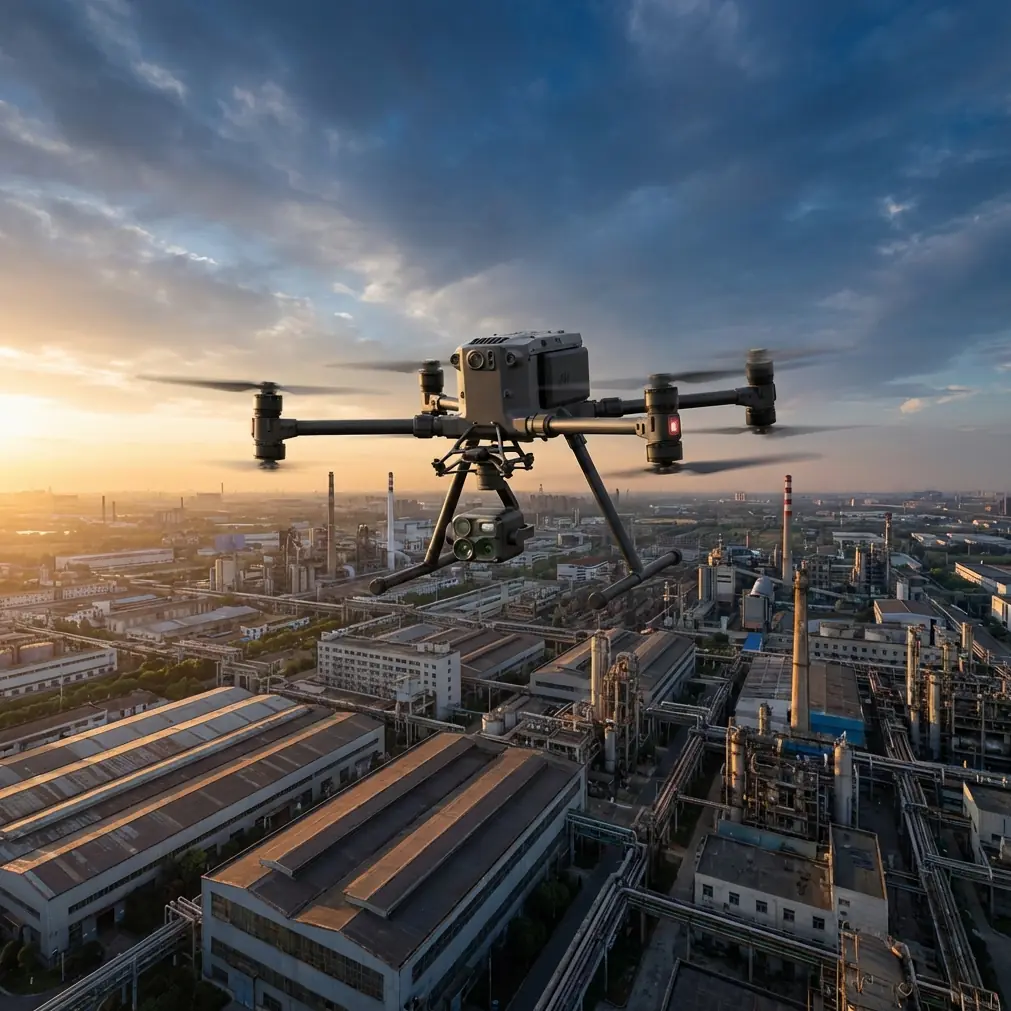
Matrice 4T Tracking Tips for Coastal Venues: What Actually Matters in the Field
META: Practical Matrice 4T tracking strategies for coastal venues, covering thermal signature control, electromagnetic interference, O3 transmission, AES-256 security, hot-swap batteries, BVLOS planning, and photogrammetry workflow.
Coastal venues look easy on paper. Wide open spaces, clean sightlines, plenty of sky. Then you get on site and the real variables show up: reflective water, steel structures, gusting wind off the shoreline, dense guest infrastructure, temporary staging, radio congestion, and a schedule that does not care whether your aircraft link is stable.
This is where the Matrice 4T earns attention. Not because it solves every problem by itself, but because its feature set is unusually well suited to venue tracking when the environment is messy and dynamic. If your goal is to monitor movement across a marina event space, survey shoreline-adjacent festival grounds, document setup changes over multiple days, or maintain visual awareness around large coastal properties, the M4T becomes less about headline specs and more about workflow discipline.
The biggest mistake I see is treating venue tracking like a generic drone mission. It is not. Coastal operations magnify small planning errors. Signal behavior changes. Thermal contrast changes. Battery turnover matters more. Antenna orientation becomes operational, not academic.
The core problem: coastal venues distort the normal rules
A waterfront resort, open-air concert ground, yacht club, or beachfront sports venue creates three overlapping technical challenges.
First, radio conditions are inconsistent. You may have marine communications nearby, venue Wi-Fi everywhere, broadcast equipment, cellular congestion, and metallic structures reflecting signals in odd ways. Second, visual interpretation gets harder than many operators expect. Sun-glare from water can flatten details in the visible image, while early-morning and late-evening thermal signature behavior can shift quickly as sand, concrete, roofing, and water all heat and cool at different rates. Third, the job usually demands continuity. You are not just grabbing one hero shot. You are tracking movement, documenting changes, watching access corridors, or supporting operations over several flight windows.
That combination is why the Matrice 4T is useful in this niche. Its thermal capability gives you a second layer of scene understanding when visible imagery gets compromised, and its O3 transmission system matters because stable control and video link quality are not a luxury near noisy venue infrastructure. Add AES-256 transmission security to the mix and you have a platform that better fits sites where image integrity and controlled data handling are part of the brief.
Why thermal is more than a backup sensor at the coast
Many teams still think of thermal as something you switch to only after dark. That misses the real advantage.
At coastal venues, the thermal signature of the scene can tell you where the operation is changing before the RGB view makes it obvious. A service vehicle that recently entered a restricted lane, a generator cluster warming up behind a temporary structure, pedestrian buildup around shaded choke points, or a recently used dock access area can all present useful thermal contrast. The key is understanding that the contrast is relative, not fixed.
Water often behaves differently from built surfaces, and that matters. Early in the day, paved areas and rooftops may heat faster than the waterline. Later, retained heat in structures can create more distinct separations than open sand. If you are tracking venue flow, this helps you identify operational hotspots rather than simply “seeing heat.”
For coastal event managers, that translates into smarter overwatch. For inspection teams around venue infrastructure, it means identifying unusual activity zones without relying entirely on visible detail. For documentation teams, it adds context to movement patterns across large sites.
With the Matrice 4T, thermal is not a novelty payload. It is part of a layered interpretation method. Use visible imagery for detail and geometry. Use thermal to isolate changing conditions. That combination is especially valuable when sea haze, backlighting, or glare reduces confidence in standard daytime imagery.
Electromagnetic interference: the quiet reason some venue flights go sideways
Let’s talk about the field issue that gets too little attention: electromagnetic interference.
Coastal venues often stack interference sources in one place. LED walls, temporary control rooms, high-power networking gear, vessel electronics, antenna arrays, steel truss systems, nearby telecom equipment, and dense public device usage can all affect link behavior. Operators tend to notice the problem only after image breakup or control latency appears.
With the Matrice 4T, O3 transmission gives you a stronger foundation, but strong transmission does not cancel poor antenna habits. Antenna adjustment is one of the simplest and most underused ways to stabilize performance on a difficult site.
Here is the practical rule: do not point the antenna tips directly at the aircraft. The broad face of the antennas should be oriented toward the flight path. At coastal venues, this becomes even more critical because reflected signal paths from water and metal can create deceptive moments where the link appears fine, then degrades as the aircraft shifts heading or moves behind structures.
When I am working a venue with known interference, I do three things:
- I establish a short test leg before the main mission.
- I rotate my body and controller position while watching link quality, not just aircraft position.
- I adjust antenna orientation based on where the aircraft will spend most of the mission, not where it is hovering now.
That last point matters. If your track line follows a marina edge or a beachfront concourse, optimize the antenna plane for the working corridor. Do not wait until breakup begins. Build signal discipline into the launch routine.
This is where the Matrice 4T’s transmission architecture and AES-256 security intersect operationally. O3 helps maintain usable video and control in harder RF conditions, while AES-256 matters for venues where operational imagery may include proprietary layouts, guest movement patterns, or sensitive infrastructure. Security is not abstract in these settings. It is part of professional deployment.
Hot-swap batteries change the rhythm of venue tracking
Venue operations rarely happen in one neat flight. There are setup windows, peak activity windows, and teardown windows. If you are documenting changes across the day or maintaining repeated observation cycles, downtime becomes the enemy.
Hot-swap batteries are one of those features that sound minor until you build a real operational schedule around them. Then they become central.
On a coastal site, wind and hover work can erode endurance faster than teams expect. Add repeated repositioning and sensor use, and battery planning becomes a live issue. The Matrice 4T’s hot-swap approach reduces ground interruption between sorties. That matters when you need temporal consistency—same route, same altitude logic, same coverage window, multiple times a day.
For venue tracking, the benefit is not just convenience. It improves data comparability. If you can relaunch quickly, you are more likely to maintain repeatable intervals for documenting crowd flow areas, staging changes, shoreline equipment deployment, or parking and access evolution. Better continuity means better decisions later, whether the end user is facilities management, event operations, or infrastructure planning.
Photogrammetry and tracking are stronger together than most teams realize
A lot of operators mentally separate “tracking” from “mapping.” On coastal venues, that is a mistake.
The Matrice 4T can support a smarter combined workflow where photogrammetry gives you the stable spatial layer and live observation gives you the temporal layer. In plain terms: map the venue structure accurately, then use ongoing flights to interpret what is changing inside that structure.
This is where GCPs come in. If you are building a reliable venue base map for recurring use, Ground Control Points help anchor your model so repeat missions line up with greater confidence. That has operational value beyond surveying. It means a facilities team can compare access routes, temporary structures, shoreline barriers, vendor placement, and maintenance zones against a dependable reference rather than eyeballing differences from loosely matched imagery.
For coastal sites, I usually recommend placing GCPs where they remain visible despite shifting shadows and seasonal activity. Avoid spots too close to reflective water edges or surfaces likely to be covered by temporary equipment. The goal is repeatability. Once your base geometry is solid, the Matrice 4T’s tracking role becomes more powerful because your observations live inside an accurate spatial framework.
This is especially useful for resorts, waterfront mixed-use developments, and recurring event venues that need both inspection-grade documentation and operational awareness.
BVLOS thinking starts long before a BVLOS flight
BVLOS is often discussed like a regulatory checkbox. It is more useful as a planning mindset, even when your operation stays within standard visual procedures.
For long, linear coastal venues, the real lesson from BVLOS planning is route discipline. Build segments. Identify signal-risk areas. Predefine lost-link contingencies. Mark visual interference zones caused by structures, glare, or terrain breaks. Consider where spotters would stand if the job scale expands. When you think this way, even a routine mission becomes cleaner and safer.
The Matrice 4T is well suited to structured operations, and coastal venue tracking benefits from that structure. A beachfront property boundary, harbor promenade, or extended event footprint can tempt operators into improvising. Resist that. Segment the mission into logical blocks: waterside edge, public circulation zone, service corridor, back-of-house infrastructure, parking or logistics perimeter.
This improves not only flight quality but also data usefulness. The client or internal stakeholder gets organized outputs tied to operational zones rather than one long, undifferentiated video archive.
A practical coastal workflow for the Matrice 4T
If I were building a repeatable program for tracking a coastal venue with the M4T, it would look something like this.
Start with a morning baseline flight. Use visible imagery to document geometry and setup status while thermal helps identify active equipment areas, recently occupied service lanes, and early operational hotspots. Keep the route consistent.
Then conduct a transmission check over the first mission corridor. Watch for link fluctuations near metal structures, broadcast infrastructure, and waterside edges. Adjust antenna orientation before the main flight block, not during it.
Midday, if glare intensifies, lean more heavily on thermal for situational confirmation while preserving RGB captures where detail remains usable. If you are running photogrammetry on a recurring basis, make sure your GCP visibility remains uncompromised by crowd barriers, vehicles, or temporary staging.
During peak activity periods, battery turnover becomes strategic. Hot-swap efficiency lets you preserve observation cadence. That is often the difference between “we have footage” and “we have a time series that actually explains what changed.”
Late in the day, thermal often becomes more revealing again as built surfaces and temporary infrastructure retain heat differently. This is a strong window for identifying lingering activity zones, service traffic patterns, and infrastructure that remained active after public operations shifted.
If you need help building a site-specific workflow for a marina, resort, or beachfront venue, a direct field discussion is often faster than guessing from spec sheets—use this quick WhatsApp contact: https://wa.me/85255379740
What makes the Matrice 4T fit this job
The answer is not one single feature. It is the combination.
Thermal signature analysis helps when visible imagery loses clarity or context. O3 transmission supports more reliable control and viewing in RF-complicated environments. AES-256 matters where operational privacy and controlled data handling are expected. Hot-swap batteries support continuity across repeated flight windows. And when paired with photogrammetry and properly placed GCPs, the aircraft becomes part of a broader venue intelligence workflow rather than just a flying camera.
That is the real story of the Matrice 4T in coastal tracking. It is not simply about staying in the air. It is about maintaining confidence when the environment fights clarity from several directions at once.
The operators who get the best results are rarely the ones chasing dramatic footage. They are the ones who understand that water reflects more than light, that thermal contrast is a moving target, that signal quality depends on body position as much as hardware, and that battery management shapes the quality of the final dataset.
Coastal venues reward that level of discipline. The Matrice 4T gives you the tools, but the value comes from how deliberately you use them.
Ready for your own Matrice 4T? Contact our team for expert consultation.