
Tracking Vineyards in Low Light With the Matrice 4T
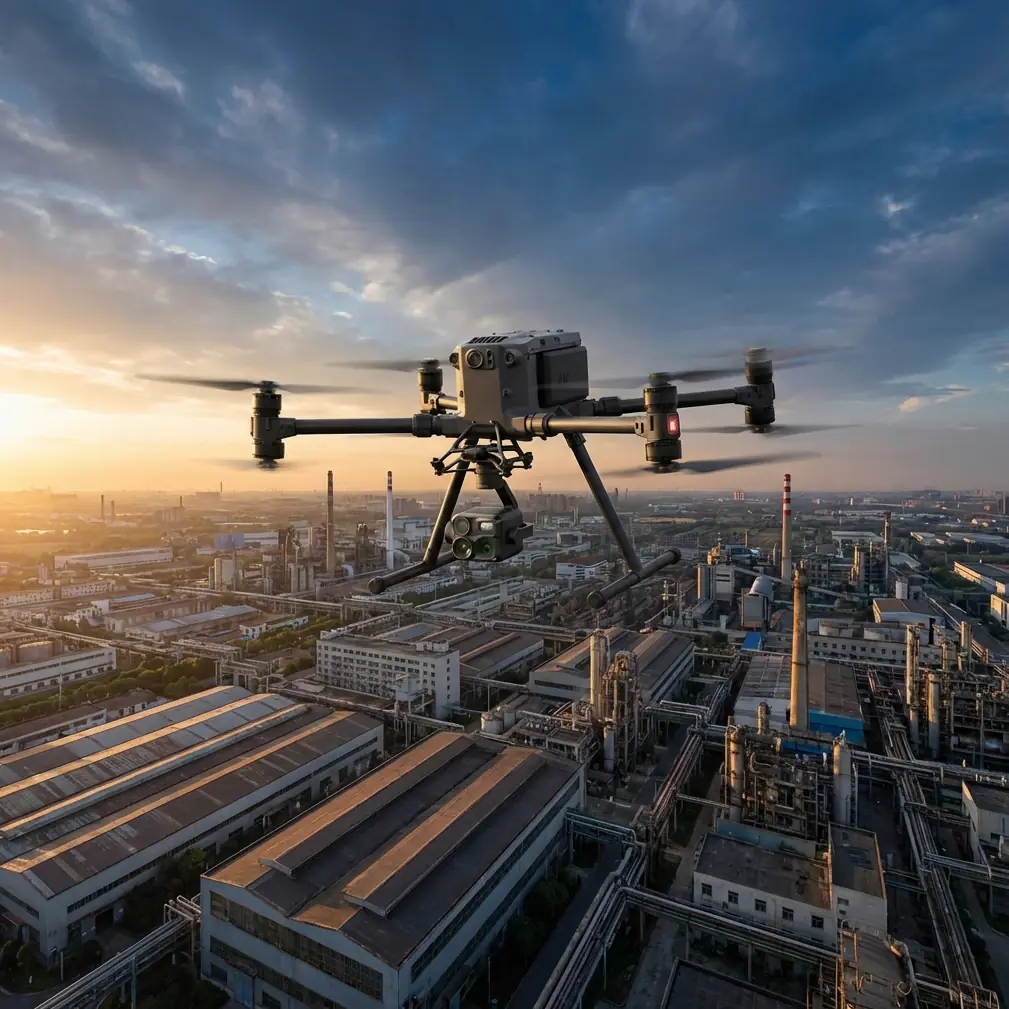
Tracking Vineyards in Low Light With the Matrice 4T: Practical Field Tips That Actually Matter
META: Learn how to use the DJI Matrice 4T for low-light vineyard monitoring with thermal workflows, maintenance logic, battery planning, and inspection tactics that reduce missed issues.
Vineyards look calm at dusk. The drone data often says otherwise.
Low light is when stress patterns begin to separate from the visual noise: irrigation inconsistency, blocked emitters, weak vine rows, animal intrusion, and temperature variation around edges and access roads. For operators working with the Matrice 4T, this is where the aircraft starts to earn its place. Not because it simply “sees at night,” but because it lets you build a repeatable monitoring method when the lighting is working against ordinary RGB inspection.
That distinction matters. A vineyard manager does not need a dramatic demo flight. They need reliable comparison flights across blocks, confidence that a suspected hot or cool zone is real, and a workflow that does not collapse when conditions in the field change.
This article is about how to do that well with the Matrice 4T, especially when the mission is tracking vineyard conditions in low light rather than creating pretty footage.
Start With the Right Question, Not the Flight Plan
When people first deploy a thermal-capable enterprise drone over vines, they often ask the wrong opening question: how late can I fly?
A better question is: what change am I trying to detect, and against what baseline?
Low-light vineyard work is rarely about a single image. It is about consistency. If one block was flown just after sunset on Tuesday and another was flown before sunrise a week later, the data may still be useful, but cross-comparison gets messy fast. Surface temperature behavior shifts with soil moisture, canopy density, recent irrigation, slope orientation, and even how long each row has been out of direct sun.
This is where a lesson from aircraft reliability and maintenance engineering becomes surprisingly relevant to drone operations. One of the source references stresses that any valid conversion model depends on clearly defining the product, the failure criteria, the time segment being measured, the maintenance event type, and the environmental factor. In plain vineyard terms: if your mission conditions are vague, your conclusions will be too.
So define the mission before you launch:
- same vineyard blocks
- same flight altitude
- same camera angle
- same approximate time window
- same weather threshold
- same interpretation criteria for heat anomalies
That discipline is not bureaucracy. It is what turns thermal imagery into operational evidence.
Why Low-Light Flights Work Better in Vineyards
Midday inspection is useful for general visual review, but it can flatten the very differences you care about. By dusk or early dawn, thermal separation can become more readable. Water distribution issues may stand out more clearly. Uneven vigor can correlate with surface temperature differences. Machinery tracks, bare patches, damaged drip lines, and perimeter disturbances also become easier to isolate when the visual scene is less cluttered.
The Matrice 4T is especially effective here because it allows the pilot to combine visible and thermal interpretation in one field workflow. That reduces the lag between “something looks off” and “I’ve confirmed what it is.”
In vineyards, that saves time in three ways:
- You spend less time revisiting the same block.
- You reduce unnecessary ground checks.
- You catch developing issues before they become obvious from the road.
Build a Repeatable Vineyard Thermal Workflow
1. Divide the property into thermal decision zones
Do not think in terms of the whole vineyard first. Think in terms of meaningful blocks:
- slope-facing sections
- irrigation zones
- younger plantings versus mature vines
- edge rows near roads or tree lines
- low-lying sections prone to moisture retention
This matters because thermal signatures are contextual. A warm patch on a rocky upper slope may be normal. The same pattern in a flat irrigated block may indicate a problem.
2. Fly at the same “decision altitude”
Too high, and you lose the row-level detail that helps distinguish vine stress from soil background. Too low, and you make your workflow inefficient while increasing the chance of inconsistent overlap and framing.
If you plan to compare missions over time, altitude discipline is non-negotiable. Another idea drawn from the reference material fits here: proper data interpretation depends on selecting the correct operating time segment and environmental factor. For drone mapping and inspection, altitude is part of that operating definition. Change it casually, and your thermal comparison may no longer be meaningful.
3. Use thermal first, RGB second
Many pilots do the reverse because RGB feels more familiar. In low light, that habit can waste the strongest capability of the platform.
Start with thermal to locate abnormal zones. Then use the visible sensor and zoom views to interpret whether the anomaly aligns with canopy gaps, irrigation hardware, access damage, standing water, or row-end disturbance. That sequence keeps the mission analytical rather than scenic.
4. Mark anomalies immediately
Use a consistent naming structure in the field:
- Block A7 north edge cool cluster
- Row 18 midpoint hot interruption
- South road boundary repeated thermal intrusion
Later, when you correlate against irrigation records, worker notes, or recent weather, you will be glad the data was tagged clearly. Again, the maintenance-engineering logic from the references is useful here: information systems only become valuable when data is timely, accurate, complete, and continuous. That principle was written for aircraft support environments, but it applies perfectly to drone-based crop monitoring.
Thermal Signature Interpretation: What Vineyards Commonly Reveal
Thermal imagery over vines is not magic. It is pattern recognition.
A few examples matter more than broad theory:
Uneven irrigation
Rows that should be thermally similar but are not can point to clogged emitters, leaks, pressure inconsistency, or partial line failure. In low light, these differences often appear before visual stress becomes obvious.
Canopy gaps
Missing or reduced canopy changes the thermal texture of a row. You may be seeing plant loss, pruning inconsistency, disease impact, or mechanical damage.
Soil moisture variation
Bare or sparsely covered soil can hold and release heat differently than adjacent sections. Over time, comparing these patterns can help identify drainage trouble spots or inefficiencies in water application.
Perimeter activity
For vineyards dealing with animal movement or unauthorized access, thermal review along roads, fence lines, and entry corridors can reveal patterns that daytime surveys miss.
The key is to avoid over-reading a single frame. One hotspot is a clue. Repeated hotspots in the same location across matched missions are evidence.
Where Photogrammetry and GCPs Still Belong
Some operators assume that once they have thermal, they can ignore mapping discipline. That is a mistake.
If you are tracking block changes over time, photogrammetry still matters. Even if the low-light mission is primarily thermal, having a well-structured RGB base map helps you align repeat observations, brief vineyard managers more clearly, and turn raw anomalies into location-specific action.
Ground control points, or GCPs, become especially useful when terrain, repeating row geometry, or patchy signal conditions make geospatial consistency harder. In vineyards with long uniform rows, small positional errors can create large interpretation confusion. Was the anomaly in row 22 or row 23? Was it near the valve cluster or 15 meters downslope? GCP discipline reduces that ambiguity.
For operators doing regular seasonal comparison, this is where the Matrice 4T becomes more than an inspection drone. It becomes a field decision platform.
O3 Transmission, AES-256, and Why They Matter in Agriculture
Low-light vineyard work often happens across large estates, broken terrain, and areas with variable line of sight. Stable transmission is not just a convenience. It affects whether you can inspect in real time with enough confidence to make decisions on site.
That is why O3 transmission matters operationally. Reliable video and telemetry links reduce hesitation when you are following row structure at dusk or checking thermal anomalies near field boundaries. You spend less attention worrying about link quality and more attention reading the data.
AES-256 matters for a different reason. Agricultural operations may not always frame data security as a priority, but they should. Vineyard maps, block health patterns, access road layouts, irrigation weaknesses, and operational routines are commercially sensitive information. A secure transmission and handling approach is not just for infrastructure clients. It is increasingly relevant in high-value agriculture too.
The Accessory That Changed My Vineyard Workflow
One third-party add-on I have seen genuinely improve low-light vineyard work is a high-output strobe designed for enterprise UAV visibility. Not because it helps the camera see the vines, but because it improves aircraft conspicuity during twilight operations around large working properties where support crews, utility vehicles, or farm staff may still be active.
That sounds minor until you have flown near tractor routes at dusk. Better visual awareness around the aircraft can make coordination smoother and reduce distractions for the pilot and observer.
Another useful accessory category is a robust GCP kit with illuminated or high-contrast targets that remain identifiable when ambient light drops. For vineyard mapping teams trying to preserve positional consistency into late-day operations, that is a practical upgrade rather than an optional extra.
If you are planning a vineyard-specific setup and want to compare field accessories that actually make sense, you can message a drone specialist here.
Battery Planning: Think Like a Maintenance Engineer
Low-light missions create a common temptation: squeeze in one more block before full dark or before the morning thermal window closes.
That is where discipline matters again.
The source references on aircraft maintenance emphasize that operators should track reliability and repairability data across the whole lifecycle, with continuity and accuracy. The drone equivalent is simple: track your own battery behavior, flight time by mission type, turnaround time, and interruption causes.
Do not rely on generic endurance claims. Build a vineyard-specific battery model:
- average minutes per block at your chosen altitude
- wind penalty on ridge sections
- added hover time for anomaly confirmation
- temperature effect on battery performance
- time lost during payload review or route adjustment
If your setup supports hot-swap batteries, use that advantage to keep mission timing consistent. In low-light agriculture, timing is part of data quality. A drawn-out battery change can shift thermal conditions enough to affect interpretation in small blocks.
Think of each battery cycle not as a power event, but as a data continuity event.
A Smarter Inspection Cadence for Vineyard Teams
A lot of drone programs fail because they borrow a rigid aviation-style schedule without adapting it to crop reality. The better model is conditional structure.
One of the source documents notes that maintenance and inspection intervals can be adjusted when approved, and that cycles may be based on use time, event counts, or calendar time. It even gives concrete examples such as a repeated structural inspection interval of 15 months or 3000 cycles, whichever comes first, and another recurring check tied to 300 events. You do not need to copy those numbers into agriculture. What matters is the logic behind them.
For vineyards, inspection cadence should be triggered by three clocks:
Calendar-based
Routine low-light block scans every week or every two weeks during critical growth periods.
Event-based
Additional flights after irrigation changes, heat waves, frost risk, heavy rain, or mechanical work in the rows.
Use-based
More frequent review for high-value blocks, problem zones, or sections with known recurring irrigation instability.
This hybrid cadence is much stronger than “we fly when someone remembers.”
BVLOS Ambition Needs Better Data Discipline First
Many commercial operators talk about BVLOS as if it is the next automatic step. For large vineyards, the appeal is obvious. More coverage, fewer repositioning pauses, broader estate visibility.
But before teams think bigger, they need to get stricter.
If your current line-of-sight thermal missions are inconsistent in naming, timing, altitude, maintenance logs, battery tracking, and anomaly verification, stretching the operational envelope will only magnify weak habits. The real value of the Matrice 4T in vineyards is not just reach. It is repeatability under field pressure.
That starts with process.
What Good Looks Like After 30 Days
A vineyard team using the Matrice 4T well in low light should be able to do the following after a month:
- compare the same block across multiple dusk or dawn missions
- identify recurring thermal anomalies by row and zone
- correlate findings with irrigation, canopy condition, or ground observations
- maintain a stable battery and maintenance rhythm
- document enough context that a manager can act without guessing
That last part is the real test. Drone data should reduce ambiguity, not create more of it.
The Matrice 4T is strong in this role because it supports quick interpretation in the field while also fitting into a more structured monitoring program. When paired with consistent mission design, careful anomaly tagging, secure data handling, and a few thoughtful accessories, it becomes a very practical vineyard tool for low-light work.
Not glamorous. Better than glamorous.
Useful.
Ready for your own Matrice 4T? Contact our team for expert consultation.