
Tracking Urban Wildlife With the Matrice 4T
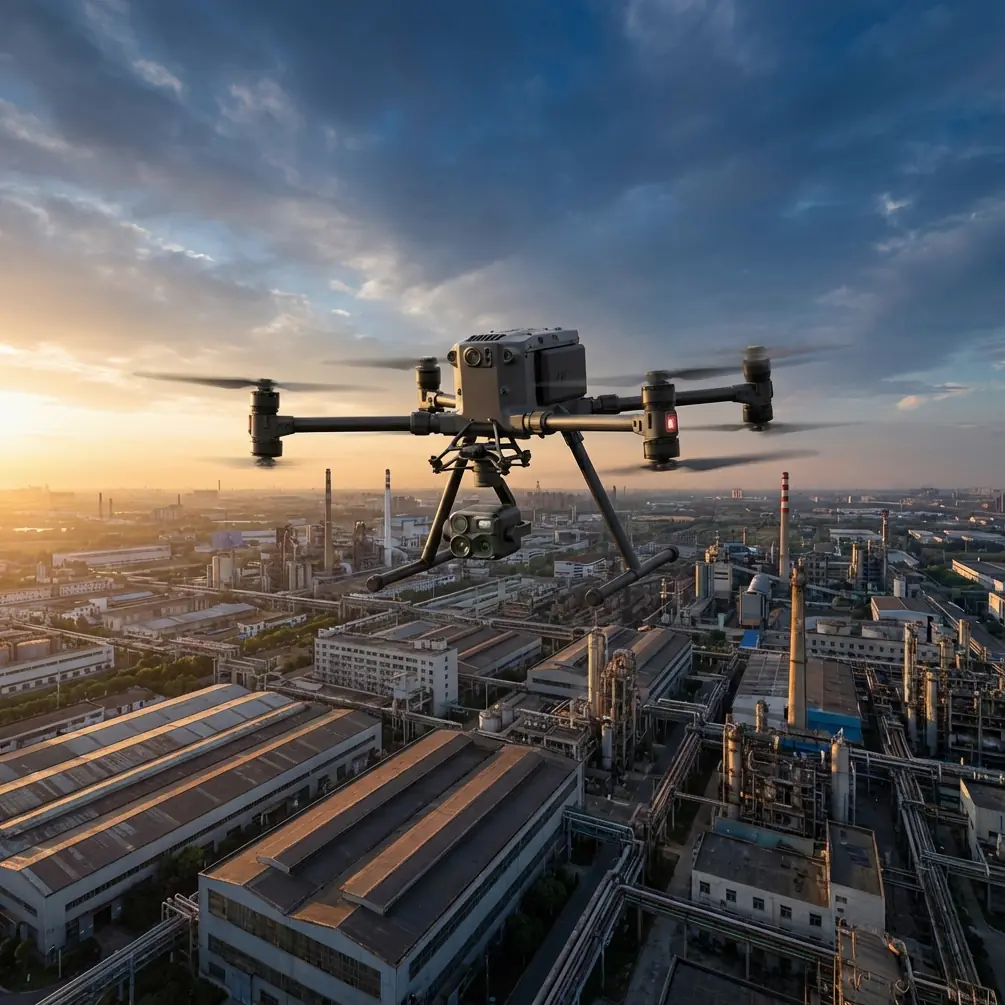
Tracking Urban Wildlife With the Matrice 4T: A Field Tutorial for Reliable, Low-Disturbance Surveys
META: Learn how to use the DJI Matrice 4T for urban wildlife tracking, with practical guidance on thermal signature detection, EMI mitigation, antenna adjustment, O3 transmission stability, hot-swap batteries, AES-256 data security, and photogrammetry workflow considerations.
Urban wildlife work is messy in a way open-country surveys are not. Heat leaks from rooftops. Glass throws reflections where you do not want them. Cell towers, Wi-Fi saturation, tram lines, substations, and dense concrete all conspire against stable flight operations and clean observations. If you are planning to track wildlife in a city environment with the Matrice 4T, the job is less about simply launching a thermal drone and more about building a repeatable method that holds up when the signal environment and visual background are working against you.
I approach the Matrice 4T as a practical urban ecology tool. Not a generic “all-in-one platform,” but a drone that becomes genuinely useful when you understand what each subsystem contributes to detection confidence, continuity of observation, and data integrity. For wildlife teams monitoring bats around buildings, nesting birds on industrial roofs, feral mammals along transport corridors, or nocturnal movement near waterways, the M4T’s real value is that it can combine thermal signature detection with visible confirmation while maintaining stable transmission in difficult urban radio conditions.
This tutorial is built around that exact scenario.
Start with the mission problem, not the airframe
Wildlife tracking in an urban setting usually means one of three things:
- Detecting animals that are visually hidden but thermally distinct.
- Following movement through cluttered environments without losing situational awareness.
- Producing evidence that can stand up to review by environmental consultants, facilities managers, or planning authorities.
The Matrice 4T fits this kind of work because thermal imaging is not just a nice extra here; it is the primary sensor for first detection. In cities, an animal may only present a partial visual silhouette, especially at dawn, dusk, or night. A thermal signature can cut through foliage gaps, rooftop shadows, and low-light scenes where a standard camera struggles. That matters operationally because you are often trying to answer a very specific question: was there movement, where did it go, and was it actually wildlife rather than background clutter from vents, vehicles, or sun-warmed surfaces?
With the M4T, the correct workflow is usually thermal first, visible second. Find the heat source. Hold position. Confirm with the visual payload before you make any ecological inference.
Thermal signature work in cities requires stricter discipline than people expect
Urban thermography is full of false positives. HVAC exhausts, sun-soaked masonry, transformer housings, parked cars, and even warm drainage outlets can all mimic the compact thermal shape of an animal. This is where operators who treat thermal as a simple spotting tool run into trouble.
A better method is to assess the thermal signature in context:
- Does the heat source move independently of surrounding background?
- Does its shape remain biologically plausible over several seconds?
- Does it respond to nearby disturbance, light change, or noise?
- Can the visible camera verify structure, movement pattern, or location?
For example, if you are tracking urban foxes along service alleys or embankments, a bright thermal spot near a wall is not enough. The M4T helps because you can use the thermal feed to acquire the target, then quickly cross-check on the visible sensor for gait and relative scale. For roost emergence monitoring around structures, thermal can flag movement near roof voids or parapets, but you still need careful interpretation because warm building edges can mask small animals.
The operational significance here is simple: thermal improves detection probability, but only when paired with a confirmation workflow that reduces false calls.
O3 transmission is more than a spec sheet item in urban wildlife operations
In open environments, pilots often take transmission stability for granted. In a city, you cannot. One of the most useful capabilities in the Matrice 4T ecosystem is O3 transmission, because urban wildlife missions frequently place the aircraft near reflective surfaces, RF congestion, and partial obstruction.
That has direct field consequences. When you are holding over a rooftop edge to confirm a nesting bird entry point, or following movement along a tree line adjacent to apartment blocks, transmission stability is what keeps your interpretation accurate. A brief video breakup at the wrong moment can mean losing the exact location of a den entrance, misreading movement direction, or failing to distinguish one animal from another in a cluster.
This is also where antenna handling becomes a real skill rather than a background detail.
Handling electromagnetic interference with antenna adjustment
Electromagnetic interference is common in urban operations. You will see it around communication masts, dense rooftop equipment, rail infrastructure, utility corridors, and even heavily built-up commercial blocks. The mistake many crews make is assuming the solution is always to climb higher or move farther back. Sometimes that helps. Sometimes it makes the link worse.
Antenna adjustment should be deliberate. With the controller, the goal is not simply pointing the antennas “at” the drone in a literal sense. It is maintaining the strongest possible orientation between the antenna faces and the aircraft while avoiding body shielding and reflective dead zones caused by nearby structures. If you are tucked close to a concrete wall or standing beside a metal rooftop plant screen, even a small repositioning of the pilot can change signal behavior.
My field routine is straightforward:
- Establish a takeoff point with clean overhead visibility if possible.
- Before moving to an observation position, check signal quality and image smoothness.
- If breakup starts, first adjust pilot stance and antenna angle rather than immediately maneuvering the drone.
- Step away from vehicles, railings, steel housings, or large HVAC units if they are near the controller position.
- If the link remains inconsistent, relocate the ground station laterally rather than only changing altitude.
Why this matters for wildlife tracking: a smoother feed leads to better behavioral interpretation. In urban ecology, a two-second hesitation in the image can make a fox disappear behind a container, a bird drop below a parapet, or a bat emergence count become unreliable. Transmission reliability is not just a pilot comfort issue; it affects biological data quality.
Keep the aircraft in the air without breaking the survey rhythm
Wildlife movement does not pause because your battery cycle ends. This is where hot-swap batteries become highly practical for repeated urban surveys. If you are monitoring dawn activity across multiple rooftops or conducting an evening thermal watch along a canal corridor, downtime between sorties can break continuity and force you to restart your detection pattern.
Hot-swap capability matters because it shortens the turnaround between flights and helps preserve your observation window. That is especially useful when animal behavior is time-sensitive, such as brief emergence periods, feeding runs, or movement linked to traffic quietening after sunset.
The number is not glamorous, but it is operationally decisive: shaving even a few minutes off each battery change can mean catching the next movement pass rather than arriving after the target has already crossed the site.
A practical tip: build your battery rotation around the ecology, not just the charge level. If activity peaks during a 20- to 30-minute interval, you want fresh packs loaded before that period begins, not during it.
Protect your location and survey data
Urban wildlife projects often intersect with sensitive sites: schools, residential estates, infrastructure facilities, private rooftops, research locations, or protected species habitats. Data security is not only an IT concern. It can be part of your ethical and contractual responsibility.
That is why AES-256 matters in the Matrice 4T workflow. Encrypted handling of transmitted or stored information helps reduce exposure of survey imagery and site details. For teams working with ecological consultancies, utilities, or property managers, this becomes significant when flight media includes private premises, access routes, or nest and roost locations that should not circulate casually.
Operational significance is often overlooked here. Secure data handling supports trust with site owners and project stakeholders, and it reduces friction when approvals depend on responsible information management.
When photogrammetry belongs in a wildlife mission
Photogrammetry is not the first thing people think about when discussing a thermal drone, but it has a place in urban wildlife work. Not always for the target animal itself, but for the habitat context around it.
If you are documenting roof structures, tree canopies, drainage alignments, embankments, or façade access points related to wildlife use, a photogrammetry pass can create spatial context that pure observation footage cannot. This is particularly useful for repeat monitoring, mitigation planning, or reporting before and after site changes.
Where GCPs come in: if you need stronger positional consistency for comparative mapping, Ground Control Points can improve confidence in model alignment. In a dense urban site, though, GCP placement is not always easy or safe, and wildlife teams should be honest about whether survey-grade accuracy is necessary. For many urban ecology tasks, relative positional understanding is enough. For infrastructure-linked habitat analysis, stronger control may be worth the setup time.
The key is not to force a mapping workflow onto every wildlife mission. Use photogrammetry when it helps answer habitat questions, not because the platform can do it.
BVLOS language should not distort the mission plan
BVLOS often enters these conversations because linear corridors and urban waterways can tempt teams to think in terms of extended tracking. But for wildlife work in cities, the practical and compliant approach is usually to focus on lawful, controlled observation segments rather than trying to stretch the mission profile beyond what the environment supports safely.
The real lesson is this: urban wildlife tracking is usually won by patient positioning and disciplined reacquisition, not by chasing an animal over long distances. The Matrice 4T is effective when used to monitor likely movement nodes, thermal transition zones, and habitat edges rather than as a pursuit platform.
A sample workflow for an evening urban wildlife survey
Let us make this concrete.
Imagine a survey around mixed-use buildings bordering a canal, with reports of nocturnal mammal activity and possible bird nesting on adjacent structures.
1. Pre-site setup
Review local obstructions, likely RF sources, lighting conditions, and thermal clutter zones such as ventilation stacks or glass-heavy façades. Plan two or three launch positions rather than one fixed point.
2. Initial hover and link check
At takeoff, assess image stability on the O3 feed. If the area is RF-noisy, test controller orientation and antenna angle before moving to observation altitude.
3. Thermal sweep
Use the thermal view to scan likely movement corridors first: vegetated edges, rooftop corners, bridge undersides, service alleys, and canal margins. Do not call a target from one bright thermal spot alone.
4. Visual confirmation
Once a heat source is found, switch to visible confirmation. Check form, movement, and environmental relationship. This is where you separate an animal from a vent, lamp housing, or warm vehicle panel.
5. Position discipline
Avoid crowding the target. In urban wildlife work, good standoff is often better than perfect proximity. Less disturbance usually means more honest behavior.
6. Battery continuity
If the observation period is expected to peak shortly, land and use the hot-swap battery workflow before the critical window rather than risking interruption mid-event.
7. Habitat documentation
If required, conduct a short photogrammetry capture of the relevant structure or corridor, with GCPs only if the project truly needs stronger geospatial repeatability.
8. Data handling
Store and transfer findings under secure protocols, especially if imagery includes private property or sensitive species locations.
If your team is building a field protocol for this kind of survey, it helps to compare notes with operators who have already dealt with urban EMI and rooftop observation challenges; one easy way to discuss practical setup details is through this direct field coordination channel.
What makes the Matrice 4T actually effective here
Not every drone with a thermal sensor is well-suited to urban wildlife tracking. What makes the Matrice 4T stand out is not one isolated feature but the way several of them reinforce each other.
Thermal signature detection helps you find what the eye misses. O3 transmission helps keep the feed stable enough to interpret subtle movement in RF-heavy places. Antenna adjustment becomes a controllable technique rather than a vague troubleshooting ritual. Hot-swap batteries protect continuity during narrow activity windows. AES-256 supports responsible handling of sensitive environmental data. Photogrammetry and GCP workflows, when used selectively, add habitat context that can strengthen reports and mitigation planning.
That combination matters because urban wildlife monitoring is rarely a single-task mission. It is detection, confirmation, documentation, and defensible reporting under imperfect conditions.
The operators who get the best results with the M4T are usually not the ones flying fastest or farthest. They are the ones who understand interference, interpret thermal carefully, plan battery timing around animal behavior, and know when spatial documentation adds value.
If you track wildlife in a city with that mindset, the Matrice 4T becomes more than a platform for observation. It becomes a reliable decision tool.
Ready for your own Matrice 4T? Contact our team for expert consultation.