
Matrice 4T for Wildlife Tracking in Windy Conditions
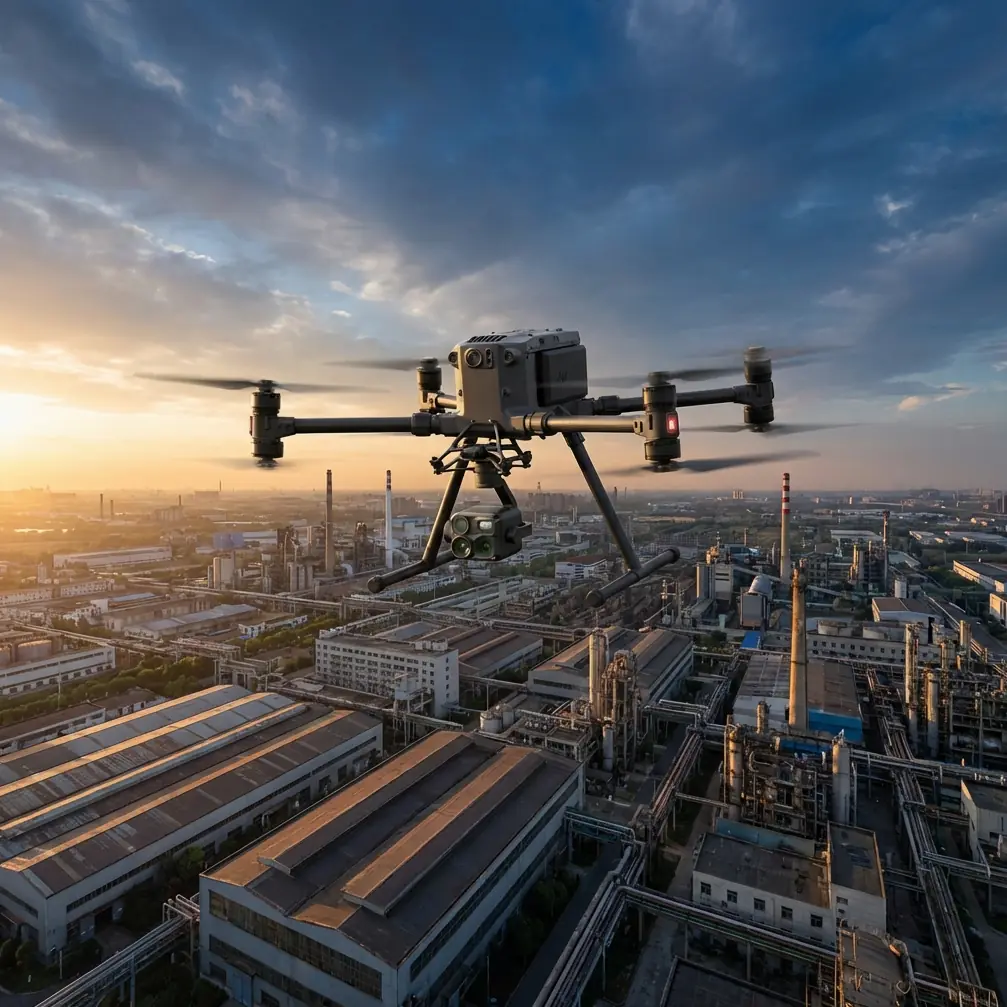
Matrice 4T for Wildlife Tracking in Windy Conditions: A Field Tutorial from the Sensor Side
META: Expert tutorial on using the DJI Matrice 4T for wildlife tracking in windy conditions, with practical guidance on thermal signature capture, O3 transmission, AES-256 security, hot-swap batteries, and mapping workflow considerations.
Wind changes everything in wildlife work.
It bends grass, shifts thermal layers, pushes a drone off its ideal line, and turns a clean visual acquisition into a blinking, partial sighting. If you are trying to track animals rather than just spot them once, the Matrice 4T becomes interesting for a different reason than most spec-sheet conversations suggest: it is not just about carrying multiple sensors. It is about preserving continuity when the environment keeps trying to break it.
This guide is built for that exact scenario—tracking wildlife in windy conditions with a Matrice 4T—using the aircraft as a field tool for ethical, civilian observation, habitat surveys, and research support. The focus here is practical. How do you actually use its thermal signature detection, transmission reliability, battery workflow, and mapping-adjacent capabilities to stay on an animal safely and consistently when the air is unstable?
I’ll start with a real field-style scenario, because that is where the value of the platform becomes obvious.
A windy dusk encounter: why the Matrice 4T makes sense here
Picture a ridgeline at last light. Ground teams have reported movement near a scrub corridor where deer often cross toward a water source. The wind is gusting across the slope, enough to make low-altitude flight busy and enough to smear fine detail in vegetation. With a standard visual-only setup, you might get flashes of movement and lose them again as branches sway and shadows lengthen.
This is where the Matrice 4T’s thermal signature capability changes the workflow.
In one such encounter, a small group of deer emerged unevenly from brush, with one juvenile lagging behind and partially concealed near a rock line still holding residual warmth from the day. Visually, the scene was messy. The rocks, brush movement, and low-angle light all competed for attention. Thermally, the animals separated from the background just enough to maintain track continuity. Not perfect, not cinematic, but usable. That difference matters. In wildlife tracking, “usable” is often what separates a completed observation from a broken data set.
The Matrice 4T is effective in those moments because it lets the operator cross-check thermal and visible views without improvising a completely different workflow mid-flight. In wind, that matters more than people expect. The harder the aircraft is working to maintain position, the less mental bandwidth the pilot has for sensor friction.
Step 1: Start with the mission logic, not the camera
A common mistake in wildlife operations is beginning with zoom, image quality, or thermal settings before deciding what kind of tracking problem is actually being solved.
With the Matrice 4T, define the mission in one of three ways:
- Detection — finding animals in a broad area
- Tracking — maintaining continuity of a known target’s movement
- Documentation — collecting repeatable visual or geospatial records for later analysis
Those sound similar. They are not.
If you are working in wind, detection and tracking usually need different flight behavior. Detection often benefits from wider search lanes and thermal-first scanning. Tracking requires steadier positioning, more deliberate standoff distance, and cleaner handoff between sensor views. Documentation may involve grid-based coverage, overlap discipline, and possibly photogrammetry workflows if habitat mapping is part of the job.
The Matrice 4T earns its place when one mission starts drifting into another. You detect thermally, confirm visually, then document movement relative to terrain features. That is much more efficient than flying separate aircraft or returning later with a mapping-specific tool just to understand where the encounter occurred.
Step 2: Use thermal first when the wind makes visual clutter worse
Wind creates visual noise. Grass flickers. Shrubs pulse. Tree crowns shimmer. Even experienced operators get pulled toward motion that has nothing to do with wildlife.
Thermal viewing helps strip away some of that clutter, but only if you use it correctly.
The goal is not to stare at the thermal feed and assume every hot object is an animal. The goal is to identify thermal contrast that persists with movement logic. A living animal does not just appear as a warm shape. It moves with intent, pauses differently than wind-driven vegetation, and often follows terrain or cover lines in ways that become clear after a few seconds of observation.
On the Matrice 4T, this is operationally significant because thermal is not a novelty sensor in windy fieldwork. It becomes your first-pass discriminator. If you begin with the visible camera in gusty brush, you may spend too long chasing uncertainty. Starting thermal-first lets you reduce the search field before switching to visible confirmation.
This also lowers disturbance risk. Instead of descending aggressively for visual certainty, you can often hold a more responsible distance while still maintaining awareness of the subject.
Step 3: Respect transmission reliability as part of wildlife ethics
People talk about transmission systems as convenience features. In field wildlife work, they are mission integrity features.
The Matrice 4T’s O3 transmission capability matters because wind often pushes operators into less-than-ideal positioning. You may need to hold a cleaner line of sight, avoid terrain shielding, or offset your hover point to keep the aircraft stable. If your link is weak or inconsistent, you start making decisions for signal survival rather than for observation quality and animal welfare.
A robust transmission system has a direct operational consequence: you can choose better aircraft placement without constantly trading away feed reliability. That is especially valuable at dusk, in mixed terrain, or when tracking animals that are moving along a ridge, drainage edge, or broken canopy line.
There is another detail here that often gets overlooked: AES-256 transmission security. In a wildlife context, this is not about abstract cybersecurity theater. Sensitive habitat locations, nest sites, migration corridors, and survey records can all be vulnerable information. Secure transmission helps protect field observations and location data that should not circulate casually. For researchers, NGOs, land managers, and environmental consultants, that is a practical safeguard, not just a technical badge.
Step 4: Build your flight pattern around animal behavior, not pilot comfort
Wind tempts pilots to simplify. Hover here. Stay close. Follow directly behind. Those choices may make control feel easier, but they often produce worse wildlife outcomes.
A better Matrice 4T tracking pattern in wind usually follows these principles:
- Fly offset, not directly overhead, unless the terrain forces a different angle
- Use crosswind awareness so the aircraft does not drift into the animal’s likely path
- Maintain enough standoff for observation without pushing the subject
- Anticipate where the animal will emerge, especially near tree lines, water edges, or heat-retaining terrain
That deer encounter I mentioned earlier illustrates the point. The juvenile that lagged behind was briefly lost when the aircraft repositioned too aggressively toward the visible group. The recovery happened because the thermal view picked up a separate heat signature lingering along the rocky edge. Had the pilot simply descended and centered the visible group, the secondary animal might have been missed entirely.
The Matrice 4T helps in this kind of split-target scenario because sensor switching is fast enough to support interpretation in real time. You are not just seeing one clean subject against a clean background. You are reading a scene.
Step 5: Use battery changes as workflow checkpoints
Hot-swap batteries are one of those details that sound administrative until you work a live field session.
In wildlife tracking, stopping a mission for a full power-down is not just inconvenient. It can break the continuity of movement data, force relocation of the aircraft and crew, and create uncertainty about where the animal went during the gap. Hot-swap battery support matters because it shortens interruption and preserves momentum.
Operationally, this gives you a better structure for longer observation windows:
- Battery segment one: broad thermal search and first contact
- Battery segment two: sustained tracking and visible confirmation
- Battery segment three: terrain-context capture or habitat documentation if needed
That kind of segmentation is cleaner than trying to squeeze the entire mission into one battery cycle and then scrambling when reserves get tight in gusty conditions. Wind already taxes planning. Your power strategy should remove complexity, not add it.
A good rule in wildlife work is to treat each battery change as a decision gate: continue tracking, widen the area, switch to documentation, or terminate to avoid unnecessary pressure on the animals. The Matrice 4T’s battery workflow supports that discipline.
Step 6: Know when photogrammetry belongs in a wildlife mission
At first glance, photogrammetry sounds separate from wildlife tracking. It is not.
You may not run a full mapping mission while actively following an animal, but there are strong reasons to pair wildlife observation with a later or adjacent mapping workflow. The Matrice 4T can contribute to a broader site understanding when you need to relate movement to terrain features, vegetation breaks, water access points, or disturbance zones.
This is where GCPs—ground control points—become relevant. If your project includes repeatable habitat mapping or corridor analysis, GCPs can tighten positional reliability and make your geospatial outputs more useful over time. That matters if the wildlife team is comparing seasonal movement patterns, measuring changes in edge habitat, or documenting how animals navigate altered land.
The key is timing. Do not turn an active animal tracking session into a sloppy mapping session. Keep the observation ethical and focused. Then, if the project requires it, return with a planned photogrammetry workflow, proper overlap, and GCP placement. The significance of the Matrice 4T here is flexibility: one platform can support immediate sensing and later site interpretation without forcing a completely disconnected toolchain.
Step 7: Wind changes thermal interpretation more than many operators admit
One caution. Wind does not just make flying harder. It changes what your thermal scene means.
Strong airflow can cool surfaces unevenly, blur thermal contrast in exposed areas, and reduce the obviousness of smaller animals, especially if they are partly hidden in vegetation. Warm rocks, sun-loaded ground patches, and sheltered pockets can also complicate interpretation. In practical terms, that means you should not treat thermal as infallible.
Use these habits instead:
- Revisit a suspected target from a slightly different angle
- Compare movement pattern over several seconds, not one frame
- Cross-check with visible imagery before logging a confirmed sighting
- Be extra cautious near rocky outcrops and transitional terrain at dusk
The Matrice 4T is strong precisely because it lets you avoid single-sensor thinking. Wind is one of the best arguments for multi-sensor discipline.
Step 8: Keep the operation civilian, ethical, and low-disturbance
Wildlife tracking with drones only remains defensible when disturbance is controlled.
That means avoiding low-pressure chases, avoiding repeated close passes, and treating the drone as an observation tool rather than a stimulus. If behavior changes noticeably because of your aircraft—abrupt direction shifts, bunching, prolonged vigilance, or separation of young from adults—you are too intrusive.
The Matrice 4T’s sensor suite gives you a useful advantage here. Because thermal and zoom-assisted observation can extend your effective awareness, you do not need to crowd the subject as often to maintain continuity. Better sensing should lead to more restraint, not more aggressive pursuit.
If your team is still refining its field workflow, it helps to compare mission plans with experienced operators before deployment; one practical route is to message a Matrice field specialist here and sanity-check your setup for terrain, wind exposure, and observation goals.
A simple windy-condition workflow for the Matrice 4T
Here is the field sequence I recommend for most civilian wildlife tracking tasks in exposed terrain:
1. Pre-flight
Assess wind direction, gust pattern, terrain shelter, and likely animal movement corridors. Decide your no-approach zones before launch.
2. Initial scan
Use thermal for broad detection. Work methodically rather than reactively.
3. Confirmation
Switch to visible imagery only after thermal gives you a credible target zone.
4. Tracking
Fly offset and maintain standoff. Let movement patterns develop before repositioning.
5. Battery checkpoint
Use hot-swap timing as a decision gate, not an emergency event.
6. Context capture
If needed, gather terrain-reference imagery for later mapping or habitat interpretation.
7. Post-flight review
Compare thermal and visible records, note false positives, and mark any areas where GCP-supported photogrammetry could improve future analysis.
The real strength of the Matrice 4T in wildlife work
The Matrice 4T is not valuable because it turns wildlife tracking into something easy. Wind, terrain, and animal behavior will keep it difficult. That is the point. Real fieldwork is messy.
Its value is that it preserves decision quality under messy conditions.
Thermal signature sensing helps when vegetation and fading light hide animals visually. O3 transmission supports stable observation choices when terrain and aircraft positioning get complicated. AES-256 helps protect sensitive environmental data. Hot-swap batteries reduce the operational fracture points that often ruin continuity. And if the mission grows into habitat analysis, the same platform can fit into a photogrammetry workflow where GCP-backed accuracy actually matters.
That is a better way to think about the aircraft. Not as a collection of isolated features, but as a system that keeps the mission coherent when wind tries to pull it apart.
Ready for your own Matrice 4T? Contact our team for expert consultation.