
Matrice 4T Tracking Tips for Wildlife: A Low
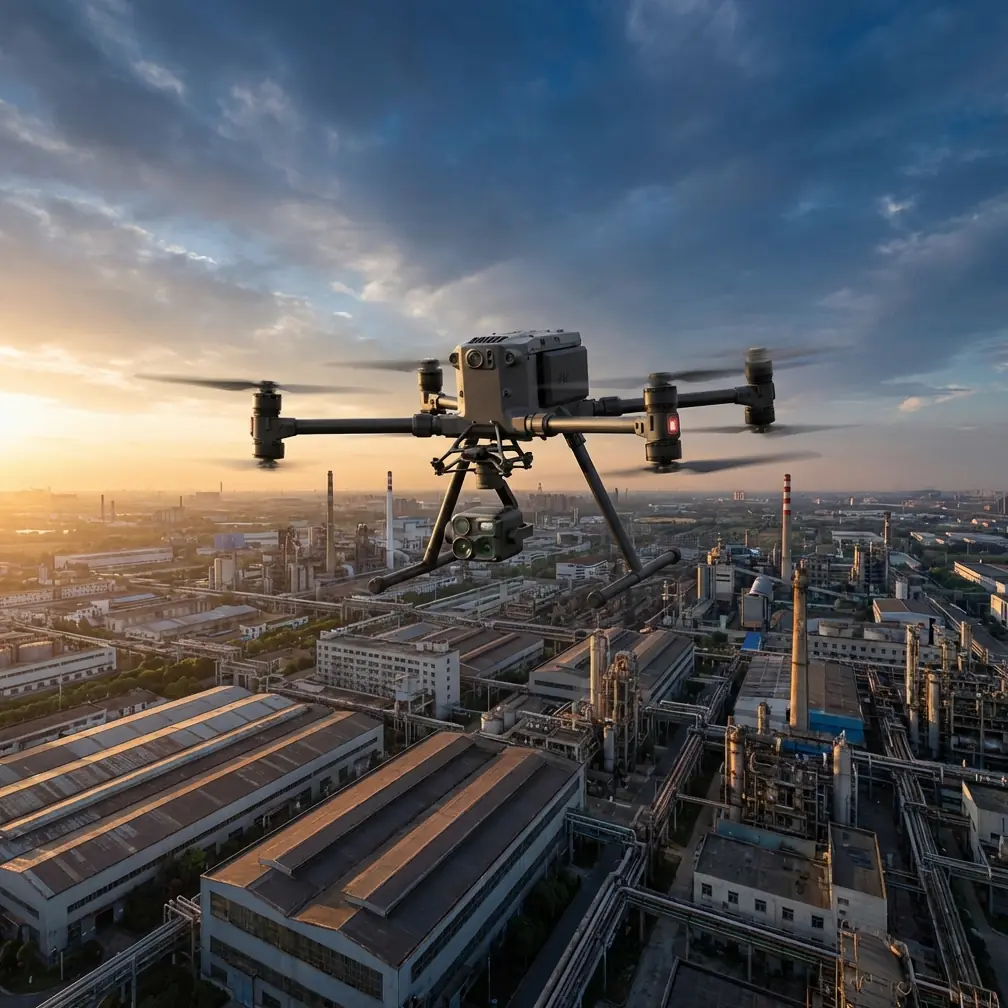
Matrice 4T Tracking Tips for Wildlife: A Low-Light Field Case Study
META: A field-focused Matrice 4T case study for wildlife tracking in low light, covering thermal workflow, pre-flight cleaning, vibration control, pressure awareness, and mission-ready operating discipline.
Most Matrice 4T articles stay at the feature level. That is rarely where wildlife work succeeds or fails.
In low-light tracking, the aircraft matters, but the discipline around it matters more. The teams that consistently find animals at dawn, recover usable thermal footage, and avoid false cues from dust, condensation, or vibration are usually the ones treating the drone less like a gadget and more like a flying instrument package.
That mindset became obvious during a recent wildlife-monitoring exercise built around the Matrice 4T. The objective was simple on paper: locate and follow heat signatures moving through uneven vegetation before sunrise, document movement corridors, and gather imagery useful enough to compare with earlier mapping runs. The reality was more delicate. Low light magnifies every small setup mistake. A smudged window, a rubbing cable, a rushed pressure check, or a sloppy battery swap can quietly degrade the whole mission.
The lesson from this case study is not that the Matrice 4T is capable. That part is already assumed. The useful question is how to prepare and operate it so the platform’s thermal and visual systems deliver clean, trustworthy information when the animals are moving and the light is poor.
Why wildlife tracking in low light is unforgiving
Thermal work sounds straightforward until you are actually out in the field. Warm rocks can mimic resting animals. Damp ground can flatten contrast. Brush can partially occlude a target, creating broken signatures that flicker in and out as the drone changes angle. If the operator is also trying to preserve enough positional consistency for later photogrammetry or habitat comparison, the task gets even tighter.
This is where the Matrice 4T fits well. It gives field teams a compact aircraft with a sensor mix suited to detection first and interpretation second. Thermal signature acquisition is the first job. Confirmation through visible imaging, position hold, and stable transmission comes immediately after. In practical wildlife work, that sequence is everything. You are not just “seeing heat.” You are deciding whether that heat source is an animal, how it is moving, whether the movement is natural or disturbed, and whether the observation can stand up in a report.
A lot of crews talk about O3 transmission, AES-256, hot-swap batteries, or BVLOS readiness as separate talking points. In the field, they converge into one thing: continuity. If the feed remains stable, the data path remains secure, and battery changes do not force clumsy restarts, the tracking narrative stays intact. That continuity is especially valuable when following nocturnal or crepuscular species whose movement windows are short.
The pre-flight step many teams rush past
Our field lead, James Mitchell, insisted on a pre-flight cleaning routine before the first launch. Not a ceremonial wipe-down. A targeted inspection and cleaning pass focused on sensor-facing surfaces, vents, and the parts most likely to collect residue in transport.
That choice may sound basic, but it aligns with a principle lifted from older aircraft instrument practice: equipment should be installed and handled without impact damage, visible scratching, or surface defects that can compromise reading quality. One reference standard from conventional aircraft instrumentation is blunt about this. Installed components should already have passed ground inspection, they should not be knocked during installation, and transparent surfaces should show no visible scratches. That is not just workshop fussiness. On a low-light wildlife mission, even minor contamination on a lens cover or thermal window can distort contrast at exactly the moment you are trying to separate an animal from background clutter.
So before power-up, the team did four things:
- Cleaned visible and thermal-facing surfaces with proper optical materials.
- Checked for hairline marks or transport rub on external sensor covers.
- Confirmed no loose harnessing or accessories could contact the airframe in flight.
- Verified drainage and moisture exposure points after a humid vehicle transfer.
That third point deserves more attention than it usually gets. A second aircraft-instrument reference notes that once installed, wire bundles and hoses must not rub against structure or nearby metal under vibration. Translate that into drone fieldwork and the operational significance becomes obvious. If a cable tie loosens, an accessory lead shifts, or a payload-side harness starts contacting the body under vibration, the result may not be dramatic enough to trigger an immediate abort. Instead, you get the more dangerous failure mode: subtle noise, intermittent image instability, or inconsistent readings that only become obvious back at the laptop.
With wildlife tracking, that can mean a target trail that looks uncertain not because the animal moved unpredictably, but because your aircraft introduced micro-disturbance into the data.
Why spacing and clearance still matter on a modern drone
Another small but useful detail from conventional aviation practice is the requirement for installed components and support brackets to maintain more than 5 mm of clearance from aircraft structure. On the surface, that sounds far removed from a Matrice 4T. In practice, the principle is highly relevant.
When crews mount accessories, route cables, attach identification tags, or improvise transport protection, they often create contact points they do not notice. A bracket touching an adjacent panel, a strap end resting against the body, a third-party mount sitting too close to a moving or vibrating surface—these are the kinds of errors that survive a bench check and show up only in flight.
James applies a drone version of the “greater than 5 mm” rule before every wildlife deployment. He is not measuring every gap with a gauge. He is asking a better question: if this aircraft vibrates, pitches, brakes, and yaws for the next 35 minutes, what might start touching what? That inspection takes less than two minutes and prevents a surprising number of avoidable issues.
The Matrice 4T’s sensor value depends on stability. Thermal interpretation depends on trust. Clearance discipline supports both.
Pressure awareness is not just for manned aircraft
One of the stranger but more valuable ideas borrowed from traditional aircraft instrumentation involves pressure-system handling. In the source material, static pressure systems are treated carefully: lines must connect correctly, tubing should slope toward drainage points, and any applied or released vacuum should change slowly enough that induced climb or descent rate changes remain below 25 m/s. That number exists to protect instruments and preserve reading integrity.
A Matrice 4T wildlife crew is not servicing an old analog airspeed indicator, but the underlying lesson still applies: environmental systems react badly to careless transitions.
For drone teams, the modern equivalent shows up in condensation management, transport between temperature zones, and cleaning methods that force moisture where it should not go. Bring a cold aircraft out into humid predawn air and rush to launch, and you may get fogging or thermal inconsistency just when you need the cleanest possible image. Clean too aggressively or use compressed air badly around ports and seams, and you can create your own problems.
That is why our team built in a short acclimatization window after unloading. No frantic launch. No immediate battery insertion. No guessing. The aircraft stayed in a controlled prep state while the operators confirmed clear optics and stable surfaces. It is not glamorous, but it preserves the value of the mission.
The actual tracking run
The first sortie launched before sunrise along a scrub edge bordering a water source. The search pattern was not random. Earlier daytime flights had already produced base imagery useful for comparing vegetation density and animal access routes. That is where photogrammetry and GCP-backed mapping still have a place in a thermal wildlife mission. You do not need to create a giant map every time. But having a known reference surface helps the crew distinguish normal movement corridors from one-off crossings.
Once airborne, the Matrice 4T’s thermal view did the initial work. Small warm patches appeared almost immediately, but not all of them were relevant. One was residual ground heat from exposed rock. Another was livestock beyond the survey boundary. The operator used the visible sensor to cross-check shape and context before committing to a track. This prevented the classic mistake of chasing heat instead of identifying animals.
A short time later, a distinct moving thermal signature emerged near brush cover. The value of stable transmission became obvious here. With O3 transmission holding clean feed continuity, the pilot and payload operator could make small heading corrections without breaking interpretation flow. Wildlife tracking is often lost in the transitions—when the drone yaws, the target passes behind cover, or the operator overcorrects. Stable link performance reduces that friction.
The team maintained altitude and angle discipline rather than diving for a dramatic close-up. That matters for two reasons. First, animals under observation should not be disturbed. Second, thermal signatures are easier to compare when the geometry stays consistent. The target moved along a narrow corridor that matched a route suspected from earlier daytime imagery. That correlation between thermal track and mapped habitat feature turned a simple sighting into useful ecological information.
Battery strategy changes the quality of observation
Hot-swap batteries are often discussed as a convenience feature. For wildlife work, they are better understood as a continuity tool.
If a low-light tracking mission includes multiple short flights around activity windows, the cost of downtime is high. Animals do not pause while the crew reconfigures. A platform that supports cleaner turnaround gives teams a better chance of holding onto behavior patterns rather than collecting disconnected clips.
During the second sortie, the crew swapped batteries and relaunched fast enough to resume coverage of the same area while the thermal environment remained comparable. That matters. Once sunlight starts changing the surface temperature profile, interpreting signatures gets harder. The Matrice 4T’s field practicality helped preserve the narrow pre-dawn window when detection contrast was strongest.
Security and remote coordination in sensitive conservation work
Not all wildlife operations happen in places with easy access or simple stakeholder structures. Some involve landowners, researchers, and remote observers sharing outputs across networks. In those cases, AES-256 is not marketing decoration. It supports responsible handling of location-sensitive ecological data.
That can matter a great deal when teams are monitoring species whose positions should not be casually distributed. Even in strictly civilian conservation work, secure transmission and controlled data handling are part of operational professionalism.
For teams building or refining that workflow, it helps to compare notes with operators who run similar deployments in the field. If you want to discuss real setup choices for low-light conservation missions, this wildlife drone workflow chat is a practical starting point.
What this case actually says about the Matrice 4T
The useful takeaway is not that the aircraft has thermal capability. Everyone reading this already knows that.
The stronger point is that the Matrice 4T rewards crews who treat mission prep with the same seriousness as target detection. Two reference details from legacy aircraft practice stand out here:
- Maintaining more than 5 mm clearance between installed components and surrounding structure reflects a larger truth about vibration-safe setup. On a drone, that means no rubbing cables, no touching mounts, no transport leftovers, and no near-contact points that can degrade stability in flight.
- Limiting pressure-induced system changes to less than 25 m/s in older instrument handling is a reminder that abrupt environmental transitions can damage trust in readings. For drone wildlife work, that translates into careful cleaning, moisture control, and thermal acclimatization before launch.
Neither point comes from a drone brochure. Both are operationally relevant to the Matrice 4T when the mission is low-light wildlife tracking.
That is the real shape of expert drone work. Not louder specs. Better discipline.
The crews that get repeatable results usually clean first, inspect clearances, manage vibration risk, respect environmental transitions, and only then launch to interpret thermal signatures. Once airborne, they use transmission stability, sensor cross-checking, and efficient battery management to protect continuity. If they also have mapped context from prior photogrammetry and properly placed GCPs, the resulting observations become much more than isolated sightings.
They become evidence.
And that is what makes the Matrice 4T valuable in this kind of work: not just that it can find animals in low light, but that it can support a field method disciplined enough to make those findings useful.
Ready for your own Matrice 4T? Contact our team for expert consultation.