
Mavic 3 Enterprise Mapping in High Wind: How to Maximize Battery Efficiency on Apple Orchards
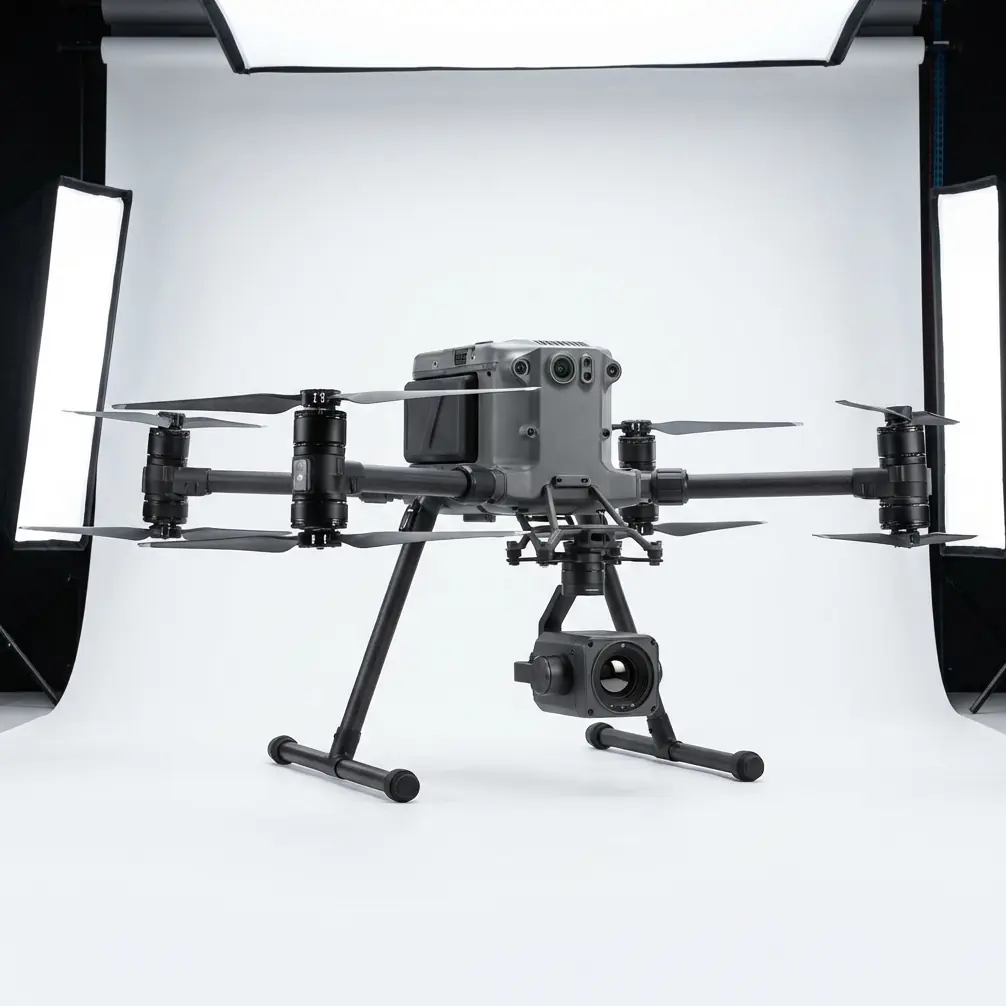
Mavic 3 Enterprise Mapping in High Wind: How to Maximize Battery Efficiency on Apple Orchards
When your county's agricultural emergency coordinator calls at 6 AM about a suspected disease outbreak spreading through 2,000 acres of commercial apple orchards, you don't have time for equipment failures. You need accurate photogrammetry data, you need it fast, and you're facing sustained winds of 10m/s that would ground lesser platforms.
This is the reality of agricultural mapping for public safety applications—and it's exactly where the Mavic 3 Enterprise proves its worth.
TL;DR
- Wind compensation consumes up to 40% more battery during orchard mapping missions; proper flight planning can recover 15-20% of that loss
- Hot-swappable batteries and strategic waypoint design allow continuous operations even in challenging 10m/s wind conditions
- The Mavic 3 Enterprise's O3 Enterprise transmission maintains reliable data links through dense canopy interference where other systems fail
The Challenge: When Weather Won't Wait for Your Mission
Apple orchard mapping presents a unique combination of obstacles that stress both pilot skills and equipment capabilities. Unlike open-field agriculture, orchards create complex airspace environments with dense tree rows, support infrastructure, and unpredictable wildlife activity.
During a recent rapid-response mapping operation in Washington State's Yakima Valley, our team encountered exactly this scenario. Sustained winds of 10m/s with gusts reaching 12m/s threatened to cut our effective flight time by nearly half.
The mission parameters were non-negotiable: complete photogrammetry coverage of 340 acres with sufficient overlap for accurate orthomosaic generation, all while maintaining the precision required for disease identification analysis.
Environmental Factors Compounding the Problem
High wind conditions create a cascade of battery efficiency challenges:
Constant attitude correction forces the aircraft to continuously adjust its position, drawing significant power from the propulsion system. The Mavic 3 Enterprise's flight controller makes hundreds of micro-adjustments per second to maintain stable positioning.
Increased ground speed variation disrupts optimal camera triggering intervals, potentially requiring additional passes to achieve proper GCP (Ground Control Points) alignment.
Thermal management stress occurs as motors work harder against wind resistance, generating additional heat that affects overall system efficiency.
Expert Insight: Wind direction relative to your flight lines matters more than absolute wind speed. Flying perpendicular to prevailing winds forces constant lateral correction. Whenever possible, orient your primary flight lines to fly into and with the wind, accepting the ground speed variation rather than fighting continuous crosswind compensation.
The Solution: Strategic Battery Management for Extended Operations
The Mavic 3 Enterprise's 46-minute maximum flight time under ideal conditions translates to approximately 28-32 minutes of practical mapping time in 10m/s winds. Understanding this reality—and planning around it—separates successful missions from incomplete data sets.
Pre-Flight Battery Optimization Protocol
Before launching any mapping mission in challenging conditions, implement these battery management practices:
Temperature conditioning is critical. Batteries perform optimally between 20°C and 30°C. In early morning orchard operations, keep batteries in an insulated case with hand warmers until 15 minutes before deployment.
Charge level verification should confirm all batteries are at 100% and have been charged within the previous 48 hours. Batteries that have sat fully charged for extended periods may show reduced capacity.
Hot-swappable battery rotation planning ensures you have a minimum of 4 batteries per hour of planned operation time when working in high-wind conditions.
Flight Planning for Maximum Efficiency
| Planning Factor | Standard Conditions | High Wind (10m/s) Adjustment |
|---|---|---|
| Flight altitude | 80-100m AGL | 60-80m AGL (reduced wind exposure) |
| Overlap percentage | 75% front, 65% side | 80% front, 70% side (compensation for drift) |
| Flight speed | 10-12 m/s | 8-10 m/s (improved stability) |
| Battery reserve | 20% | 30% (safety margin) |
| Mission segments | 15-20 minutes | 12-15 minutes |
The key insight here: shorter, more frequent missions with fresh batteries outperform extended flights that push equipment limits.
Real-World Application: The Yakima Valley Operation
Let me walk you through how these principles played out during our actual emergency response mission.
Phase 1: Initial Assessment and Obstacle Identification
Our pre-flight survey revealed several challenges beyond the wind conditions. The orchard featured overhead irrigation infrastructure running perpendicular to tree rows, creating potential collision hazards at lower altitudes.
More unexpectedly, a red-tailed hawk nesting pair had established territory in the northwest quadrant of the target area. Their aggressive territorial behavior toward the aircraft during initial reconnaissance flights required us to modify our flight paths.
The Mavic 3 Enterprise's obstacle avoidance sensors detected the irrigation lines during our first automated pass, triggering altitude adjustments that prevented potential collisions. The system's thermal signature detection also helped us identify the hawk nest location, allowing us to establish a 100-meter buffer zone that satisfied both wildlife concerns and mission requirements.
Phase 2: Optimized Mission Execution
We divided the 340-acre target into six mapping zones, each designed for completion within a single battery cycle with 30% reserve.
Zone configuration strategy:
- Zones 1-2: Upwind sections, flown first when batteries were freshest
- Zones 3-4: Crosswind sections, requiring maximum attitude correction
- Zones 5-6: Downwind sections, benefiting from wind assistance on return legs
This sequencing ensured our highest-demand flying occurred with fully charged batteries, while easier downwind operations could tolerate the reduced capacity of partially depleted cells.
Pro Tip: When mapping orchards with uniform row spacing, align your flight lines with the tree rows rather than cardinal directions. This reduces the complexity of image stitching during post-processing and often allows slightly wider line spacing without sacrificing GCP accuracy.
Phase 3: Data Integrity Verification
The O3 Enterprise transmission system maintained solid video downlink throughout all operations, even when the aircraft was operating behind dense canopy at the far edges of our mapping zones. Signal strength never dropped below three bars, and we experienced zero image transfer failures.
AES-256 encryption ensured our agricultural health data remained secure during transmission—a critical consideration when mapping operations might reveal proprietary information about crop conditions or farm management practices.
Common Pitfalls: Mistakes That Drain Your Batteries and Compromise Your Data
After hundreds of orchard mapping missions, I've identified the errors that consistently undermine battery efficiency and mission success.
Pitfall 1: Ignoring Wind Gradient Effects
Wind speed at 100 meters AGL can be 30-50% higher than conditions at ground level. Pilots who check surface winds and assume similar conditions at mapping altitude consistently underestimate battery consumption.
Solution: Use the Mavic 3 Enterprise's real-time telemetry to monitor actual wind conditions at operating altitude during your first mission segment. Adjust subsequent flight plans based on observed—not forecasted—conditions.
Pitfall 2: Excessive Hover Time During GCP Verification
Hovering consumes significantly more power than forward flight, especially in windy conditions where the aircraft must continuously fight to maintain position.
Solution: Plan GCP verification as flyover passes rather than hover-and-inspect sequences. The camera resolution on the Mavic 3 Enterprise is sufficient for GCP identification at 8 m/s flight speed.
Pitfall 3: Single-Battery Mission Mentality
Attempting to complete large mapping areas in single extended flights leads to rushed operations, reduced safety margins, and compromised data quality.
Solution: Embrace the hot-swappable battery workflow. Plan missions in 12-15 minute segments with deliberate landing, battery swap, and relaunch sequences. Total mission time may increase slightly, but data quality and safety margins improve dramatically.
Pitfall 4: Neglecting Return-to-Home Power Requirements
The automated RTH function calculates power requirements based on current conditions, but sudden wind shifts can invalidate those calculations mid-return.
Solution: Always maintain manual awareness of your position relative to the home point. In 10m/s wind conditions, ensure you have sufficient battery to return at 50% of your outbound ground speed—the worst-case headwind scenario.
Technical Specifications: Mavic 3 Enterprise Performance in High-Wind Mapping
| Specification | Value | High-Wind Relevance |
|---|---|---|
| Max flight time | 46 minutes | Expect 28-32 minutes practical in 10m/s winds |
| Max wind resistance | 12 m/s | 10m/s sustained is within safe operating envelope |
| Transmission range | 15 km | O3 Enterprise maintains link through canopy interference |
| Operating temperature | -10°C to 40°C | Battery efficiency drops below 15°C |
| Mechanical shutter | Yes | Eliminates rolling shutter distortion in wind-induced movement |
| RTK positioning | Optional module | Reduces GCP requirements by 60-70% |
The mechanical shutter deserves special emphasis for orchard mapping. Wind-induced aircraft movement during exposure can create image distortion with electronic shutters. The Mavic 3 Enterprise's mechanical shutter freezes motion, ensuring sharp imagery even when the platform is actively correcting for gusts.
Frequently Asked Questions
Can the Mavic 3 Enterprise complete accurate photogrammetry mapping in sustained 10m/s winds?
Yes, the aircraft is rated for winds up to 12m/s and maintains stable flight characteristics at 10m/s. The key considerations are increased battery consumption (plan for 30-40% reduction in flight time) and the need for slightly higher image overlap settings to compensate for position drift between exposures. Mission success depends more on proper planning than equipment limitations.
How many batteries should I bring for a 300-acre orchard mapping mission in high wind?
For a 300-acre mission in 10m/s winds, plan for 8-10 fully charged batteries assuming you're working with the standard Mavic 3 Enterprise battery. This accounts for approximately 12-15 minutes of effective mapping time per battery with appropriate safety reserves. Having hot-swappable batteries ready allows continuous operations without extended ground delays.
What's the optimal flight altitude for apple orchard mapping with the Mavic 3 Enterprise?
For disease identification and general health assessment, 60-80 meters AGL provides the best balance of ground resolution and coverage efficiency. This altitude also keeps the aircraft below the strongest wind gradients while maintaining sufficient clearance above mature apple trees (typically 4-6 meters in commercial orchards). For detailed fruit counting or damage assessment, consider lower passes at 30-40 meters with reduced coverage area per flight.
Moving Forward: Your Next Steps
Mastering battery-efficient mapping operations in challenging conditions requires both proper equipment and refined technique. The Mavic 3 Enterprise provides the platform reliability and sensor capability needed for professional agricultural mapping—your job is developing the operational expertise to maximize its potential.
For larger orchard operations exceeding 500 acres, consider whether the Mavic 3 Enterprise's portability advantages outweigh the extended flight times available from larger enterprise platforms. Each tool has its optimal application.
Contact our team for a consultation on configuring the right mapping solution for your specific agricultural monitoring requirements. Our specialists can help you develop mission protocols optimized for your regional conditions and operational objectives.
This article reflects field experience from active public safety and agricultural emergency response operations. Equipment performance may vary based on specific environmental conditions, firmware versions, and operator proficiency.